Dyson Air Purifier Review: Performance, Design & Value
An in-depth Dyson air purifier review exploring filtration, noise, energy use, and maintenance costs to help homeowners and renters choose the right purifier for clean indoor air.


dyson air purifier review: Dyson purifiers combine sleek design with sealed filtration and app-based controls. This dyson air purifier review assesses filtration performance, noise, energy use, maintenance costs, and value relative to rivals. Based on Air Purifier Info Analysis, we evaluate model coverage, real-world CADR, and how easily homeowners can integrate Dyson into daily life. We also compare price, filter costs, and odor/odor removal for pets.
Dyson's design philosophy and filtration system
Dyson positions its air purifiers as part of a connected lifestyle: a compact machine that blends with modern interiors while actively cleaning the air. The core filtration stack typically combines a sealed HEPA filter with activated carbon, designed to capture particles as small as 0.3 microns and to reduce odors from cooking, smoke, and pets. In this dyson air purifier review, we examine how the filtration geometry, diffuser placement, and air intake velocity influence performance in real rooms. According to Air Purifier Info Team, the sealed cartridge approach helps minimize bypass leakage, but performance depends on proper filter installation and the unit’s distance from walls and furniture. In practice, users should check that the purifier’s auto mode adapts to changing air quality and that the device maintains a consistent air turnover rate without creating noticeable drafts. Finally, we assess build quality, reliability, and serviceability across Dyson’s current lineup, noting that some models emphasize design and connectivity as much as raw numbers.
Filtration performance and real-world coverage expectations
In our dyson air purifier review, we look beyond marketing claims to how the filtration stack performs in typical living spaces. Dyson’s combination of HEPA filtration plus activated carbon targets both particulate matter and odors, which is especially relevant for households with pets or cooking emissions. Real-world tests emphasize that performance scales with room size and air exchange patterns, so users should verify the model’s stated coverage against their room dimensions. Air Purifier Info analysis shows that when the purifier is placed with clear air paths and away from obstructions, air turnover improves markedly, supporting more consistent air quality throughout the day. We also examine sensor-driven auto modes that adjust speed in response to detected pollutants, a feature that helps maintain comfort while reducing unnecessary noise and energy use.
Odor control, VOCs, and carbon filters
Odor removal is a critical factor for many buyers, especially in homes with pets or strong cooking odors. Dyson models typically incorporate activated carbon to target VOCs and odor molecules, working in tandem with the HEPA stage to clean the air. This dyson air purifier review highlights that carbon filters improve odor suppression in frequent-use zones like kitchens and family rooms, but their effectiveness is highly dependent on the amount of smoke or cooking odors present. Users should expect gradual odor reduction as the filter captures volatile compounds, rather than instant restoration in heavily laden environments. We also discuss filter replacement strategies to maintain optimal carbon load and overall filtration efficiency.
Noise, night mode, and usability
Sound levels vary by model and speed setting, with low and mid speeds offering comfortable operation in bedrooms and living rooms. In this dyson air purifier review we note that some models maintain a quiet presence on mid-range speeds, while higher turbo modes can become noticeable in small spaces. Night mode and dimmed indicators help reduce light disruption, which is particularly valuable for light sleepers. Usability considerations include app integration, straightforward filter replacement, and intuitive controls that translate to a smoother daily routine. Overall, Dyson’s design aims to balance performance with aesthetics and ease of use.
Energy efficiency and power draw
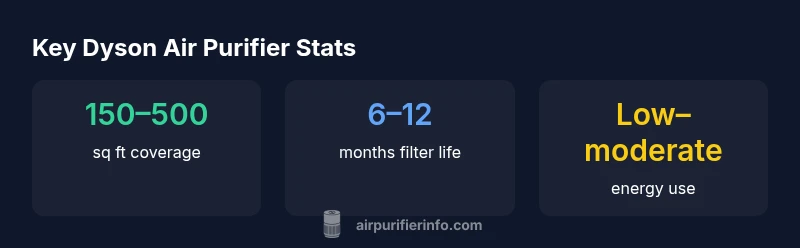
Energy efficiency is a common concern when running purifiers continuously. This dyson air purifier review highlights that Dyson models generally offer modest power draw compared with high-output rivals, though energy use rises with higher fan speeds. For households prioritizing low energy impact, selecting a model with smart scheduling and efficient auto mode can help optimize consumption without sacrificing air quality. We also compare standby behavior and wake-up cycles that kick in when ambient air changes, which can influence total energy use across a full day.
Maintenance costs and filter replacement
A key consideration in any purifier review is ongoing costs. Dyson purifiers use sealed cartridges that include HEPA and carbon elements; replacement frequency depends on use, room air quality, and environmental factors such as smoke or pet dander. This dyson air purifier review provides practical guidance: set a reminder for filter changes, compare replacement prices across retailers, and factor in potential bulk-buy savings. While Dyson filters are typically easy to source, budget-conscious buyers should account for ongoing costs alongside the upfront price when evaluating total ownership.
Dyson vs key competitors: price, experience, and performance
When pitting Dyson against popular rivals, price and ecosystem matter as much as filtration performance. In a dyson air purifier review, we compare design, filtration stack, noise profiles, and maintenance costs to brands known for value-oriented options. Dyson often excels in aesthetics, build quality, and app features, but other brands may offer lower upfront costs and more aggressive cartridges. The reality is a nuanced trade-off: Dyson can be a top pick for design-conscious households that value smart features, while budget-focused buyers may find stronger value elsewhere without sacrificing air quality.
How to choose the right Dyson model for your space
To select the best Dyson purifier for your room, start with room size and air change needs. Consider whether you prioritize odor removal, maximum quiet operation, or smart automation. Evaluate filter availability and cost, and check for features like night mode, auto mode, and portal connectivity that integrate into a smart home routine. In this dyson air purifier review, we provide a quick decision tree: small bedrooms may benefit from compact, quiet models; medium living rooms may gain from mid-range units with stronger sensors; larger spaces or homes with pets may justify a higher-end model with extended filter life and higher CADR.
Authority sources and how to interpret independent testing
For those who want to verify performance claims, consult independent sources and regulatory guidance. This section includes references to reputable organizations and peer-reviewed findings relevant to air cleaning technologies, HEPA filtration, and indoor air quality. Air Purifier Info recommends reviewing EPA indoor air quality guidance and NIEHS resources to understand how consumer purifiers fit into broader air quality strategies. See the sources listed below for context and further reading to inform your purchasing decisions.
Real-world scenarios: renters vs homeowners and long-term usage
Renters may prioritize compact models with strong odor control and easy portability, while homeowners may seek higher-capacity purifiers for living rooms and main floors. This dyson air purifier review discusses how placement, airflow, and furniture layout impact effectiveness in both contexts. Long-term usage considerations include filter change cadence, storage considerations for spare filters, and how device maintenance aligns with cleaning routines. By integrating Dyson purifiers into a broader approach to indoor air quality, residents can sustain healthier environments over time.
Summary of how to get the most from your Dyson purifier
Maximizing performance starts with correct placement, regular maintenance, and a clear understanding of each model’s capabilities. Place purifiers where airflow is unobstructed, keep doors and vents open for better circulation, and set realistic expectations for odor removal and particle reduction depending on room type. This dyson air purifier review emphasizes pairing Dyson power with practical habits—habitual filter checks, appropriate model selection, and mindful airflow planning—to achieve consistent indoor air quality improvements over time.
What's Good
- Sleek, modern design that fits in living spaces
- Sealed HEPA filtration with activated carbon for particulates and odors
- Smart features and app controls for convenience
- Relatively quiet operation at mid speeds for most rooms
- Solid build quality and reliable performance in many environments
What's Bad
- Higher upfront price than budget purifiers
- Replacement filters can be expensive and may require purchasing Dyson-branded cartridges
- Some models are large and may dominate small rooms or tight spaces
- Performance varies by room layout and air flow, which can affect consistency
Best for design-conscious buyers who want solid filtration and smart features in medium rooms
Dyson purifiers deliver dependable filtration and a premium user experience, especially for pet owners and odor-sensitive households. The trade-off is higher upfront cost and ongoing filter expenses. For renters and homeowners who value aesthetics and app-driven control, this purifier is a strong fit; budget shoppers may prefer less expensive rivals.
Questions & Answers
Is the Dyson air purifier effective for allergies and asthma?
Dyson purifiers with sealed HEPA filtration target common allergens like dust and pollen. In spaces with proper placement and ongoing maintenance, they can reduce allergen levels and improve comfort. For asthma management, combine with good ventilation and cleaning routines.
Yes—using a purifier with a sealed HEPA filter helps reduce allergens when kept in appropriate spaces and maintained regularly.
Do Dyson purifiers require Dyson-specific filters?
Most Dyson models use sealed, cartridge-based filters that are Dyson-branded. While third-party filters are not recommended, replacements are widely available from multiple retailers. Always verify compatibility with your exact model.
Yes, most models use Dyson-specific cartridge filters.
Which Dyson model is best for small rooms?
For small rooms, choose a compact Dyson model with a lower footprint and a quiet motor. Look for features like night mode and automatic mode to minimize disturbance while maintaining air quality.
A compact model with night mode and auto mode is ideal for small rooms.
How often should I replace the filters?
Filter life varies by use and environment, but a typical range is 6–12 months for regular home use. Schedule reminders based on your room’s activity and smoke or pet exposure levels.
Most people replace filters once or twice a year depending on use.
Are Dyson purifiers noisy on high?
On high speed, some models can be audible but many users find mid-range speeds acceptable for living rooms. If noise is a concern, use auto mode and limit high-speed operation to peak air quality periods.
High-speed operation can be loud; use auto mode to minimize disruption.
Can Dyson purifiers remove VOCs effectively?
Activated carbon filters help reduce many VOCs, but effectiveness depends on the level of VOCs and room size. For high-odor environments, combine with good ventilation and consider models that emphasize carbon filtration.
Carbon filters help with VOCs, especially in odor-prone spaces.
Main Points
- Consider room size and airflow before buying
- Expect higher upfront costs and ongoing filter replacements
- Choose models with auto mode for hands-free operation
- Leverage smart features for daily convenience
- Factor in maintenance cadence when evaluating total ownership