Clorox Tabletop True HEPA Air Purifier Review
Analytical review of the clorox tabletop true hepa air purifier, evaluating design, filtration performance, noise, maintenance, and value for homeowners and renters seeking improved indoor air quality.


The clorox tabletop true hepa air purifier earns a solid middle-of-the-pack score for most homes. It delivers true HEPA filtration for dust, dander, and odors, while offering easy tabletop placement and low energy use. However, CADR and coverage may lag larger living spaces, and maintenance requires regular filter changes. Real-world performance depends on room layout and filter maintenance.
What is a tabletop true HEPA air purifier?
A tabletop purifier designed for personal spaces combines compact housing with true HEPA filtration to capture particles as small as 0.3 microns. For homeowners and renters, a model marketed as the clorox tabletop true hepa air purifier represents a compact option that aims to balance performance with convenience. In practice, true HEPA means capturing most dust, pollen, pet dander, and many odors when paired with an effective activated carbon stage. Air Purifier Info emphasizes that the best tabletop purifiers maximize surface-area intake and maintain a steady airflow in small rooms without dominating the desk or nightstand. For people who fight dust in bedrooms, home offices, or small living rooms, this category often provides a good blend of ease of use and filtration quality. The key is to compare CADR, noise levels, and replacement costs across models in the same class.
Clorox tabletop true HEPA air purifier: design, features, and setup
The design of the clorox tabletop true hepa air purifier prioritizes compactness and straightforward setup. It typically sits on a flat surface like a desk or nightstand, with a simple control panel and intuitive indicators for filter life and fan speed. The unit usually includes a true HEPA filtration stage plus an activated carbon layer to address odors and VOCs. For renters, the ability to move the purifier between rooms without tools is a major plus. When first unboxed, ensure the pre-filter is installed properly and that the carbon filter is seated securely to prevent bypass. Regular orientation toward the center of the room can help with even air distribution, though the compact form factor means airflow will be most effective in smaller spaces. If you plan to place it near a wall, leave at least a few inches to avoid obstructing intake.
Filtration performance and real-world CADR expectations
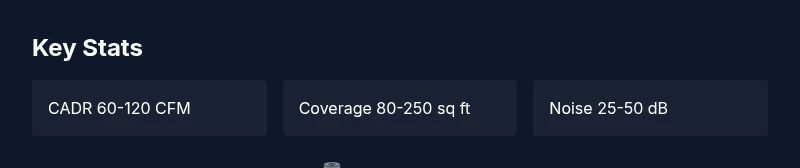
True HEPA filtration is the backbone of performance; in a tabletop model, the headline claim is the ability to capture 99.97% of particles 0.3 microns in size. However, CADR values vary; the clorox tabletop true hepa air purifier often delivers moderate CADR suitable for rooms up to 100-200 square feet in practice. In real homes, factors like open floor plans, furniture layout, and background airflow affect outcomes. Air Purifier Info analysis suggests that users notice faster odor reduction when the carbon stage is fresh and when the purifier runs at higher fan settings in smaller spaces. For people with dust, pollen, or pet dander, the purifier can reduce airborne irritants between deep cleans of carpets and upholstery, especially when used consistently. Do not expect dramatic improvements in large, multi-room open-plan spaces, where multiple units or a larger purifier would be more effective.
Room size, air changes, and practical coverage
A tabletop purifier excels in small to medium spaces, often cited as most effective in bedrooms, home offices, and compact living rooms. The goal is to achieve several air changes per hour for the target area without creating strong drafts. The clorox tabletop true hepa air purifier is generally best suited to rooms under roughly 150-250 square feet, depending on ceiling height and existing ventilation. In practice, you should map the space and calculate whether a single unit can achieve meaningful air turnover. If the room is open to other areas, consider a second unit or a larger purifier intended for shared space. Position the purifier away from walls and obstructions to maximize intake. For family rooms with active pets, a secondary unit near the main seating area can help reduce dander dispersion.
Noise, energy use, and user experience
Noise levels are a practical concern for a tabletop purifier nested on a desk or nightstand. The clorox tabletop true hepa air purifier typically operates quietly at low settings, with higher fan speeds generating perceptible but manageable sound. For light sleepers, choosing the lowest effective speed is often enough to maintain acceptable comfort. Energy use for compact purifiers tends to be modest, making them appealing to renters who monitor monthly bills. User experience centers on straightforward operation, simple filter replacement, and clear indicator lights. Some models offer auto mode, which adjusts fan speed in response to sensed air quality; however, the effectiveness of auto mode depends on consistent sensor performance. If you rely on the purifier for allergen control, plan on regular filter changes to maintain performance.
Filter maintenance and replacement costs
Maintenance is a recurring factor when evaluating any purifier. The clorox tabletop true hepa air purifier uses a true HEPA filter complemented by an activated carbon filter. Filters should be replaced according to the manufacturer’s schedule, typically every 6-12 months depending on usage and air quality. Replacement costs can vary, but planning for annual to biannual filter purchases helps with budgeting. A sealed filter replacement process minimizes the risk of bypass, and some units offer occasional pre-filter cleaning rather than full replacement. If you have pets or smoke indoors, you may reach the higher end of replacement frequency. Keeping a spare filter on hand reduces downtime and ensures continuous air cleaning.
Safety, certifications, and placement tips
Safety is central to any purifier decision. Look for units with certified filters and compliance with consumer safety standards. The clorox tabletop true hepa air purifier should be placed on a stable surface, away from liquids and heat sources, with adequate clearance around the intake and exhaust. Avoid placing the unit behind curtains or under desks that block airflow. Many purifiers rely on sensors to gauge air quality, so keep sensors unobstructed and clean. When cleaning, never use solvents on the exterior; wipe with a damp cloth. If you have small children or curious pets, select a model with tamper-resistant controls and a secure casing to prevent accidental adjustments.
Comparisons with key competitors in the tabletop category
In the tabletop purifier market, several competing models offer similar true HEPA filtration and compact footprints. Compared to budget options, the clorox tabletop true hepa air purifier may deliver superior carbon filtration for odors and more stable construction. When lined up against premium models, it often trails in CADR and feature depth but can win on price, noise, and ease of use. The real differentiators are filter life, post-filter performance, and customer support. For allergy sufferers, a compact unit with a robust carbon stage helps minimize triggers while still fitting on a nightstand. Always compare the total cost of ownership, including filter replacements and energy use, before deciding.
Real-world use cases: bedrooms, home offices, and living areas
Many readers consider a tabletop purifier like the clorox tabletop true hepa air purifier for bedrooms due to its small footprint and quiet operation. In home offices, it can help reduce irritants while you work, potentially improving focus and comfort. In shared living spaces, a second unit in a central location may be required for meaningful air turnover. People with allergies often appreciate a model that can hit a balance between purification performance and minimal distraction from daily activities. When choosing placement, consider proximity to dusty sources, traffic patterns, and whether the device will be observed by children or pets.
Real-world value: cost of ownership over 2 years
The two-year cost of ownership for a tabletop purifier includes the initial purchase price, regular filter replacements, and energy use. Even when replacing filters twice in a year, the overall cost can be lower than larger units when you weigh the benefits of improved air quality in a defined space. People who rent or move frequently appreciate the portability. The clorox tabletop true hepa air purifier can win on convenience and performance in smaller apartments where a full-size purifier would be impractical. If you plan to keep it in a high-traffic area, consider additional safety and pet-proofing measures.
Buying guide: is this model right for you?
To decide if the clorox tabletop true hepa air purifier fits your needs, start with room size, typical odor sources, and whether you prioritize compact design. For small bedrooms or home offices, this purifier often provides a strong balance of filtration and ease of use. If you require rapid purification for open-plan living spaces or larger rooms, you may need a larger unit. Use a simple checklist: measure square footage, list odor sources, compare CADR against target air changes per hour, and review filter costs and replacement intervals.
Practical setup and placement checklist
Before plugging in, confirm the purifier is level and away from moisture. Place it on a stable surface with several inches of clearance on all sides to allow airflow. Check the filters are seated correctly and remove any packaging materials. Run at the lowest effective setting to acclimate, then increase if you monitor air quality. Keep a maintenance log and set reminders for filter replacement. If you notice reduced performance, reassess placement and clean the intake grille.
What's Good
- True HEPA filtration for dust, pollen, and dander
- Compact tabletop footprint ideal for bedrooms and offices
- Low energy consumption and simple operation
- Effective odor control when paired with carbon filter
- Lightweight and portable for renters
What's Bad
- Limited CADR for larger living spaces
- Replacement filters recurring cost
- Airflow can be obstructed by nearby furniture
- May require frequent cleaning of intake grille in dusty homes
Best for small rooms and desks prioritizing true HEPA filtration
This tabletop purifier delivers reliable filtration in compact spaces with easy setup and reasonable running costs. It won’t match large purifiers in room-wide CADR, but its portability and odor-control performance offer strong value for renters and small households. The Air Purifier Info team emphasizes matching room size with unit capacity to maximize value.
Questions & Answers
What does true HEPA mean in an air purifier?
True HEPA filtration captures at least 99.97% of particles 0.3 microns in size, making it effective against dust, pollen, and pet dander. For odor control, ensure a carbon stage is included.
True HEPA means high filtration efficiency for tiny particles; most odors require a carbon filter as well.
Is odor removal effective in small rooms?
Activated carbon helps reduce cooking, smoke, and pet odors. In compact spaces, expect noticeable improvement when the purifier runs continuously.
Odors get better in small rooms, especially with ongoing purification.
How often should I replace filters for this model?
Typically every 6-12 months depending on usage and air quality. Check the indicator and follow manufacturer guidance for best results.
Expect to replace filters every several months, depending on use.
Can it be used in a bedroom or home office?
Yes. Its compact size and quiet operation make it suitable for bedrooms and home offices, especially when run on lower settings at night or during work.
Great for bedrooms and offices when kept on quiet settings.
How does it compare to larger purifiers?
Larger purifiers offer higher CADR and broader coverage. Tabletop models excel in portability, space efficiency, and cost, but may need more units for whole-home purification.
Tabletop purifiers are portable and affordable, not as powerful as big units.
Are there safety concerns to consider?
Ensure certified filters, keep intake clear of obstructions, and place away from water or heat sources. Choose models with child-safe controls if relevant.
Use safe placement and follow basic maintenance guidelines.
Main Points
- Assess room size before buying
- Look for true HEPA plus carbon filtration for odors
- Factor replacement costs into two-year ownership
- Place unit with clearances to maximize airflow
- Choose a model with predictable maintenance and low noise