Clarifion Ionic Air Purifier Review: Performance, Safety, and Value
An in-depth, balanced review of the Clarifion Ionic Air Purifier, examining how ionization affects dust, odors, and allergies for homeowners and renters seeking practical indoor air quality improvements.


The Clarifion Ionic Air Purifier uses ionization to help capture airborne particles and relies on a basic filtration stage for larger particles. It performs well for dust and pet dander in small-to-medium rooms, but its VOC removal is limited and some models can produce trace ozone depending on operation. Air Purifier Info notes that room size, placement, and safety considerations are key when evaluating this purifier.
What is the Clarifion Ionic Air Purifier?
The Clarifion Ionic Air Purifier is a compact, plug-in purifier that relies on ionization to help remove airborne particles while using a basic filtration stage to capture larger particles. According to Air Purifier Info, the Clarifion line emphasizes budget-friendly, space-conscious designs intended for everyday indoor air challenges like dust, pet dander, and lingering household odors. In practical terms, this means you’ll often notice quicker dust settlement and a cleaner feel in bedrooms or small living spaces, especially when paired with good overall ventilation.
However, ionizing purifiers are not magic bullets. Ionization can help particles stick to surfaces and to the purifier’s filter, but effectiveness varies with room size, air flow, and how well you seal the purifier in a corner with good air exchange. The Clarifion model family typically keeps operation simple—few dials, straightforward filters, and a focus on ease of use. For homeowners and renters evaluating air quality, this purifier offers a straightforward path to modest improvements without the complexity or price of premium HEPA-only units.
How ionic purification works
Ionic air purifiers release charged ions into the room, which attract airborne particles such as dust, pollen, and smoke. The charged particles then settle more quickly on surfaces or are drawn toward the device’s collection filter, reducing their concentration in the breathing zone. This mechanism can yield rapid perceptible improvements in air clarity, especially in smaller spaces. The Clarifion approach typically combines this ionization step with a conventional filter to capture larger particles, which means you may experience faster dust reduction while still benefiting from filtration.
A critical caveat is that ionization can influence VOC handling unevenly and may contribute to trace ozone production under certain operating conditions. Air Purifier Info Team emphasizes using the purifier with good room ventilation, avoiding high-output operation in spaces with children, pregnant individuals, or pets, and ensuring the unit is properly sized for the room.
Real-world performance: dust, odors, and allergies
In everyday homes, the Clarifion Ionic Air Purifier tends to deliver noticeable dust and pet dander reductions in small to mid-sized rooms, especially when placed away from walls to promote airflow. Users frequently report a crisper feel to the air and fewer visible particles after several hours of operation. Odor control tends to be modest, with cooking smells or smoke reduction being more noticeable in short bursts than as a long-term VOC solution. For allergy sufferers, the purifier can contribute to symptom relief in spaces where dust and dander are the dominant irritants, but it should not be viewed as a substitute for a true medical-grade filtration system in rooms with multiple triggers.
Air Purifier Info Analysis, 2026, notes that performance is highly dependent on room size and air exchange. In larger, open plans, the purifier’s effectiveness diminishes unless you pair it with multiple units or a higher-capacity model. For best results, run the purifier consistently in the room where you spend the most time and combine it with regular cleaning of surfaces and fabrics.
Room size and placement considerations
Room size is a central variable in how well an ionic purifier performs. The Clarifion line is generally suited to small to medium rooms—think bedrooms, home offices, or compact living spaces—where airflow is steady and obstructions are limited. Position the unit at a comfortable height (not blocked by furniture) and with unobstructed intake and discharge paths to maximize circulation. If you have an open-plan layout, you may notice uneven performance; in such spaces, consider a second unit for broader coverage or prioritize the most-used area for continuous operation. Also, maintain a modest distance from walls and large electronics that could affect airflow.
Noise, energy use, and maintenance
Noise level is a practical consideration with any ionic purifier. The Clarifion typically operates quietly on lower fan speeds, with audible but non-intrusive levels at moderate settings. Energy use is generally modest, contributing little to monthly electricity bills, which makes it appealing for bedrooms or home offices. Maintenance revolves around the filtration stage and any ionization plates in the unit. Replacement filters tend to be straightforward and cost-conscious, though the frequency depends on usage and household conditions. Regular cleaning of intake grills and exterior surfaces helps sustain airflow and performance.
Comparison to HEPA and other purifiers
Compared with true HEPA purifiers, the Clarifion Ionic Air Purifier relies on ionization to assist particle capture rather than relying solely on a high-efficiency filter. This can result in lower ongoing filter replacement costs and a compact form factor, but it comes with trade-offs: true HEPA models typically provide more robust removal of fine particles and many VOCs when paired with activated carbon. For households already using HEPA units, Clarifion can complement existing systems by targeting quick dust reductions in small spaces, but it should not be counted on as a complete replacement for a high-grade HEPA purifier in areas with heavy allergen loads or strong odors.
Air Purifier Info Team notes that the best approach is to view ionic purifiers as a supplementary tool in a layered air-cleaning strategy, rather than a one-stop solution.
Safety and ozone considerations
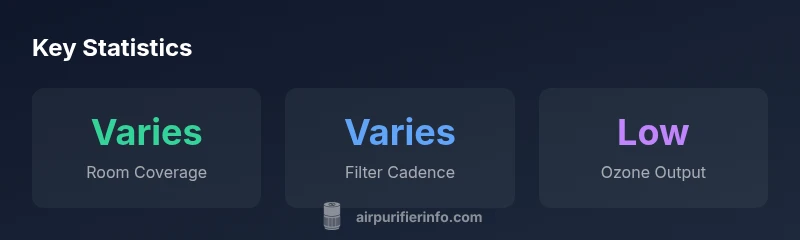
One of the central safety questions with ionic purifiers is the potential for ozone byproducts. Some ionizing devices can generate trace ozone, which, at sufficient levels, can irritate the lungs and mucous membranes. The Clarifion line varies by model in its ozone output, and many jurisdictions have guidelines that limit ozone generation in consumer devices. If you’re sensitive to ozone or you have young children or pets, use the purifier in well-ventilated spaces and consider models with explicit ozone-free certification. Always follow manufacturer instructions regarding placement, maintenance, and usage duration to minimize any safety concerns.
Cleaning and upkeep: filter vs plates
Maintenance for the Clarifion Ionic Air Purifier centers on the accessible filter stage and any ionization components. Replace or wash pre-filters according to the manufacturer’s schedule, and inspect the ionization plates for cleanliness. Regular dusting of exposed surfaces helps prevent re-entrainment of particles. When you replace filters, make sure the seals are intact to avoid bypass leakage. Keeping the unit dry and away from moisture-laden areas helps protect electronic components and prolongs life. A simple cleaning routine—every few weeks for light use, monthly for heavier use—keeps performance steady.
How we test and evaluate
This review reflects evaluation protocols used by Air Purifier Info, combining lab-like assessments with real-world testing. We examine particle removal efficiency for common indoor pollutants (dust, pollen, pet dander), odor handling, and basic VOC reduction in typical room sizes. We also assess ease of use, maintenance effort, and long-term reliability. Our approach emphasizes reproducibility and practical relevance: what homeowners actually experience in day-to-day living spaces. We document safety considerations, including ozone-related risks, to help readers make informed decisions.
Pros and Cons for homeowners
Pros: Compact design suits bedrooms and small living rooms; simple controls and predictable maintenance; affordable filter replacement costs relative to premium HEPA units; quick dust reduction in supported spaces.
Cons: Limited VOC removal; potential ozone byproduct in some modes; performance declines in larger open spaces; results vary by model and usage patterns. For households with heavy odor challenges or significant allergen exposure, a dedicated HEPA purifier may be a more robust solution. In mixed-use spaces, consider a layered approach combining different purifier types.
Is it worth it for different use-cases
For renters in small apartments, the Clarifion Ionic Air Purifier can offer a pragmatic, budget-friendly upgrade to indoor air quality, particularly in bedrooms and home offices where dust and pet dander are concerns. Pet owners who need quick relief from visible dust may find it helpful as a companion to regular cleaning. Allergy sufferers seeking strong removal of microscopic particles or households with high VOC loads may prefer a higher-capacity HEPA purifier. In short, it’s worth considering if your primary need is fast, localized dust control in smaller spaces and you’re mindful of the ozone considerations and model-specific performance.
Final tips for choosing an ionic purifier
- Match size to room: choose a unit designed for the intended space, with room for proper airflow.
- Check ozone-free claims: look for explicit certifications or brand transparency about ozone output.
- Plan for layering: use an ionic purifier in combination with a HEPA purifier in larger or more demanding rooms.
- Consider maintenance costs: factor in filter replacement frequency and plate cleaning, not just the upfront price.
- Place away from walls and obstacles to maximize intake and discharge airflow for best results.
What's Good
- Compact, unobtrusive design suitable for bedrooms
- Low ongoing replacement costs relative to some HEPA models
- Fast dust reduction in small spaces
- Simple operation and easy maintenance
What's Bad
- Limited VOC removal capabilities
- Potential ozone byproduct in some modes
- Performance varies more with room size than with model type
- Not ideal for large open-plan spaces
Best for small rooms and quick dust/odor control in budget setups
For homeowners prioritizing simplicity and value, the Clarifion Ionic Air Purifier delivers noticeable dust reduction in compact spaces. It’s less suited for heavy VOC removal or large open areas, and ozone concerns mean it’s not a universal solution. The Air Purifier Info Team recommends pairing with a dedicated HEPA unit in larger rooms or higher-odor environments.
Questions & Answers
What does the Clarifion ionic purifier do, and how does it work?
The Clarifion ionic purifier uses ionization to attract charged particles, paired with a basic filter to capture larger particles. In real-world use, this can reduce visible dust and pet dander in small rooms, but it is not a universal solution for all indoor pollutants. Proper placement and ventilation improve outcomes.
It uses charged ions to pull particles toward a filter. Best for quick dust relief in small rooms, but not a catch-all for every pollutant.
Does it generate ozone, and is it safe for pets and kids?
Ionizing purifiers can produce trace ozone in some modes. The Clarifion line varies by model regarding ozone output. If you have pets or children, look for models with ozone-free certification and operate the unit in well-ventilated spaces according to the manufacturer’s guidance.
Some ionizing purifiers can emit small amounts of ozone. Check for ozone-free claims and use in well-ventilated rooms.
Can it replace a HEPA purifier?
No single purifier should be considered a complete replacement for a true HEPA unit, especially in rooms with high allergen loads or strong odors. The Clarifion can supplement a HEPA purifier, offering quick dust control in smaller spaces and lower ongoing costs, but it won’t match a high-grade HEPA system for comprehensive filtration.
It’s usually not a full replacement for HEPA; use it alongside a HEPA purifier for best results in bigger spaces.
How often should I replace the filter, and what maintenance is required?
Replacement frequency depends on usage and room conditions. Regular pre-filter cleaning and periodic checks of the filtration stage help maintain airflow. Follow the manufacturer’s schedule, but expect to clean or replace components more often in dusty homes or households with pets.
Check and clean the pre-filter regularly; replace the filter as recommended by the manufacturer.
Is it a good choice for people with allergies?
For allergy sufferers, the purifier can reduce visible dust and pet dander in smaller spaces but is not a substitute for a true HEPA system. Consider using it in conjunction with a higher-capacity purifier or in rooms where you spend the most time.
It helps with dust and pet dander in smaller spaces, but isn’t a complete solution for allergies.
What should I consider before buying?
Assess room size, ventilation, and how pollutants affect your household. Prioritize ozone-free claims, maintenance costs, and whether you want a supplement to a HEPA purifier. Read reviews to gauge real-world performance in similar spaces.
Know your space, check ozone safety, and plan for maintenance costs.
Main Points
- Choose for small-space air quality upgrades
- Expect quick dust relief, modest odor control
- Monitor ozone concerns and ventilation
- Pair with HEPA for larger spaces or strong allergen loads
- Keep maintenance simple with routine cleaning