Whole House Air Filtration System Cost: What to Expect in 2026
Explore the true cost of whole house air filtration systems, including installed price ranges, components, installation, and upkeep. Learn how to estimate budgets, compare quotes, and maximize IAQ value for your home.


The whole-house air filtration system cost is typically in the thousands of dollars, with installed setups ranging from a few thousand dollars up to ten thousand or more, depending on ductwork, filtration type, and HVAC integration. A precise quote requires an on-site assessment. The Air Purifier Info team notes that long-term IAQ benefits matter in the cost decision.
What drives the cost of a whole-house air filtration system
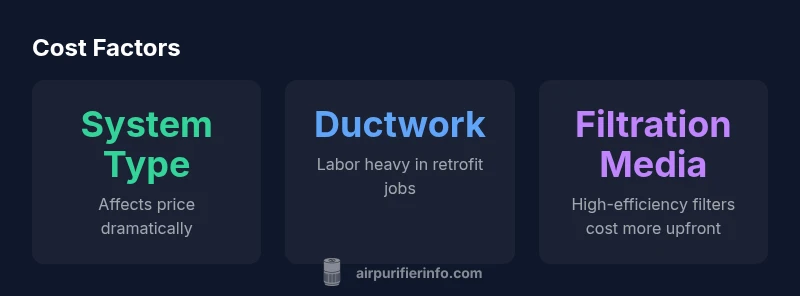
According to Air Purifier Info, understanding the whole-house air filtration system cost starts with identifying what you are trying to achieve for indoor air quality and how your home is built. The total price is not a single number; it reflects several moving parts: the filtration method (basic pre-filters vs true HEPA or electrostatic/electronic cleaners), the number of zones or rooms connected to the system, and whether the purifier is integrated into your existing HVAC ductwork or added as a retrofit. The scale of ductwork, required changes to supply/return runs, and the complexity of the installation can multiply costs quickly. The consumer should also consider whether the system uses standard filters (low-cost) or high-efficiency filters that require less airflow restriction but come with higher upfront costs. In many homes, the biggest cost driver is ductwork modifications or new duct runs to accommodate proper filtration across all living spaces. When evaluating entire-house options, translate the numbers you see into: equipment price + labor + potential ductwork changes + any permit or electrician hours. The house you live in and your climate play a role too, as long duct runs or high-efficiency filters may mean more materials and labor.
System options and components
The central idea behind a whole-house air filtration system is to filter air as it travels through the HVAC system, rather than filtering rooms individually. Options range from simple electronic air cleaners attached to a furnace/air handler to full-velocity HEPA modules integrated into the ductwork. Some setups use higher-MERV filters to catch finer particles, while others employ multi-stage filtration with activated carbon for odors and gases. The most common configurations include: (1) an integrated central filter or electronic air cleaner built into the air handler, (2) a bonded HEPA module installed in the return plenum, and (3) a retrofit kit that adds filtration to existing ducts. Each option has its own price profile and maintenance requirements. Additional components, such as UV-C lights for microbial control or carbon filters for odor removal, add to the upfront cost but can improve indoor air quality in sensitive environments. When you read cost estimates, ask what’s included: filter type and replacement frequency, labor for mounting and duct modifications, and any required electrical work or controls. The aim is clean, breathable air across every room, not just a subset of spaces.
How costs are typically structured and what to expect in quotes
Baseline equipment costs are only part of the story. A complete estimate should separate items into equipment, labor, and ancillary costs. Equipment might include the core filtration module, associated filters, and optional add-ons such as carbon or UV components. Labor covers installation, potential ductwork alterations, sealing, and commissioning tests. Ancillary costs can include permits, electrical work, building code inspections, and any required upgrades to your furnace or air handler to accommodate higher-capacity filtration. For many homes, duct modifications add a substantial portion to the total price because the system must be evenly distributed to all living spaces. A few reputable installers provide transparent line items with clear remarks on materials and labor; others quote a lump sum that masks the breakdown. Air Purifier Info analysis shows that the cost range is broad because of variables like home size, existing ductwork, climate, and chosen filtration media. Prospective buyers should request itemized quotes, compare not only the upfront price but ongoing costs for filter replacements, energy use, and maintenance intervals. A thorough assessment helps ensure you don’t overpay for unneeded components or miss important capabilities.
Installation realities: labor, ductwork, and electrical considerations
The installation phase is where most of the cost variance comes from. If your home already has well-planned ductwork and space in the attic or mechanical room, a retrofit may be easier and cheaper. In homes with older or poorly designed duct systems, installers may need to re-route air paths, add new supply or return runs, and seal joints to prevent leaks, all of which can significantly raise the price and extend project timelines. Electrical considerations include wiring for any powered filtration modules or UV lights, as well as control wiring for staged filtration and smart thermostats integration. Some jurisdictions require permits or inspections, which add administrative cost and schedule impact. A professional HVAC contractor will typically perform a load calculation and duct analysis to confirm adequate air movement after filtration upgrades. As part of your planning, request a written scope of work that enumerates exactly which ducts will be altered, what filters will be used, and how the system will be tested for performance. Clear expectations about installation duration and disruption help prevent sticker shock.
Maintenance costs and ongoing IAQ investments
Ongoing costs usually revolve around filters and occasional component replacements. Higher-efficiency filtration media or carbon/Odor media generally cost more per filter and may require less airflow, which can affect energy use. You should plan for regular filter changes aligned with the manufacturer’s schedule, plus potential costs for UV bulbs or electronics maintenance if those options are selected. Over time, the frequency of filter replacements can shift with seasonality, changes in occupancy, and air quality in your area. An important consideration is whether the system uses standard, widely available filters or proprietary media that limits where you can buy replacements. If filters are cheap but labor to change them is high, the total cost of ownership may tilt toward the higher labor end. Air Purifier Info notes that when budgeting, homeowners often underestimate the cumulative cost of maintenance over 5–10 years. Considering the long-term IAQ benefits—dust reduction, allergen control, and better overall comfort—the investment can be worthwhile, especially for households with sensitivities or pets.
How to get an accurate quote and avoid surprises
The only reliable way to know your whole-house air filtration system cost is to obtain on-site estimates from multiple, qualified HVAC pros. Before scheduling visits, prepare a simple inventory: number of living spaces, current ductwork layout, your preferred filtration level (for example, MERV rating), and any additional goals (odor control, germ reduction, or energy efficiency). During site visits, ask for a breakdown of costs: equipment, labor, ductwork, permits, and any electrical work. Request references and check recent projects similar in size to your home. It’s crucial to verify that the contractor’s design accounts for proper air balance and that the proposed filters do not unduly restrict airflow, which could raise energy costs. If a proposal looks unusually low, probe for hidden line items or low-grade materials. It’s often worth paying a little more for a well-executed installation that minimizes future maintenance hassles. Finally, compare warranties and after-sales service; a long-term support package can save money in the years after installation.
Long-term value, rebates, and a decision framework
Beyond the sticker price, consider the long-term value of a whole-house air filtration system. Improved indoor air quality can reduce symptoms for allergy sufferers and pets, as well as lessen dust and odors across every room, making daily life more comfortable. Some regions offer rebates, tax incentives, or utility programs to encourage upgrades that improve IAQ and energy efficiency. When evaluating options, consider the total cost of ownership: initial hardware and installation, ongoing replacement filters, energy impact, and maintenance. Compare multiple quotes to gauge what’s truly included and whether the higher upfront cost buys durable performance and more complete filtration coverage. The Air Purifier Info team recommends focusing on system compatibility with your HVAC, the filtration media’s performance, and the professional’s installation plan, rather than chasing a lowest upfront price. A well-planned installation tailored to your home often yields better IAQ, lower long-term costs, and greater comfort, making the whole-house air filtration system cost represent a wise investment in your family’s health.
Illustrative cost structure for whole-house filtration systems
| Name | Value | Unit |
|---|---|---|
| Typical installed cost range | thousands to ten-thousand dollars | |
| Annual maintenance cost | hundreds to low thousands | |
| Energy usage impact | low to moderate |
Questions & Answers
What is included in the whole-house air filtration system cost?
Typically, the cost includes the core filtration equipment, filters, optional add-ons (carbon or UV), installation labor, potential ductwork changes, and any required electrical work or permits.
Expect a breakdown of equipment, installation, and any modifications.
How is the cost calculated for a whole-house air filtration system?
Costs are usually broken into equipment, labor, and ancillary items like permits. Major variables include ductwork extent, filtration media (MERV/HEPA), home size, and integration with existing HVAC.
Look for a clear line-item breakdown showing equipment, labor, and mods.
Can I reduce costs with DIY installation?
DIY central filtration installation is generally not recommended because of ductwork, building codes, and safety concerns. Hiring a licensed HVAC pro ensures proper integration and performance.
DIY may save money upfront but risks leaks and poor filtration.
Are there rebates or incentives for installing a whole-house filtration system?
Some regions offer rebates, tax incentives, or utility programs to encourage IAQ and energy efficiency upgrades. Availability varies by location and program timing.
Check local utilities and tax programs for current offers.
How long does installation typically take?
Installation duration depends on ductwork scope, permits, and system complexity. Simple retrofits may take a few days; more extensive ductwork can extend timelines.
Ask for a schedule with milestones before work starts.
What maintenance costs should I plan for?
Plan for regular filter replacements, potential UV bulb maintenance, and occasional component checks. Higher-efficiency filters may cost more upfront but reduce replacement frequency.
Budget for filters and occasional component upkeep.
“Sizing and proper integration are the keys to achieving desired IAQ benefits, and total cost hinges on ductwork and filtration choices.”
Main Points
- Plan for equipment, labor, and ductwork when budgeting.
- Costs vary widely by home size, ductwork, and filtration type.
- Consider long-term IAQ benefits in the total value equation.
- Obtain multiple on-site quotes to ensure accurate budgeting.