Which Air Filter for Furnace: A Practical Guide for Homeowners and Renters
Learn how to choose the right furnace air filter for your system. Explore MERV ratings, sizing, maintenance, and cost with guidance from Air Purifier Info.


To optimize indoor air quality, start with a furnace filter that matches your unit’s size and a filtration level suited to your needs. For general use, a MERV-8 to MERV-11 filter balances filtration with airflow. If you or others have allergies, pets, or heavy dust, consider MERV-13 if your furnace supports it. Always check the manual for compatibility.
What a furnace air filter does and why the right one matters
A furnace air filter protects both the indoor environment and the HVAC system by trapping dust, pollen, pet dander, and other particulates before air is circulated back into your home. The right filter improves comfort, reduces allergy symptoms, and helps protect sensitive components like the blower and heat exchanger. According to Air Purifier Info, starting with the right size and filtration level is essential for steady airflow and efficient operation. If you’re unsure, consult your furnace manual to confirm compatibility and recommended MERV ranges.
In most homes, the filter is located in a return-air intake. It’s easy to replace when you know the correct size, but mismatched filters can restrict airflow, cause the blower to work harder, and raise energy costs. The goal is to balance filtration performance with the furnace’s airflow design. A good rule of thumb: avoid over-filtration that stifles airflow, and don’t under-filter where fine particles slip through.
How MERV, MPR, and PM ratings influence filter choice
Filters are rated by how efficiently they capture particles of various sizes. MERV (Minimum Efficiency Reporting Value) is the most common standard in U.S. homes. Many furnaces work well with MERV-8 to MERV-11 for everyday filtration. If you have allergies or heavy pet dander, MERV-13 can offer stronger filtration, though it may require a higher-capacity blower or professional confirmation of compatibility. MPR and FPR are alternative scales used by some brands, but your furnace manual will indicate which ratings it supports. When in doubt, start with the middle ground (MERV-8 to MERV-11) and avoid very high ratings unless your system is designed for them.
Quick guide: picking the right filter for common scenarios
- General cleaning and typical households: MERV-8 to MERV-11.
- Allergies or asthma-prone environments: consider MERV-11 to MERV-13, if allowed by the furnace.
- Homes with multiple pets or heavy dust: aim for the upper end of the range while monitoring airflow and system noise.
- Energy-conscious households: the lowest acceptable MERV that meets air quality goals.
Air Purifier Info recommends evaluating your specific needs, then confirming with your furnace’s documentation before purchasing.
Sizing and compatibility: how to fit a filter in your furnace
Filters come in fixed sizes; you must choose the size that matches the slot opening. Look for the dimensions written on the current filter frame or in the owner’s manual. Ensure the filter is designed for “return-air” placement and that it seals tightly in the slot with no light showing around the edges. If you’re uncertain, measure the slot (height x width x depth) and bring the measurements to the store or compare with your manual.
Replacement schedule and maintenance tips
Most homes replace filters every 1 to 3 months, with more frequent changes during peak dusty seasons or with pets. A dirty filter reduces airflow and can cause the furnace to work harder. Set reminders on your thermostat or phone, and consider alternating month-by-month reviews to stay on track. Always power down the furnace before changing the filter.
Cost considerations and where to buy
Filters range from budget to premium. Expect basic filters to cost around a few dollars, with mid-range options in the $10–$25 range and higher-end filters going beyond $25. Price often reflects filtration efficiency, materials, and brand reliability. Buying in bulk or subscribing to a replacement program can save time and money over the long term.
Air Purifier Info's practical guidance
The Air Purifier Info team emphasizes verifying compatibility with your specific furnace model and following the manufacturer’s MERV recommendations. Our analysis highlights the importance of balancing filtration performance with maintaining adequate airflow to prevent restricted ducting or excessive blower strain. Always consult the HVAC documentation and, when in doubt, opt for a conservative MERV rating and a properly fitted filter.
Tools & Materials
- Replacement furnace filter (correct size)(Find exact dimensions from the current filter or furnace manual)
- Furnace manual or specifications(Needed to verify MERV rating and compatibility)
- Measuring tape (optional)(Use if you’re unsure about slot size)
- Screwdriver (Phillips or flathead, if needed)(Only for cover access if your unit uses screws)
Steps
Estimated time: 25-40 minutes
- 1
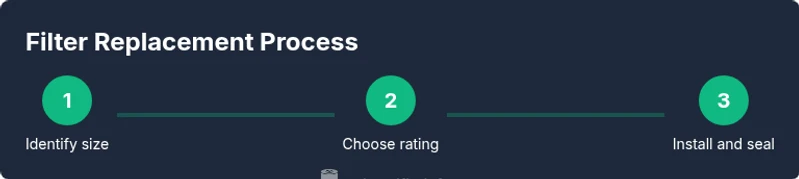
Identify the correct filter size and rating
Locate the filter slot in the return air path and read the size printed on the existing filter or in the furnace manual. Note the MERV rating recommended by the manufacturer and confirm the slot will accommodate your chosen filter.
Tip: Take a photo of the current filter and its size for reference. - 2
Power down and remove the old filter
Turn off the furnace at the thermostat or breaker. Open the filter compartment, remove the old filter carefully, and inspect for moisture or damage before replacing.
Tip: Have a trash bag handy to contain the old filter. - 3
Verify compatibility and rating
Compare the chosen filter’s MERV rating with the furnace manual. Ensure the selected rating won’t reduce airflow beyond what the system can handle.
Tip: If in doubt, start with MERV-8 to MERV-11 and adjust after testing airflow. - 4
Install the new filter
Insert the new filter with the airflow arrows pointing toward the blower and ensure it sits evenly in the slot. Close the compartment and seal any gaps.
Tip: Make sure there’s a tight seal around all edges—light should not pass around the filter. - 5
Reset reminders and schedule the next change
If your thermostat or furnace has a filter-change reminder, reset it. Schedule the next replacement based on your environment and usage.
Tip: Keep a simple log of replacement dates. - 6
Test airflow and comfort
Turn the furnace back on and listen for normal airflow. Check for any unusual noise or reduced air output and address if needed.
Tip: If airflow is weak, recheck the seal and size. - 7
Maintain a replacement routine
Review and adjust your replacement frequency every season based on dust levels, pets, and occupancy.
Tip: Set calendar reminders to stay on track.
Questions & Answers
What is the ideal MERV rating for a typical home furnace?
For most homes, MERV-8 to MERV-11 provides good filtration without overly restricting airflow. If you have allergies and your system supports it, MERV-13 can offer stronger cleansing.
Most homes do well with a filter in the MERV-8 to MERV-11 range; check your system's specifications for higher ratings.
Can I use a higher MERV filter than recommended by the furnace manufacturer?
Only if the furnace and ductwork are designed for it. Higher MERV filters can reduce airflow and raise energy use, potentially causing strain on the blower.
Only if your furnace supports it; otherwise stick to the manufacturer’s recommended range.
How often should I replace furnace filters?
Typical guidance is every 1 to 3 months, but the interval depends on pets, dust, and how often the system runs.
Most homes replace every one to three months, adjusting for your environment.
Are washable or reusable filters a good option?
Washable filters exist but may be less effective and require thorough drying; not all furnaces support them.
Washable filters can work for some setups; check compatibility with your furnace.
What does MERV stand for and why does it matter?
MERV stands for Minimum Efficiency Reporting Value. Higher numbers indicate better filtration but may reduce airflow if the system isn’t designed for it.
MERV is a rating of how well a filter captures particles; higher means better filtration but check airflow.
Do all HVAC systems require the same filter size as the current one?
Not always; check the slot size and use the filter size specified in the manual or on the existing frame.
Always confirm the exact size; don’t guess.
Watch Video
Main Points
- Measure the correct filter size before purchase
- Match MERV rating to your HVAC and needs
- Install with correct orientation and seal
- Replace on schedule to maintain airflow
- Follow manufacturer guidelines for best results