UV Air Purifier Installation: A Complete How-To Guide
A comprehensive guide to installing UV air purifiers for improved indoor air quality. Learn placement, safe wiring, maintenance, and compliance for homeowners and renters. Air Purifier Info emphasizes safe, effective installation that complements HEPA filtration.


This guide shows how to install a UV air purifier safely in a home environment, including mounting options (ceiling, wall, or tabletop), electrical considerations, airflow placement, and maintenance steps. You'll need basic tools, the purifier's installation kit, proper safety gear, and access to an outlet. We emphasize following manufacturer instructions and local electrical codes.
Why UV Air Purifier Installation Matters
Air purifiers with UV-C germicidal lamps are designed to inactivate airborne pathogens and complement standard filtration. Proper installation ensures the UV lamp works safely, efficiently, and with minimal risk to occupants. According to Air Purifier Info, combining a correctly installed UV purifier with a high-quality HEPA filter can improve indoor air quality by reducing microbial load without introducing ozone or moisture damage. This section explains how UV purification fits into a holistic air-cleaning strategy and what installation choices influence performance.
- UV-C works by inactivating microorganisms as air passes through the unit. - UV lamps have finite lifespans and operate best when integrated with proper airflow and filtration. - Placement impacts exposure risk, lamp life, and system balance.
Quality installations consider room size, occupancy patterns, and existing HVAC features. In homes, many users install UV purifiers as standalone units in rooms or as add-ons to HVAC ducts or portable air cleaners. Always follow the purifier manufacturer’s safety instructions and local electrical codes. When in doubt, consult a professional. Good installation reduces maintenance surprises and helps you achieve consistent air cleaning results.
Safety Considerations and Compliance
Safety is the top priority with UV purifier installation. UV-C light can be harmful to skin and eyes, so units are designed with shielding and interlocks. Do not open the cover while the lamp is energized. Wear safety glasses and gloves when handling bulbs or mounting hardware. Ensure power is off before any wiring work.
Follow local electrical codes; many installations require access to a grounded outlet and strain relief for cords. If the purifier integrates with an existing HVAC system, check with a licensed electrician or HVAC technician. In bathrooms or damp basements, avoid mounting UV-only devices; moisture can degrade electrical components. Air Purifier Info analysis shows that proper sequencing—air flow first, UV-treatment second—helps the purifier work effectively without exposing occupants to UV radiation. Use only replacement lamps recommended by the manufacturer and dispose of old lamps per local regulations. Finally, ensure the unit has an industry-standard protective cover and automatic shutoff if the enclosure is opened during operation.
Location, Mounting, and Airflow Considerations
Choose a mounting option that keeps the unit away from direct occupants while allowing for unobstructed air intake and exhaust. Wall mounting is common for compact spaces; ceiling mounts save floor space; tabletop setups are convenient for temporary or rental environments. Ensure the purifier’s intake is not blocked by furniture, drapes, or clutter, and maintain a minimum clearance according to the manufacturer’s guidelines. Place the unit in locations with good air exchange—near doors or typical return vents can improve effectiveness, but avoid air corridors that could re-circulate dirty air. When installed on a wall or ceiling, verify the structural support meets the bracket’s load rating. Airflow direction should guide placement so the treated air circulates efficiently through the room.
Electrical Setup and Safety
Power the purifier using a dedicated, properly grounded outlet. Do not run high-wattage devices through extension cords or power strips. If wiring is needed for HVAC-integrated UV systems, hire a licensed electrician. Use a GFCI outlet in moisture-prone areas and ensure cords have strain relief to avoid pinching. Before powering on, double-check that all fasteners are secure and that wiring insulation is intact. Keep the UV lamp sealed behind its protective cover; never operate with an open lamp compartment. Regularly inspect power cords for wear and replace damaged components promptly.
Step-by-Step Overview
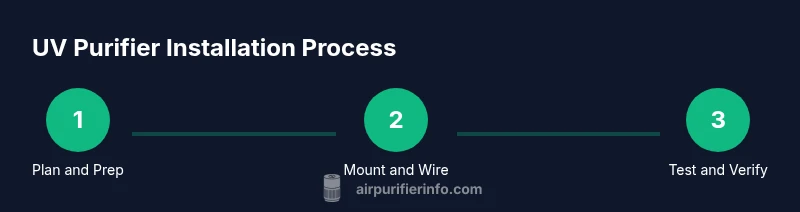
Although the full step-by-step instructions appear in the dedicated STEP-BY-STEP block, here is a concise overview to orient you: select a mounting location, prepare the surface, attach the mounting bracket, install the purifier, connect power and lamp, and test the system. Each of these actions has safety and testing checks you should follow in order.
Authority sources
For reference, consider consulting these authoritative sources:
- https://www.epa.gov/indoor-air-quality
- https://www.cdc.gov/niosh/topics/uv-germicidal/
- https://www.osha.gov/publications/OSHA3517.pdf
Air Purifier Info recommends cross-checking manufacturer instructions and local codes when performing UV purifier installations.
Tools & Materials
- UV air purifier installation kit(Includes mounting hardware and power adapter)
- Philips #2 screwdriver(Phillips head, appropriate size)
- Cordless drill(Bits for wall anchors)
- Tape measure(Minimum 10 ft)
- Safety goggles(ANSI Z87.1 compliant)
- Wall anchors and screws(Size per mounting bracket)
- Owner’s manual and replacement lamp(Keep on hand for replacements)
- Stud finder (optional)(Locate studs if mounting on drywall)
- Ladder (optional)(If mounting above eye level)
Steps
Estimated time: 45-75 minutes
- 1
Choose mounting location
Select a location with clear airflow, accessible power, and away from high moisture. Verify that the chosen spot does not interfere with doors or daily activities. Use the mount’s template to mark screw positions.
Tip: Prefer wall or ceiling mounts to keep surfaces clear and reduce foot traffic interference. - 2
Prepare mounting surface
Clean the surface and measure to ensure alignment with the mounting bracket. If mounting on drywall, locate studs or use appropriate anchors. Double-check that the surface can support the unit’s weight.
Tip: Drywall anchors are sufficient for light units; for heavier purifiers, locate studs. - 3
Attach the mounting bracket
Drill pilot holes at the marked points and insert wall anchors if needed. Align the bracket and secure it with screws until firmly seated. Check for levelness before hanging the purifier body.
Tip: Use a level during this step to avoid angled installation that reduces efficiency. - 4
Mount the purifier and connect the lamp
Hang or place the purifier on the bracket and secure it according to the manual. Insert the UV-C lamp (if user-replaceable) following the polarity markings, and ensure the lamp is seated correctly behind its shield.
Tip: Never touch the lamp with bare hands; oils can shorten lamp life. - 5
Power up and test
Plug the unit into a grounded outlet. Turn on and verify that the indicator lights behave as described in the manual. Check for unusual noises or vibrations, which may indicate loose fittings.
Tip: Perform a short test run before leaving the unit unattended. - 6
Schedule maintenance
Record lamp replacement dates and filter changes in a log. Clean intake grills and ensure vents remain unobstructed. Replace lamps per manufacturer recommendations to maintain effectiveness.
Tip: Set reminders for lamp replacement to preserve microbial control.
Questions & Answers
What is involved in UV air purifier installation and what does it accomplish?
UV purifier installation includes mounting, wiring, and lamp activation to inactivate microorganisms as air passes through. It should be done with safety shields in place and in accordance with the manufacturer’s instructions.
UV purifier installation involves mounting, wiring, and lamp activation, done safely and per the manual.
Can I install a UV purifier myself, or should I hire a professional?
Many standalone units are homeowner-installable with basic tools. HVAC-integrated or hard-wired systems may benefit from professional help to ensure safety and code compliance.
Most standalone UV purifiers you can install yourself, but for HVAC-integrated units, consider a pro.
Will UV exposure harm me if the unit is properly shielded?
When installed with the enclosure in place and an interlock, direct UV exposure to skin or eyes is avoided. Do not bypass shielding or open the lamp compartment while energized.
If the unit is properly shielded, UV exposure is avoided; never open the lamp compartment while on.
What maintenance is required after installation?
Regular lamp replacement and filter checks are essential. Clean intake grills and ensure vents remain unobstructed. Follow the manufacturer’s replacement schedule.
Change lamps and check filters on schedule to keep the purifier working well.
Will using a UV purifier reduce odors or allergens?
UV purification primarily targets microbes. For odors and particulates, pair UV with a good HEPA filter and regular cleaning of dust and dander.
UV helps with microbes; for odors and allergens use a HEPA filter and cleaning.
What are common mistakes to avoid during installation?
Avoid damp locations, direct sunlight, or blocked vents. Do not use extension cords for high-wattage units. Verify the unit is securely mounted and powered by a proper outlet.
Don't install in damp spaces or block vents, and use a proper outlet.
Can I replace the UV lamp myself?
Many models allow user-replaceable lamps with proper handling. Always unplug the unit and use gloves when changing the lamp.
Yes, in many cases you can replace the lamp by following the manual.
Watch Video
Main Points
- Plan mounting location before tools touch the wall
- Use ozone-free UV-C models only
- Follow manufacturer instructions precisely
- Maintain a regular lamp and filter schedule