Removing Pet Hair from Air: A Practical How-To Guide
Learn proven steps to remove pet hair from air, minimize dander, and improve indoor air quality with HEPA purifiers, routine cleaning, and smart habits for homes with pets.


By the end of this guide, you’ll know how to remove pet hair from air with a proven setup: choose the right purifier, optimize airflow, and establish cleaning routines. You’ll focus on true HEPA filtration, prefilters, and strategic placement to reduce hair particles, dander, and odors in common living spaces. The approach is layered, practical, and scalable for small apartments or larger homes.
Understanding the problem: removing pet hair from air
Pet hair and associated dander can become suspended in indoor air, contributing to irritation and allergy symptoms for many households. Removing pet hair from air isn’t just about one filter; it’s about a layered approach that combines surface cleaning, proper filtration, and careful airflow management. According to Air Purifier Info, effective IAQ improvements come from a true HEPA filter catching fine particles, a prefilter intercepting larger fibers, and a purifier placed to maximize air exchanges. Start by reducing the hair load from surfaces: vacuum floors and upholstery with a HEPA-equipped vacuum, wipe furniture with microfiber, and launder textiles regularly. Then select a purifier matched to room size and noise tolerance. The goal is to minimize recirculation, cut dander exposure, and limit odors—creating a calmer, healthier living space for both people and pets. Realistic expectations: meaningful improvements emerge with consistent use over days, not hours.
How air moves and why pet hair lingers
Hair particles act like lightweight travelers in your home air. They ride on currents created by fans, HVAC systems, doors, and even people moving around. In rooms with poor sealing or obstructed airflow, fibers can recirculate or settle on surfaces rather than exiting through vents. Effective removal relies on aligning purifier placement with typical air paths: central locations for general cleaning, and spots near frequent shedding zones to capture hair as it becomes airborne. A purifier that draws air from multiple directions and pushes purified air back into the room creates a gentle circulation that guides particles toward the filter. The more consistent the air exchange, the less time particles spend in the breathing zone. This is how you start reducing airborne pet hair effectively.
Purifier types and why HEPA matters
Purifiers vary in their filtration and performance. For pet hair and dander, prioritize a true HEPA filter (capturing at least 99.97% of particles at 0.3 microns) in combination with a prefilter that traps larger fibers before they reach the main filter. A high CADR relative to room size translates into faster removal of hair particles. Activated carbon helps with odors but does not replace HEPA for particle capture. If you’re sensitive to noise, look for models with multiple speed settings and an overnight mode. Washable prefilters and easy-to-replace filters make maintenance simpler over time. In short, a properly sized HEPA purifier is the cornerstone of removing pet hair from air. Air Purifier Info emphasizes validating the unit against your room’s dimensions and pet activity.
Accessories and add-ons that help
Some purifiers pair with helpful extras to boost performance. Washable prefilters reduce dirt loading on the main filter, extending life. An activated carbon filter helps with pet odors without compromising hair capture. Use HEPA-sealed vacuum attachments for floors and upholstery to minimize fiber dispersion. A lightweight air quality monitor can provide real-time data on particle levels, guiding running times. Keep spare filters and replacement parts on hand. When used together, these accessories create a more efficient hair-reduction system. As Air Purifier Info notes, having the right accessories reduces friction in daily use and supports long-term IAQ gains.
Cleaning routines that boost air cleanliness
Pair filtration with routine surface cleaning to prevent fibers from returning to the air. Vacuum high-traffic areas daily or every other day with a HEPA-equipped vacuum, focusing on couches, stairs, and pet beds. Wipe surfaces with microfiber cloths to trap fibers rather than scatter them. Launder pet bedding and throw blankets weekly; consider washing curtains or drapes if shedding is heavy. After filter changes, reset the purifier so the new filter starts from a clean baseline. Run the purifier during hours you’re home when pet activity is highest to maximize contact with airborne particles.
Everyday habits to reduce hair distribution
Groom pets regularly—daily brushing can dramatically cut loose hair. Increase laundering during shedding seasons and store fabrics in closed containers to minimize hair migration. Place mats by entryways and use lint rollers to capture fibers at key touchpoints. Position pet beds and toys in an organized zone with minimal clutter to support smooth airflow. If you have multiple rooms, consider zoning purifiers so each area receives adequate coverage. These habits, paired with strong filtration, reduce hair recirculation and improve overall IAQ.
Setup, placement, and running your system efficiently
Place purifiers away from walls and large furniture that could block intake or exhaust. Set units on a stable surface at breathing level for occupants, ideally in rooms where pets spend the most time. Open doors to encourage cross-ventilation when appropriate, but close off overly hair-heavy rooms if airflow is restricted. Use timers or smart plugs to run units during peak activity and sleep times. The total running time depends on room size and shedding loads; plan for 60–90 minutes in small rooms and longer in larger spaces during shedding seasons. Correct placement helps maximize efficiency and comfort.
Measuring progress and knowing when to upgrade
Track improvements with a simple before/after approach: note visible hair on surfaces, odor reduction, and any changes in allergy symptoms. If hair remains noticeable after several weeks of consistent cleaning and purifier use, consider upgrading to a higher CADR model or adding a second purifier to boost coverage. Remember to replace filters on schedule; a clogged or overloaded filter reduces performance. If you notice health improvements in occupants and pets, that’s a strong indicator your IAQ program is working. Upgrades should be based on room size, hair load, and real-world results, not speculation.
Pet health and indoor air quality: long-term benefits
Cleaner indoor air supports comfort and respiratory health for both people and pets. Reducing hair particles and dander can lessen itching, sneezing, and eye irritation in sensitive households. The Air Purifier Info team recommends a balanced approach: reliable filtration, consistent maintenance, and proactive hair reduction strategies at the source. Grooming, laundering, and surface cleaning should run in parallel with purification for sustained IAQ gains. The payoff is not just a cleaner environment, but a more livable, pet-friendly home with fewer irritants and healthier air all around.
Tools & Materials
- True HEPA air purifier(Select one with CADR appropriate for room size (e.g., 200+ CFM for medium rooms))
- Pre-filter (washable)(Keeps larger fibers from reaching the main filter)
- Extra replacement filters(Stock according to manufacturer schedule)
- HEPA-backed vacuum cleaner(With sealed attachments and HEPA filtration)
- Microfiber cleaning cloths(For dusting surfaces without dispersing fibers)
- Lint roller or pet hair remover(Best for quick surface-shedding checks)
- Air quality monitor (optional)(To track particle levels over time)
- Measuring tape or room size calculator(To size purifier correctly)
Steps
Estimated time: 60-90 minutes
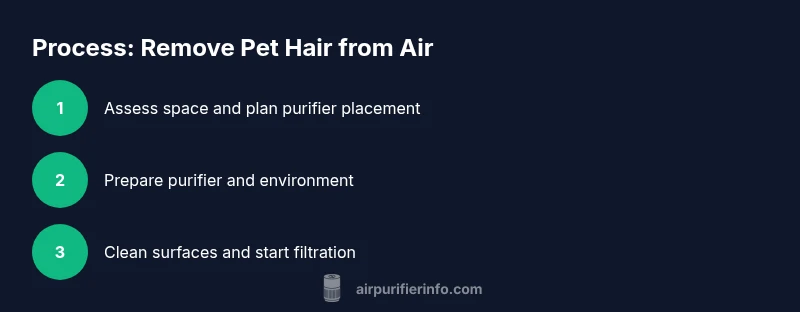
- 1
Assess room and plan placement
Evaluate the room size, pet activity, and traffic to determine the best purifier placement. Consider central locations to optimize airflow and avoid corners where air can stagnate. A good start is to place the purifier where most shedding occurs and where occupants spend time.
Tip: Aim for at least two directions of airflow into the purifier to improve capture efficiency. - 2
Prepare purifier
Remove the packaging, install a fresh filter, and confirm the device is set to a suitable mode (standard daytime cleaning or higher for shedding days). Ensure the unit is plugged into a reliable outlet and that any power-saving features are configured as needed.
Tip: Run on high for 15–20 minutes after setup to purge any residual manufacturing odors. - 3
Clear surfaces and pre-clean
Vacuum upholstered furniture, carpets, and pet beds with a HEPA-filter vacuum. Wipe hard surfaces with microfiber cloths to trap hair rather than disperse it. This reduces the hair load before filtration begins.
Tip: Work slowly in sections to capture fibers that would otherwise become airborne again. - 4
Activate and optimize airflow
Turn on the purifier, set to a comfortable speed, and ensure intake and exhaust paths are unobstructed. If possible, position doors to allow cross-ventilation during cleaning phases to help move air through the system.
Tip: Avoid placing the purifier directly against walls or behind large objects. - 5
Deep-clean pet zones
Vacuum pet zones and frequently used areas—couches, stairs, and beds—with a HEPA-equipped vacuum. Dust and wipe these areas to remove fibers before the purifier cycles. Reassess the layout to see if additional purifiers are necessary for larger homes.
Tip: Change or clean the vacuum filter after heavy shedding to maintain suction. - 6
Maintain and track filter health
Periodically check the main and prefilters for dirt buildup. Replace filters according to the manufacturer’s schedule or sooner if airflow noticeably drops. Reset the purifier after any filter changes to ensure accurate performance.
Tip: Set calendar reminders for filter changes aligned with your usage level. - 7
Incorporate grooming and laundering
Brush pets daily during shedding seasons and launder pet bedding regularly. Clean curtains and throws, especially in rooms with heavy pet activity. The goal is to reduce loose hair at the source.
Tip: Keep grooming tools handy near pet zones for quick daily use. - 8
Monitor progress and adjust
Run the purifier for a consistent period and observe changes in visible hair and odors. If improvement stalls, recheck placement, consider larger coverage, or add another purifier for the space.
Tip: Document changes over 1–2 weeks to judge real gains. - 9
Plan for shedding seasons
Shedding peaks can overwhelm a single purifier. Prepare by increasing running time, upgrading to a higher CADR unit, or adding zoning reducers to maintain airflow balance across rooms.
Tip: Have spare filters ready before shedding peaks to avoid downtime.
Questions & Answers
What is the best type of purifier for pet hair?
A true HEPA purifier with a prefilter is most effective for hair and dander. Look for models with a high CADR relative to room size and a washable prefilter for easy maintenance.
Choose a true HEPA purifier with a prefilter and good CADR for your room size.
Can odors be eliminated along with pet hair?
Activated carbon filters help reduce odors from pets, but they don’t replace the need for a HEPA stage to capture hair and dander particles.
Carbon filters help odors, but you still need HEPA for particles.
How often should I replace filters?
Follow the manufacturer’s replacement schedule. Frequency depends on usage, pet hair load, and room size.
Replace filters per the maker’s schedule; higher usage means more frequent changes.
Will washing fabrics help with air quality?
Yes. Laundering pet bedding, throws, and curtains reduces hair and dander release into the air when they’re disturbed.
Washing fabrics reduces hair and dander release.
Is it better to run the purifier at night?
A quiet overnight setting is fine for sleep, but maximize effectiveness by running during peak pet activity times when possible.
Run during active times; use overnight mode if noise is a concern.
How can I tell if hair is still in the air?
Visual checks, odors, and, if available, an air quality monitor can indicate remaining particles. Adjust placement or run time if you still notice fibers.
Watch for hair on surfaces or use a monitor to assess particle levels.
Watch Video
Main Points
- Choose a properly sized HEPA purifier for your room.
- Groom pets and launder fabrics to reduce shedding at the source.
- Position and run purifiers to maximize airflow and particle capture.
- Replace filters on schedule and monitor air quality for improvements.