Air Purifier to Remove Pet Hair: A Practical Guide
Learn how to choose and use an air purifier to remove pet hair, dander, and odors. This guide covers filters, placement, maintenance, and tips for homes with pets to keep indoor air clean.


This guide helps you pick and use an air purifier to remove pet hair efficiently, with practical steps for filtration, placement, and maintenance. You’ll learn which features matter, how to size a unit for your space, and how to sustain performance in a pet-friendly home.
Why pet hair challenges exist and how purifiers help
Pet hair creates more than visible strands. It carries dander, dust, and odors that can linger in the air and settle on furniture. For homeowners evaluating an air purifier to remove pet hair, the goal is to reduce airborne particles quickly while minimizing re-suspension from daily activity. According to Air Purifier Info Team, choosing the right purifier can dramatically cut pet hair and dander while improving overall indoor air quality. In practice, a well-chosen unit with a true HEPA filter and proper placement can capture most hair particles, while a carbon filter helps with odors associated with pets. The result is less shedding on surfaces and a more comfortable living space for both people and furry friends.
Key concepts to grasp include room size versus purifier CADR, airflow direction, and maintenance cadence. Hair particles are light and can circulate if airflow is weak, so you want a purifier that pulls air from the living area and recirculates it through clean filters rather than bouncing air around the room. This section lays the groundwork for practical steps that follow.
Top features for pet hair removal
When shopping for an air purifier to remove pet hair, prioritize features that directly impact hair capture and ease of use. A true HEPA filter consistently traps fine particles, including hair fragments and dander, while a high CADR for dust indicates faster air cleaning. Sealed housings reduce leaks, and a washable or replaceable pre-filter captures larger hair fibers before they reach the main filter, extending filter life. Carbon filters help with pet odors that often accompany shedding. Air Purifier Info analysis shows that models combining true HEPA, sealed design, and strong CADR for dust deliver the best performance in homes with pets.
Other useful features include multiple speed settings, a quiet night mode, and smart sensors that adjust operation based on air quality. For pet owners, easy filter replacement and clear indicators reduce the risk of running a unit with a clogged filter, which can compromise efficiency.
Filter types explained: HEPA, activated carbon, and more
Understanding filters is essential when choosing an air purifier for pet hair. A true HEPA filter captures 99.97% of particles at 0.3 microns, including pet hair fragments and dander. A high-quality activated carbon filter helps absorb odors from litter boxes, shedding areas, or cooking smells that mingle with pet-related scents. Some purifiers include a washable pre-filter that traps hair before it reaches the main filter, which can improve longevity and reduce maintenance costs. Secondary filters like UV-C or ionizers are generally not necessary for pet hair and may add cost or safety concerns; opt for ozone-free designs to avoid irritation for pets and people.
Clean air also depends on filter compatibility and replacement schedules. Always pair HEPA with an appropriately rated carbon layer for multi-pet homes. The right combination reduces both visible hair and invisible odors, improving overall satisfaction with your indoor air quality.
Sizing and placement for pet-heavy homes
Correct sizing is critical to ensure effective removal of pet hair. Start by calculating the room’s square footage and match it to the purifier’s CADR rating for dust. A larger room may require a unit with a higher CADR or multiple devices for even coverage. Place the purifier so that airflow can circulate across the room, not just around a single corner. Avoid placing units directly behind furniture or near walls that could obstruct intake or outflow. Elevate the purifier off the floor if pets frequently lounge nearby to optimize airflow and reduce hair buildup on the floor.
For trusted performance, aim for at least one air purifier per large living area or per bedroom if multiple pets shed across the home. Ceiling height and room layout influence airflow; in open-plan spaces, consider two purifiers or a higher-CADR model to maintain consistent air changes per hour.
Maintenance routines to sustain performance
Maintenance is the key to long-term pet-hair control. Check and replace filters on the manufacturer’s recommended schedule, and keep pre-filters clean to maximize efficiency. Clean the exterior housing and intake grills monthly to prevent hair buildup, which can impede airflow. If you notice reduced airflow or louder operation, inspect and clean the filter or replace it as needed. Keep a simple maintenance calendar and set reminders so you don’t miss changes that can degrade performance.
Avoid using household cleaners on the filter media, which can damage the filter or reduce filtration efficiency. When replacing filters, follow the manufacturer’s instructions to avoid damaging seals or airflow pathways. Regular maintenance not only extends device life but also keeps pet hair and dander levels under control for healthier indoor air.
Real-world scenarios: apartments vs houses
In apartments, compact purifiers with high CADR for small-to-medium rooms are often ideal, especially if you share walls with neighbors who may trigger allergies. In multi-bedroom houses with several shedding pets, you may need either larger-capacity purifiers or a couple of units to ensure comprehensive coverage. In both settings, placement near primary pet zones—such as living rooms and bedrooms—maximizes hair capture and reduces airborne particles. Consider a purifier with a mode that adapts to higher activity times when shedding spikes, like after a pet returns from an outdoor excursion.
In rental homes, portability matters: lightweight units with easy filter access help you relocate during changes in space, while still delivering effective hair capture. For pet owners with severe allergies, pairing a purifier with a fine filter and regular maintenance becomes especially important to minimize allergen exposure.
Cost considerations and value
Budgeting for an air purifier to remove pet hair involves balancing upfront costs with ongoing filter expenses. Entry-level purifiers may offer solid hair removal but often require more frequent filter replacements, increasing long-term costs. Mid-range units typically provide a good blend of CADR, filtration options, and filter longevity. High-end models with sealed housings, larger filters, and smart features can offer superior performance in homes with multiple shedding pets, though the price rises with capability.
When evaluating value, consider the total ownership cost, including replacement filters, energy use, and warranty. A purifier designed for your room size with durable filters and a simple maintenance routine often yields the best long-term savings by maintaining effective pet-hair control and indoor air quality without constant upkeep.
Brand and model selection tips
Focus on models that clearly advertise true HEPA filtration, a method to capture hair fibers, and a durable pre-filter. Check for certifications or independent reviews that verify performance claims. Favor units with easy-to-replace filters, visible indicators for filter life, and quiet operation across speeds. Avoid gimmicks like ionizers or ozone generators that can irritate pets or people.
Since you’re evaluating a purifier to remove pet hair, prioritize CADR ratings for dust and a seal-tight design that prevents hair from bypassing the filter. Compare models based on room coverage, filter replacement costs, and warranty length. Remember that a slightly larger unit or a second purifier in larger homes can drive more consistent results than a single underpowered device.
Edge cases: allergies, pet odors, and multi-pet homes
Some homes have heightened sensitivity due to allergies or asthma. In these cases, selecting a purifier with a true HEPA filter and a robust carbon stage for odor control is especially important. For multi-pet households, odor control becomes more critical; ensure the unit supports frequent filter changes and has a service-friendly design. If you have birds or small mammals, verify that the purifier’s intake locations align with those habitats to avoid creating air currents that push dust toward you.
Air Purifier Info recommends starting with a robust, easy-to-maintain purifier and supplementing with additional units or targeted filtration in rooms with the heaviest pet activity. This approach minimizes pet hair and odors across the home and makes everyday cleaning simpler and more effective.
Tools & Materials
- True HEPA air purifier(Choose a model with a true HEPA filter capable of capturing particles at least 0.3 microns)
- Replacement filters (HEPA and carbon)(Have extra filters on hand; carbon helps with odors in pet spaces)
- Room size calculator or measuring tape(Match purifier capacity to room size in square feet and ceiling height)
- Cord management clip(Keep cords tidy and away from pets and feet)
- Placement markers (painter’s tape)(Mark ideal spots for testing and rotation)
Steps
Estimated time: 60-90 minutes
- 1
Assess room size and purifier capacity
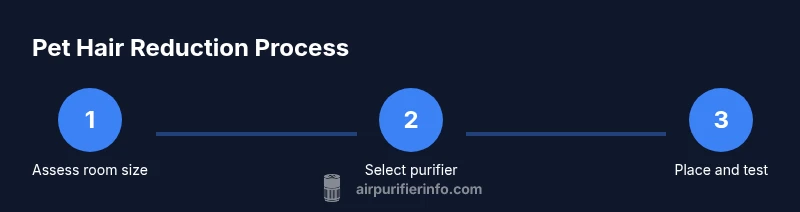
Measure the room area in square feet and compare it to the purifier’s CADR for dust. Ensure the unit’s capacity aligns with the space you intend to treat so air changes per hour are sufficient to capture pet hair particles.
Tip: Use a room size chart from the manufacturer to confirm you’re not over- or under-sizing the purifier. - 2
Unbox and inspect the purifier
Unpack the device and verify the filter is properly seated. Check for any shipping damage and ensure the power cord is intact before installation.
Tip: Remove packaging carefully to avoid disturbing seal areas or filters. - 3
Install or verify the filter
If new, install the true HEPA filter and any carbon or pre-filters per the manual. Ensure seals are tight and that airflow directions match the model’s design.
Tip: Never operate with a loose or misaligned filter; it can bypass filtration. - 4
Choose placement for optimal airflow
Place the purifier in a central location or near main pet activity zones so air circulates through the room. Elevate if pets spend time on furniture to maximize intake exposure.
Tip: Keep at least a few inches of clearance on all sides for maximum airflow. - 5
Power up and configure initial settings
Plug in, select a standard mode, and set an appropriate fan speed based on room noise tolerance and shedding intensity. Enable any auto-mode features if available.
Tip: If you have sleeping pets, use the night or quiet mode to minimize disruption. - 6
Run for initial period and observe
Run the purifier for 24 hours to establish baseline air changes and observe performance. Note any hotspots or areas with visible hair accumulation that may benefit from repositioning.
Tip: If you notice overheating or loud grinding, pause and inspect the filters. - 7
Schedule ongoing maintenance
Set reminders to inspect and replace filters per the manufacturer’s recommended interval. Keep spare filters on hand to avoid gaps in filtration.
Tip: Label maintenance dates on a wall calendar or digital reminder. - 8
Clean and maintain the pre-filter
Remove and wash or vacuum the pre-filter as required to prevent hair buildup. Dry thoroughly before reinstalling to maintain seal integrity.
Tip: Check the washable pre-filter monthly during heavy shedding seasons. - 9
Rotate placement for coverage
If multiple rooms are involved, rotate the purifier’s location to cover different zones and ensure even air treatment. This reduces pet hair accumulation across surfaces.
Tip: Create a simple rotation map to track movements over weeks. - 10
Evaluate results and adjust
After a week, reassess hair levels and odors. Adjust placement, speed, or the number of units if needed to achieve better coverage.
Tip: Document changes to identify what configuration yields best results.
Questions & Answers
What features matter most for pet hair removal?
True HEPA filtration, high CADR for dust, a sealed housing, and an easy-to-change pre-filter are the most important. Odor control helps in homes with multiple shedding zones.
Look for true HEPA, high CADR for dust, and sealed housings for the best pet hair removal.
Can one purifier remove hair from textiles like furniture and cushions?
A purifier reduces airborne hair and dander, but removing hair from fabrics is aided by regular vacuuming and lint rollers. A purifier helps keep re-deposition down by capturing hair before it becomes airborne.
It helps keep hair in the air down, but you still need fabric cleaning for textiles.
Is it better to have one large unit or multiple smaller units for pet hair?
For larger spaces or multi-room homes, multiple units often provide better coverage and more consistent air changes. In smaller apartments, a single high-CADR purifier can be sufficient.
Multiple purifiers can cover more area effectively, especially in big homes.
How often should I replace filters in a pet-heavy home?
Follow the manufacturer’s schedule, but in homes with heavy shedding, inspecting every 1–3 months and replacing every 6–12 months is common. Always replace when airflow decreases or you notice odor.
Check filters regularly and replace as soon as you notice reduced airflow or persistent odors.
Will purifiers remove pet odors as well as hair?
Yes, a purifier with an activated carbon or other odor-absorbing filter helps reduce pet-related smells in addition to removing hair and dander.
Yes—odor control is common with the right carbon filter stage.
Are there safety concerns with pets around purifiers?
Choose ozone-free models and avoid devices that emit ionized air with ozone. Ensure cords are out of reach and that pets cannot chew on them.
Use ozone-free purifiers and keep cords away from pets.
Watch Video
Main Points
- Choose true HEPA with high CADR for dust
- Place unit where pets shed most for best results
- Maintain filters regularly to sustain performance
- Consider multiple units for larger homes or multi-room coverage
- Avoid ozone-based purifiers and opt for ozone-free designs