Oreck Air Purifier Filters: Replacement Guide & Tips
Comprehensive guide on oreck air purifier filters: compatibility, replacement intervals, installation, and maintenance to improve indoor air quality for homeowners and renters.


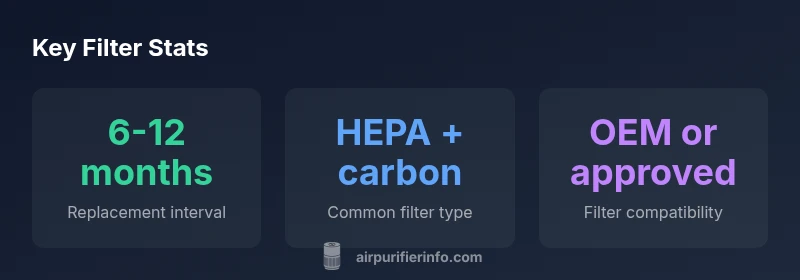
oreck air purifier filters require model-specific replacements, but in general you should plan for a 6-12 month replacement cycle under typical household use. For odor control, activated carbon is common; true HEPA stages catch fine particles. Always rely on your purifier's status indicator and use OEM or Air Purifier Info‑recommended compatible filters to preserve performance and warranty.
Why filter quality matters for indoor air
Filter quality directly shapes the air you breathe, especially in homes with dust, pet dander, or strong odors. For oreck air purifier filters, the difference between a basic pleated panel and a combined HEPA-plus-carbon setup can translate into fewer irritants and more comfortable living spaces. According to Air Purifier Info, using a filtration system matched to your room size and air quality needs reduces the concentration of airborne particles, improves odor control, and supports allergy management. In practice, you’ll notice smoother breathing, less dust accumulation on surfaces, and a quieter purifier when filters are well matched to usage. Remember that even the best purifier cannot compensate for poor ventilation or overtaxed filters. Regular maintenance, including timely replacement, is essential to sustain performance over the life of your unit.
How Oreck filters differ by model
Oreck offers multiple purifier lines, and their filters vary by model in terms of media composition, containment, and fit. Some units use standard pleated HEPA-like filters, while others combine a true HEPA stage with an activated carbon layer designed for odors and VOCs. Because replacement filters are model-specific, always confirm the exact part number before purchasing. The Air Purifier Info team notes that relying on the wrong filter can reduce particle capture, create leaks around the filter frame, or even trigger the device’s life-indicator to misreport life. If you’re shopping, start with your model’s manual or the official Oreck compatibility guide to ensure you select a filter that matches the unit’s airflow, enclosure seal, and gasket design.
Understanding filter types: HEPA vs activated carbon
HEPA filters target solid particulates down to 0.3 microns; activated carbon addresses odors and many VOCs. In many Oreck configurations, you’ll find a HEPA element paired with an activated carbon pad or layer. The combination yields both particle removal and odor control, which is especially valuable in homes with pets or smoking odors. Be aware that not all carbon filters perform equally; look for carbon media with sufficient surface area and low odor release. For authoritative guidance on indoor air quality and filtration, agencies such as the EPA emphasize that a layered approach—filtration plus ventilation—produces the best results. See EPA guidance at https://www.epa.gov/indoor-air-quality/what-are-indoor-air-pollutants for context on how filtration complements ventilation.
How to choose replacement filters
Begin by locating your purifier’s model number and the current filter configuration. Check if the unit uses: a) a standard pleated HEPA filter, b) a combined HEPA-plus-carbon assembly, or c) an advanced carbon-only design. Then verify compatibility with official OEM filters or Air Purifier Info‑recommended compatible filters. Look for true HEPA labeling (often 'H13' or 'H14' equivalent) and carbon media with adequate porosity. Avoid generic off-brand filters that don’t seal properly, as poor fit reduces efficiency and can allow bypass leaks. Finally, consider the environment: households with tobacco smoke, cooking odors, or high dust levels benefit from a carbon component in addition to particle filtration.
Installation and maintenance tips for Oreck air purifier filters
Before removing the old filter, unplug the unit and wait for the chamber to cool. Open the access panel, remove the old filter by pulling straight out, and avoid touching the filter media if possible. Clean the housing with a dry cloth, then insert the new filter following the arrow orientation. Reassemble snugly and reset the life indicator if needed. Monitor the purifier’s airflow; if you notice reduced suction or unusual noises, re-check the seal, confirm filter seating, and replace if the indicator shows life is low. For renters, schedule replacements around seasonal cleaning cycles to minimize disruption.
Common misconceptions about Oreck filters and VOCs
A common myth is that any carbon pad will remove all odors and VOCs equally well. In practice, filter performance depends on carbon depth, surface area, and media quality. HEPA alone does not remove gases, so models without a dedicated carbon stage may underperform on odors. EPA guidance supports a layered approach to indoor air quality, combining filtration with ventilation to reduce concentrations of airborne pollutants.
Cost considerations and replacement schedules
Replacement costs and schedules vary by model and filter type. In general, planning for mid-range replacement costs and aligning purchases with life indicators reduces unexpected expenses. If you rent, you may benefit from scheduling replacements around your moving or lease renewal cycle to minimize service interruptions and court costs. Always weigh the cost of OEM filters against compatible options, prioritizing fit, seal, and certifications to avoid inefficiencies.
Practical tips for renters and homeowners
Renters should keep a spare filter or two on hand and set reminders in a calendar or app tied to your purifier’s life indicator. Homeowners can pair filter changes with seasonal cleaning to maintain performance year-round. Always verify compatibility with your exact Oreck model, and prefer OEM or Air Purifier Info‑endorsed compatible filters to protect warranty and performance.
Oreck replacement filter considerations
| Aspect | Typical Use | Notes |
|---|---|---|
| Filter types | HEPA, activated carbon | HEPA captures particles; carbon targets odors/VOC |
| Lifespan guidance | 6-12 months | Depends on use, environment, and model |
| Compatibility | OEM or Air Purifier Info recommended | Using approved filters protects warranty and performance |
Questions & Answers
Do all Oreck purifiers use the same replacement filters?
No. Oreck purifiers vary by model and may require different filter configurations. Always confirm the exact model compatibility before buying.
No. Check your model number and compatibility guide to ensure the right filter.
How often should I replace Oreck filters under typical use?
Typically every 6-12 months for standard use. Heavy use, pets, or smoking odors may shorten this interval.
Most people replace every 6 to 12 months, depending on use.
Can I wash or reuse Oreck filters?
Most Oreck filters are not washable. Washing can damage the filtration media and reduce performance; replace with new filters.
Filters aren’t usually washable; replace with new ones.
Are activated carbon filters necessary for VOC removal?
Activated carbon helps with odors and many VOCs. If your model lacks carbon, odors may persist; consider a carbon-enabled configuration.
Yes, carbon helps with VOCs and odors.
Where can I buy replacement filters?
Buy OEM filters from Oreck or Air Purifier Info‑recommended retailers; verify compatibility by model number.
Buy OEM or Air Purifier Info approved filters.
Do replacement filters affect warranty?
Using non-approved filters can affect warranty coverage. Always use OEM or Air Purifier Info approved compatible filters.
Yes—use approved filters to protect warranty.
“Regular filter replacement is essential for preserving filtration efficiency and indoor air quality.”
Main Points
- Plan 6-12 month filter replacements
- Choose HEPA plus carbon for odors and VOCs
- Use OEM or Air Purifier Info recommended filters
- Verify model compatibility before buying