iwave air purifier vs uv light: A balanced comparison
Objective comparison of iwave air purifier vs uv light for home air quality. Learn how filtration, ionization, and UV-C address dust, odors, and microbes to guide your purchase.


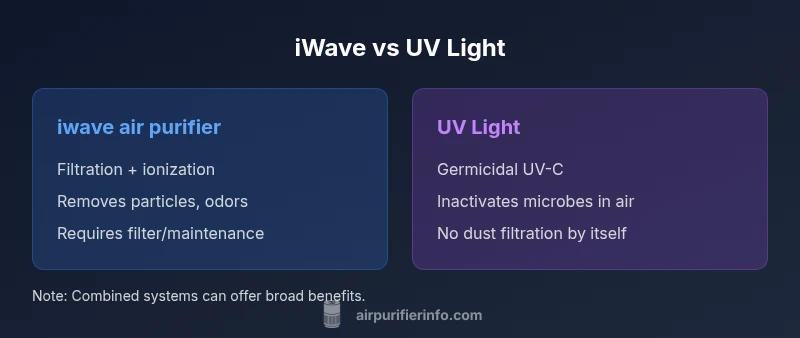
iwave air purifier vs uv light: The core difference is that iWave-style purifiers focus on capturing and neutralizing particles and odors with filtration and ionization, while UV light targets microorganisms with germicidal UV-C. For most homes, a filtration-based system delivers broader benefits, while UV light is best used as a supplement in controlled settings. Overall, choose based on your primary indoor air quality goals.
What are we comparing and why it matters
When evaluating iwave air purifier vs uv light, homeowners must distinguish between filtration-based purification and germicidal irradiation. An iWave-style purifier typically emphasizes removing dust, pollen, and odors from the breathable air, often using a combination of mechanical filtration and ionization. UV light, by contrast, emphasizes inactivating microorganisms in the airstream or on surfaces. Understanding these core differences helps you choose a setup that actually improves your indoor air quality, rather than chasing a single metric like particle count or microbial kill rate. According to Air Purifier Info, the distinction between particulate removal and microbial inactivation is central to most households’ decision, and recognizing your own air-quality priorities is the first step toward a rational choice. The goal is to map technology to real-world needs (dust exposure, odors, allergies, or illness-related disinfection) rather than relying on marketing alone.
How purification technology works: filtration vs UV-C in practice
Filtration-based purifiers pull air through one or more filters—often a pre-filter, a true HEPA or equivalent, and sometimes a carbon filter for odors. Some devices also use ionization or electrostatic precipitation to capture smaller particles. The iWave approach is typically described as combining filtration with ionization to reduce particle adhesion and improve surface cleanliness. UV-C light, on the other hand, is a germicidal strategy. When air is irradiated by UV-C radiation, the genetic material of viruses and bacteria is damaged, rendering them unable to reproduce. However, UV-C does not remove dust, pollen, or odors by itself. If you want broad air cleanup, you usually need a unit that includes filtration alongside any UV components. The Air Purifier Info Team notes that the best outcomes come from pairing a solid filtration stage with controlled, purpose-driven irradiation, rather than relying on UV alone.
The iWave air purifier concept and its practical implications
An iWave-style purifier is typically designed to move air efficiently while employing multiple filtration stages and, in many configurations, an ionization or NPBI (needlepoint bi-polar ionization) component. The practical impact is improved particle capture, reduced odors, and a perceived boost in air freshness. Important caveats include filter replacement costs, maintenance intervals, and the need to ensure the device operates without producing unwanted ozone. In spaces with pets or heavy dust, a good filtration stage often yields the most noticeable benefits. For households with specific infection-control concerns, UV irradiation can complement filtration when used in conjunction with proper safety measures and device design. Air Purifier Info’s perspective emphasizes integrating multiple approaches for robust air cleaning without over-reliance on a single technology.
UV light technology in air treatment: what it does and doesn’t
UV-C light is a proven method for inactivating a wide range of microorganisms, including many bacteria and viruses, as air passes through the irradiation zone. In a typical home setup, UV irradiation targets microbes in the airstream or on exposed surfaces. It does not physically remove dust, dander, or volatile organic compounds on its own, and effectiveness depends on air flow, exposure time, and lamp quality. Safety is a key consideration: consumer UV devices are designed to shield occupants from direct exposure, but improper use or damaged lamps can pose risks. When UV is used in a system, it is generally part of a broader package that includes filtration to handle particulates and odors. The combined approach often yields the strongest overall results for microbial control and irritant reduction.
Side-by-side: core differences at a glance
- Purification mechanism: iWave focuses on filtration plus optional ionization; UV light relies on germicidal irradiation.
- Dust and odor control: Filtration-based systems excel at capturing dust and reducing odors; UV alone does not remove particulates.
- Microbial inactivation: UV-C can inactivate microbes in the air; filtration removes particles that may carry contaminants.
- Safety considerations: Filtration systems generally have minimal direct safety concerns; UV devices require shielding and proper installation to avoid exposure.
- Maintenance: Filtration requires regular filter replacement; UV lamps require periodic replacement.
- Best use: For comprehensive indoor air quality, a filtration-centric purifier with optional UV adjunct is typically preferable for most homes.
Practical considerations for homes: noise, energy, and cost
Noise levels, energy consumption, and ongoing maintenance are practical determinants of long-term satisfaction. Filtration-based purifiers often run with variable speeds; higher fan speeds improve air turnover but raise noise and energy use. UV lamps add minimal ongoing energy cost but require lamp replacement every 12-24 months depending on use and lamp type. If you have a busy household with pets, a unit with high-efficiency filtration and a robust carbon layer can address odors and dust, while any UV component provides a supplemental disinfection benefit when built into a safe, enclosed system. Budget-wise, initial price differences between models usually reflect filtration stages, filter replacement costs, and lamp life. A prudent approach is to estimate yearly filter costs and lamp replacement cycles to compare true total cost of ownership.
Safety, health, and regulatory considerations: reading the fine print
Ozone generation is a potential concern with some ionization-based purifiers, especially models that emphasize aggressive ion output. Look for ozone-free claims and independent testing to ensure safe operation in occupied spaces. UV-C devices designed for home use come with shielding that minimizes occupant exposure; however, bulb integrity and enclosure sealing are critical for safety. For households with children or pregnant occupants, choose devices with certified safety features and avoid DIY modifications. Regulatory standards and third-party testing can help you assess claims about health benefits and safety.
How to decide: a practical decision framework
Start with your primary goal: reducing particulate matter (dust, pollen, dander) or disinfecting microbes. If dust and odors are the main issue, a filtration-based purifier is the logical baseline. If you’re concerned about microbial contamination in spaces like kitchens or bathrooms, consider a system that combines filtration with a UV-C module, ensuring the UV component is properly shielded and maintained. Evaluate room size, airflow, and existing HVAC strategy; larger rooms may benefit from multiple smaller units rather than a single oversized purifier. Finally, weigh maintenance costs: filters tend to be ongoing purchases, while UV lamps require periodic replacements.
Implementation tips and common pitfalls to avoid
- Avoid models that over-promise on disinfection without clearly delineated safety features.
- Check for true HEPA filters and carbon stages when dust and odors are concerns.
- Ensure the unit is appropriately sized for the room to avoid ineffective “short-circuiting” of air.
- Regularly inspect and replace filters; neglect can negate performance gains.
- If you plan to use UV, verify that the system is designed for safe, enclosed operation and follows local health guidelines.
Comparison
| Feature | iwave air purifier | UV light |
|---|---|---|
| Purification mechanism | Filtration + ionization (optional NPBI) | Germicidal UV-C inactivation (no filtration) |
| Particle removal effectiveness | Strong when filtration is high-quality | Limited to in-air disinfection; minimal dust removal |
| Pathogen control | Broad microbial control with filtration plus ionization (design dependent) | Inactivates microbes in air; requires exposure and airflow |
| Ozone risk | Typically ozone-free in modern devices | Low to moderate risk if ozone-generating lamps are used |
| Energy use | Moderate energy with variable fan speeds | Low to moderate; lamp life impacts long-term cost |
| Maintenance | Filter replacements; occasional cleaning | Lamp replacements and cleaning of irradiation chamber |
| Best use | Allergen and odor control with filtration | Targeted disinfection; best as a complement to filtration |
What's Good
- Broad allergen and odor control with filtration systems
- Optional UV components can add disinfection capability
- Lower long-term maintenance when using high-quality filters
- Clear maintenance schedules help predictable costs
What's Bad
- Ionization may raise ozone concerns if not properly designed
- UV-only approaches do not remove dust or odors
- Lamp replacements add ongoing cost for UV modules
- Performance depends on room size and proper placement
The Air Purifier Info team recommends prioritizing a filtration-based air purifier as the baseline for most homes, with UV-C as a supplementary germicidal option where appropriate.
Filtration-based purifiers address dust, pollen, and odors effectively in typical living spaces. UV-C adds a disinfection layer but should not replace filtration. A combined approach—robust filtration with a properly shielded UV module—offers the most reliable indoor air quality.
Questions & Answers
What is the main difference between iWave air purifiers and UV light in air cleaning?
iWave purifiers emphasize particle removal via filtration plus optional ionization, addressing dust and odors. UV light inactivates microbes but does not remove dust or odors on its own. The two technologies serve complementary roles.
iWave purifiers clean the air by filtering particles and sometimes ionizing them, while UV light inactivates germs but won’t remove dust by itself.
Can UV light alone clean indoor air?
UV-C can inactivate airborne microbes, but it does not remove dust, pollen, or odors. For practical air cleaning, UV is best used with filtration or within a system that handles particulates.
UV light can kill germs, but it won’t remove dust by itself—use it with proper filtration.
Is UV-C light safe for home use?
Yes, when installed in properly shielded units designed for occupied spaces. Avoid direct exposure and ensure the device meets safety standards and replacement schedules.
In home devices, UV-C is generally safe if the unit is properly shielded and maintained.
Do iWave purifiers generate ozone?
Ozone generation depends on the specific model. Opt for ozone-free designs or devices with clear emission specifications to minimize risk.
Ozone can be a concern with some ionizing technologies; choose ozone-free options.
Which is better for allergy sufferers?
Filtration-based purifiers with a true HEPA-like filter are typically best for pollen, dust, and pet dander. UV light helps reduce microbes but doesn’t address common allergens on its own.
For allergies, filtration is usually the better baseline choice.
How should I choose between ionization and UV sources?
Base the decision on room size, target pollutants, safety concerns, and whether you need dust control or disinfection. A hybrid approach often provides the most balanced outcome.
Think about what you need most—dust control or disinfection—and pick accordingly.
Main Points
- Define your primary air-quality goal first
- Favor filtration-based purifiers for particulates and odors
- Consider UV as an adjunct, not a sole solution
- Account for maintenance costs (filters and lamps)
- Choose ozone-free designs and verify safety certifications