How to Tell If an Air Purifier Is Effective: A Practical Guide
Learn how to determine whether your air purifier is delivering real-world improvements in indoor air quality, with practical tests, metrics to track, and maintenance tips from Air Purifier Info.


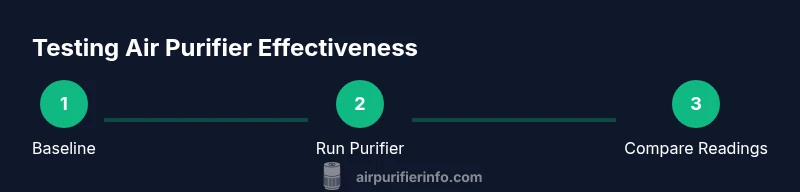
To tell if your air purifier is effective, start with a baseline air-quality reading, run the purifier on a typical setting for 20–30 minutes, then recheck air quality to see a meaningful drop in particles. Also confirm the unit has independent CADR certification and seals are intact. Track noise and energy use for real-world value.
What does 'effective' mean for an air purifier?
Effectiveness for an air purifier translates to the unit’s ability to reduce particle concentrations, remove odors, and lower exposure to irritants in a real living space. In practice, this means the purifier must be appropriately sized for the room, use a legitimate filtration stack (commonly a pre-filter, HEPA filter, and activated carbon stage for odors), and operate with little air bypass. The Air Purifier Info team notes that effectiveness isn’t just about a badge on the box; it’s about how the unit performs in your actual room with your daily activities. Independent testing bodies, consumer reviews, and manufacturer claims should be weighed together to form a realistic picture of how well a purifier works for your dust, odors, allergies, and pet dander.
When people ask how to tell if an air purifier is effective, they’re really asking: does it deliver cleaner air where I live, work, and rest? The quick takeaway is that effectiveness comes from proper matching, verifiable performance data, and ongoing maintenance—three pillars that guide every test and comparison. Air Purifier Info’s methodology emphasizes that you should look for CADR and ACH alignment with your room size, verified via independent testing and real-world use. This ensures the purifier isn’t just loud or energy-hungry; it actually improves daily indoor air quality for occupants.
How to interpret efficacy in real rooms
In real-world terms, effectiveness means a noticeable reduction in common indoor pollutants such as dust, pollen, smoke particles, and volatile organic compounds (VOCs). Achieving this requires more than a high speed on the dial; it requires a harmonious combination of room size, correct placement, seal integrity, and appropriate filtration stages. Seek units with CADR ratings that match or exceed your room’s square footage, and favor models that have undergone independent testing. In the realm of air purification, the proof is in the post-filter data, not just the manufacturer’s promises. Air Purifier Info highlights that many people overlook how placement and room layout affect outcomes—angles, corners, and doors can create stagnation or bypass.
Baseline and post-test readings: the core of a practical check
A practical test starts with a baseline measurement of air quality using a PM2.5 sensor or a consumer-grade monitor. After establishing a stable baseline, run the purifier on a typical setting for 20–30 minutes, then take a second reading. A meaningful improvement should be observable as lower PM2.5 levels, reduced particle counts, or improved overall air quality scores. If readings barely budge or bounce back quickly, consider placement tweaks, filter status, or even a model with a larger CADR for your space. The key is consistency: compare like-for-like conditions (same room, same activity level, same speed) across tests.
Seals, airflow, and safe operation: the hidden drivers of performance
Airflow is only as good as the air actually moving through the purifier. Check for leaks around doors and windows, ensure the unit’s intake is unobstructed, and confirm that all seals are intact. A unit with blocked vents or a loose filter won’t perform to its claimed capacity. Noise and energy use also matter: a purifier that’s loud or power-hungry may be less effective in practice because you’ll turn it down or off. A real-world test should document these non-particle factors alongside pollutant reductions to give you a complete picture of effectiveness.
Scenario-based testing: dust, odors, and pet dander
Different conditions reveal different strengths. For dusty environments, look for consistent PM reductions when the purifier cycles on for long periods. For odors and VOCs, activated carbon stages matter; the ability to lower odor intensity in cooking or smoke events is a practical indicator of effectiveness. Pet dander requires sensitive air quality readings and a filter that captures fine particles without excessive bypass. In each scenario, document baseline and post-test readings, note any odor changes, and assess whether results meet your expectations given the room size and typical activity.
Maintenance and ongoing care: the long-term driver of effectiveness
Even the best purifier loses efficacy if filters are saturated or seals degrade. Create a routine to monitor filter status, set replacement reminders, and keep the surrounding area clean to minimize new dust sources. A well-maintained unit will consistently meet or exceed its stated CADR in practice, not just on the packaging. Air Purifier Info emphasizes that the value of any purifier compounds with its maintenance schedule and how faithfully owners follow it. Regular care sustains airflow, filtration efficiency, and the overall health benefits you expect from cleaner indoor air.
AUTHORITY SOURCES and independent testing
To ground your expectations in credible evidence, consult independent testing and reputable sources. The EPA’s Indoor Air Quality resources explain how filtration and ventilation influence pollutant levels, while AHAM provides CADR-based standards and certification that many quality purifiers seek. Cross-reference manufacturer claims with these benchmarks and with consumer reviews to confirm expected performance in typical living spaces. Credible sources will help you avoid over-reliance on marketing and focus on measurable outcomes like air changes per hour and post-test quality improvements.
Tools & Materials
- PM2.5 air quality monitor (consumer-grade)(Prefer models with PM2.5 readouts and data logging; ensure batteries are fresh and sensors are calibrated.)
- Incense sticks or a smoke source (optional for visualization)(Use away from ventilation to avoid external air bursts; can help visualize airflow paths and leaks.)
- Sound level meter or smartphone decibel app(Useful to gauge noise at typical settings; note acceptable noise for comfort.)
- Measuring tape(For quick room volume estimation if you’re calculating room size manually.)
- Notebook or digital logging app(Record baseline values, post-test values, times, and notes on placement.)
- Power outlet and extension cord (if needed)(Ensure the purifier can run at its standard setting without tripping breakers.)
Steps
Estimated time: 90-120 minutes
- 1
Determine room size and purifier coverage
Measure the room’s length, width, and height to calculate volume. Compare this against the purifier’s recommended room size and CADR rating. If you’re near the upper limit, plan for a purifier with a higher CADR or consider two units for even air changes per hour.
Tip: Use a standard tape measure and log the results in your notes for later reference. - 2
Set baseline air quality reading
Place the monitor in the center of the room and let it stabilize for 5–10 minutes before recording baseline PM2.5 readings. Document current activity (cooking, cleaning, outdoor pollution) as context for the reading.
Tip: Choose a calm period with minimal outdoor air intrusion to obtain a stable baseline. - 3
Run purifier on a typical setting
Turn the purifier to your usual operating speed and run for 20–30 minutes. If you have multiple speeds, pick the one you normally use during the day. Ensure doors and windows remain closed during the test.
Tip: Use the same speed in all tests to maintain comparability. - 4
Record post-test air quality
After the run, take another PM2.5 reading at the same location. Note any changes in odor or visible air clarity and log the time and conditions.
Tip: If readings don’t improve, consider repeating after repositioning the unit or replacing a clogged filter. - 5
Visual airflow check with smoke
If you’re comfortable, use incense or a light smoke source to visualize airflow. Watch for stagnant pockets behind furniture or near walls and check that air is moving through the filtration path rather than bypassing it.
Tip: Do not inhale smoke directly; keep a safe distance and ventilate afterward. - 6
Inspect seals and airflow
Inspect intake and exhaust grills for obstructions. Check for gaps around the door seal and ensure the filter is correctly seated. Leaks can significantly reduce effective air exchange.
Tip: If you hear whistling or feel air escaping around seams, reseat filters or replace seals as needed. - 7
Evaluate noise and comfort
Record the sound level at your typical daily position. Compare how comfortable the purifier is at the selected speed during routine activities like watching TV or cooking.
Tip: If the unit is too noisy for long-term use, try a higher-quality model with better efficiency at a lower noise level. - 8
Compare results to manufacturer claims
Cross-check your post-test improvements with the purifier’s CADR/ACH claims, adjusting expectations based on room size and activity level. Independent testing bodies such as AHAM provide benchmarks worth matching.
Tip: Rely on independent verification rather than marketing claims for decision-making. - 9
Document results and plan next steps
Summarize findings, note any placement changes, maintenance needs, or product upgrades. Decide whether the purifier meets your needs or if a different model or placement improves performance.
Tip: Store your observations for future comparisons and yearly reviews.
Questions & Answers
What is a good CADR rating for my room?
A good CADR depends on your room size and target air changes per hour. Look for units with CADR ratings that cover your space and aim for multiple air changes per hour, rather than merely chasing the highest number.
Choose a CADR rating that matches your room size and gives you several air changes per hour, not just the highest figure.
Can an air purifier remove odors completely?
Purifiers with activated carbon can reduce odors, but complete removal depends on the source, size of the space, and how long the source has been active. Odor control is strongest when filtration is combined with source control and ventilation.
They can significantly reduce odors, but complete removal isn’t guaranteed; source control helps a lot.
How long should I test an air purifier before deciding?
For a meaningful assessment, test across several sessions and different activities, typically totaling 2–3 hours of verified, comparable data. Longer-term testing can reveal maintenance needs and real-world consistency.
Test across a few sessions and activities for a couple of hours to get reliable results.
Does higher power mean better filtration?
Higher power can improve air turnover, but effectiveness also depends on room size, filtration quality, and placement. An oversized purifier may be loud without adding proportional benefit.
More power helps with turnover, but efficiency depends on room size and proper setup.
Is AHAM certification important?
AHAM certification provides independent CADR benchmarks and helps compare purifiers objectively. Look for AHAM-certified models when assessing performance claims.
AHAM certification offers independent, comparable performance data you can trust.
Can purifiers help with viruses or mold?
Purifiers can reduce airborne particles that carry viruses and mold spores, but they are not a standalone solution for mold remediation or disease prevention. Combine filtration with moisture control and source management.
They help reduce particles, but aren’t a standalone mold or virus solution.
How often should filters be replaced for optimal performance?
Follow the manufacturer’s guidance and monitor filter pressure or performance indicators. Timely replacement preserves filtration efficiency and prevents bypass that reduces effectiveness.
Replace filters on schedule and when performance indicators show a drop.
Can placement affect effectiveness more than the unit’s rating?
Yes, placement can dramatically impact results. Position the purifier where airflow isn’t blocked, avoid corners, and keep doors open when practical to maximize air changes.
Placement matters a lot; optimize location alongside a good CADR.
Watch Video
Main Points
- Choose a purifier sized for your room with a validated CADR.
- Use baseline and post-test readings to gauge real-world improvements.
- Place unit for optimal airflow and seal awareness; avoid leaks.
- Maintain filters and seals to sustain long-term effectiveness.