How to Stop Air Filter Whistling: Easy, Safe Fixes
Learn practical steps to stop air filter whistling with reseating, gasket checks, and sealing tips. Air Purifier Info guides homeowners to quiet airflow and protect indoor air quality.


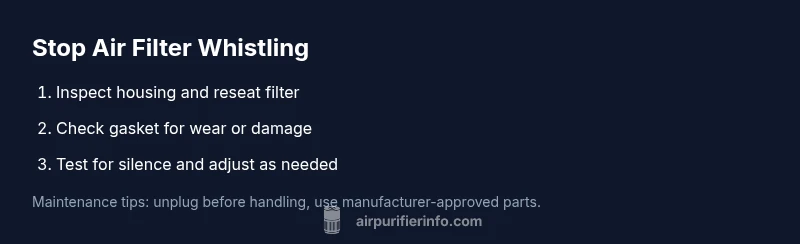
To stop an air filter from whistling, identify the source (airflow seal, cracked housing, or filter misfit) and reseat or replace the filter. Clean or reseal the gasket, tighten screws, and ensure the airflow path is unobstructed. If the whine persists, check for vacuum leaks or use a foam gasket for a tighter seal.
What causes air filter whistling and how to stop
Whistling from an air filter usually means air is escaping through a gap or past a seal rather than flowing cleanly through the filters. The most common culprits are a mis-seated or ill-fitting filter, a worn or damaged gasket, or a cracked housing that creates a small, high-speed air leak. In some setups, the noise comes from the ductwork or from tight bends that create resonance as air moves through narrow passages. Understanding these triggers helps you target fixes quickly. According to Air Purifier Info Team, most whistling originates from seal gaps and mis-seated filters, and the simplest repair is often enough to quiet the noise without replacing components. If you’re dealing with a portable purifier, the issue is frequently the filter itself or the door gasket; for HVAC systems, the housing and duct transitions are more likely the origin.
In all cases, start with the easiest solution first—reseat the filter and inspect the housing—before moving to sealant or gasket replacements. A quiet purifier also tends to operate more efficiently, because a proper seal reduces uncontrolled air leakage, which can cause the system to work harder and use more energy. For homeowners and renters, addressing whistling promptly protects indoor air quality by ensuring the purifier is actually filtering air rather than leaking around the edges. Air Purifier Info notes that consistent maintenance is the best defense against recurring noise and reduced filtration performance.
Long-term prevention often comes from a light touch of routine checks: confirm the filter’s orientation matches the manufacturer’s arrows, ensure the door or housing is fully closed, and periodically inspect seals for wear. If you’ve recently replaced the filter and the noise started afterward, double-check the new filter’s thickness and type to confirm compatibility with your device. In many cases, the fix is straightforward and cost-effective.
For families with dust, pollen, or pet dander concerns, a quiet, properly sealed purifier is essential for maintaining indoor air quality. A poor seal can let unfiltered air bypass the filter, negating benefits and possibly aggravating allergies. Keep spare filters on hand so you can swap quickly if you notice persistent noise after reseating. Air Purifier Info’s approach emphasizes diagnostic checks and practical replacements over guesswork.
note
Tools & Materials
- Flathead screwdriver or appropriate driver(Used to open housing or door screws if needed.)
- Replacement air filter (correct model/size)(Check the user manual for exact dimensions and MERV rating.)
- Foam gasket or sealing gasket(Optional if the current gasket shows wear or is missing.)
- Silicone sealant or weatherstripping (optional)(Use only where manufacturer recommends; avoid sealing all air paths unless directed.)
- Clean cloth(For wiping away dust and cleaning gasket surfaces.)
- Vacuum with brush attachment(Helpful for cleaning dust from the housing channels.)
- Mild soap and water(For cleaning filter seals and accessible mating surfaces when removing the filter.)
Steps
Estimated time: 40-70 minutes
- 1
Power down and locate the filter housing
Unplug the unit to avoid any shock and locate the filter compartment. If you’re dealing with an HVAC filter, turn off the furnace or switch off the circuit for safety. This step ensures you can safely inspect the filter and sealing surfaces without airflow.
Tip: Always unplug before handling electrical components to prevent shocks. - 2
Remove and inspect the filter
Carefully remove the filter and check both sides for warping or damage. If the filter is misshapen or wet, replace it rather than attempting to reseat. Also look at the edges of the filter frame to see if they sit evenly in the housing.
Tip: Note the filter type, direction of airflow, and frame condition to avoid reinstallation mistakes. - 3
Reseat the filter and check the seating
Reinsert the filter with the correct orientation as indicated by the arrows on the frame. Ensure it sits flush against the gasket and that the sides are fully aligned with the housing walls. A slight tilt or partial seating can cause air to bypass the filter and produce whistling.
Tip: You should feel the filter settle into place with firm, even pressure. - 4
Inspect and replace seals or gaskets as needed
Look for cracks, tears, or hardening on the door gasket or foam seal around the housing. If you notice wear, replace the gasket or add a thin gasket tape where the seal contacts the housing. A damaged gasket is a common cause of air leaks that create whistle sounds.
Tip: Use compatible gasket material; avoid over-tightening which can compress and deform seals. - 5
Reassemble and test for noise
Close the housing and secure all latches or screws. Restore power and run the unit at low to medium speed and listen for whistle. If the noise continues, proceed to step 6 for additional sealing adjustments or consider a professional check.
Tip: Test at a lower speed first; many noises vanish once the system reaches steady airflow. - 6
Advanced: sealant or structural adjustments
If whistling persists after reseating and gasket replacement, apply manufacturer-approved sealant to joints or transitions, or install weatherstripping along the door edge where permissible. Do not seal off all airflow paths; you may affect performance and safety.
Tip: Follow manufacturer guidelines for sealant use to prevent voiding warranties.
Questions & Answers
What causes air filter whistling in most systems?
Whistling is usually caused by air escaping through gaps around the filter frame or through damaged gaskets. Mis-seated filters and cracks in the housing are common culprits. Addressing these issues first often stops the noise.
Whistling typically comes from gaps around the filter or worn seals, so start by reseating the filter and inspecting gaskets.
Can I apply duct tape or sealant to fix whistling?
Using generic tape on air paths is not recommended unless the manufacturer approves it. Sealant or weatherstripping should be used in accordance with the device’s manual. Improper sealing can impair airflow or create new leaks.
Only use manufacturer-approved sealants; improper sealing can affect performance.
How long should I test after reseating a filter?
Run the device at a low speed for 5-10 minutes after reseating or sealing to listen for ongoing whistles. If it remains quiet, the fix likely worked. If noise persists, proceed with gasket replacement or professional inspection.
Test for several minutes on a low setting to confirm the fix.
When should I replace the entire filter vs. the housing?
If the filter is deformed or if the gasket is torn beyond repair, replace the filter and the gasket. If the housing itself is cracked, you may need a replacement housing or professional service.
Replace worn parts; a cracked housing usually requires a professional replacement.
Is whistling a sign of reduced filtration efficiency?
Yes—whistling can indicate air is bypassing the filter, reducing filtration efficiency. Reseating and sealing recommendations restore proper airflow and improve air quality.
A whistle often means air is bypassing the filter, so fix seating and seals to restore performance.
Watch Video
Main Points
- Identify the source of whistle before acting
- Reseat or replace the filter to fix misfit issues
- Check and replace worn gaskets; seals matter
- Test after each fix to confirm silence
- Use manufacturer-approved methods to avoid warranty issues
- Keep spare filters and seals for quick maintenance