How to Get an Air Purifier for Free: A Practical Guide
Discover legitimate, ethical ways to obtain a no-cost air purifier through manufacturer programs, charitable initiatives, and verified giveaways, with practical steps to verify offers and protect your household.


This guide shows how to get an air purifier for free through legitimate channels like manufacturer programs, charity initiatives, and verified giveaways. You'll learn where to look, how to qualify, and how to avoid scams. The steps below help homeowners and renters improve indoor air quality without upfront costs while keeping safety first.
How to get air purifier for free: practical path
If you're researching how to get air purifier for free, you’re not alone. Many homeowners and renters want clean indoor air without paying upfront, and legitimate programs exist. According to Air Purifier Info, the best approach is to target official manufacturer trials, charity initiatives, and respected giveaways rather than unverified offers. This first section lays the foundation: understand where free purifiers come from, why programs exist, and how to participate responsibly. Always start from trusted sources and document every step so you can verify eligibility and track deadlines.
By treating the search as a process, you can align your goals with the options that genuinely help improve air quality in your home. If you have sensitive lungs, allergies, or pets, focus on programs that emphasize HEPA-filter performance and VOC reduction. The Air Purifier Info team found that legitimate programs often require you to provide some information about your living situation and air quality concerns, but they don’t typically ask for money upfront. This distinction is crucial to avoid scams.
Where to look for legitimate free air purifiers
Start with official manufacturer campaigns. Most large brands run seasonal trials, product tester programs, or donation drives to gather feedback and showcase real-world performance. Check their official websites, press releases, and social channels rather than third-party sites. You can also sign up for brand newsletters to receive invites when new tester slots open. Next, explore charitable organizations and community programs that provide durable medical equipment or home improvement resources. Hospitals, clinics, and housing nonprofits sometimes partner with manufacturers for loaner or donated units. Finally, keep an eye on government or university initiatives that study indoor air quality; these programs may distribute devices as part of a research project or environmental health outreach.
Eligibility, requirements, and how to apply
Free purifier programs vary, but common requirements include being a homeowner or renter in an occupied residence, proof of address, and a brief description of air quality concerns. Some offers target families with limited income or households with at-risk individuals. Prepare to provide contact details, a short justification, and consent for data collection or follow-up questionnaires. Applications may be online forms, email pitches, or portal submissions. In many cases you'll need to complete a short survey describing your home layout, ventilation, and whether you currently use an air purifier. Be truthful and precise; inaccuracies can disqualify you later. If you’re in a multi-person household, designate a single point of contact to reduce confusion.
How to evaluate offers and avoid scams
With dozens of listings, it’s easy to fall for a scam. Start by validating the issuer's official domain, email address, and social profiles; beware free offers from unknown marketplaces. Look for clear terms, no upfront payment, and transparent post-application communication timelines. If a request asks you for credit card numbers, bank details, or a payment of any kind, stop and move on. Verify terms with the brand’s official site or customer service line. Read privacy policies and consider whether data collection is essential for eligibility. Finally, insist on written confirmation of any gift, loan, or trial with an explicit end date and return policy.
A practical, ethical plan to pursue a free purifier
A pragmatic plan blends research, persistence, and documentation. Begin by listing your top three sources—manufacturer trials, charity programs, and university studies. Create a tracking sheet with deadlines, required documents, and contact information. Allocate 30–60 minutes weekly to review new offers and to respond promptly if you qualify. If you receive a rejection, ask for feedback and look for alternative opportunities rather than giving up. Keep notes of every interaction; you may need them if the offer requires follow-up.
What happens after you are approved
Once you’re approved, you’ll typically sign an agreement outlining delivery timelines, installation expectations, and any warranty or care instructions. Some programs require you to share feedback within a set period, or to participate in a short survey or case study. Prepare for a shipping window that can range from a few days to several weeks, depending on inventory and logistics. After delivery, follow setup steps from the provider, register the device for warranty, and keep receipts for any post-purchase maintenance. Always preserve contact details in case you need support.
Alternatives if you can't find a legitimate free offer
If free options don’t materialize, consider inexpensive routes that still minimize cost. Look for refurbished units from reputable sellers, seasonal discounts with price-matching guarantees, or trade-in programs that offer store credit toward a new purifier. Some home-improvement programs or community grants can subsidize purchases for households with specific needs. If air quality remains a concern, an affordable plug-in purifier with a reputable HEPA filter can be a practical compromise. Finally, check whether your local utility offers rebates for energy-efficient devices; even small savings add up over time and can make a bigger purchase more feasible.
Quick tips to stay organized and safe while seeking freebies
- Maintain a simple two-tab folder: one for sources and one for responses. - Use a calendar to track application dates.
- Always verify using official sources; contact customer support through verified channels.
- Do not share sensitive financial information unless the offer is verified and legitimate.
- Keep evidence of all communications and agreements in case of disputes.
- If something sounds too good to be true, it probably is. Trust your instincts and proceed slowly.
A final note on improving indoor air quality while you pursue freebies
Free offers can help, but prioritize actions that reliably improve indoor air quality today. Use doors and windows to improve ventilation when weather allows, vacuum with a true HEPA-equipped machine, and reduce household pollutants by choosing low-VOC cleaners. Even without a free purifier, you can create meaningful, immediate improvements in air quality while you explore legitimate opportunities. The Air Purifier Info team recommends staying vigilant and focusing on verified programs to protect yourself from scams while pursuing your goals.
Tools & Materials
- Computer or smartphone with internet access(Search, apply, and communicate with providers)
- Email address(Registration, confirmations, and program updates)
- Notepad and pen(Track deadlines, responses, and offers)
- Spreadsheet or tracking sheet(Log sources, eligibility, and timelines)
- Consent for data collection(Some programs require opt-in; keep a copy for your records)
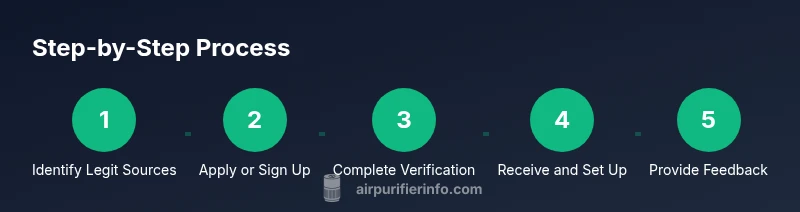
Steps
Estimated time: 2-6 weeks
- 1
Identify legitimate sources
List manufacturer programs, reputable charities, and university or government studies that distribute or loan air purifiers. Use official sites and verified channels to avoid scams. Create a short criteria list for what counts as legitimate (no upfront payment, clear terms, defined timelines).
Tip: Cross-check every source against the brand’s official site before applying. - 2
Prepare your eligibility packet
Gather proof of residence, a brief description of air quality concerns, and basic contact information. Some programs will want a short justification or home layout. Have your documentation ready in digital format.
Tip: Keep a single point of contact to streamline communications. - 3
Submit applications or requests
Submit through official portals, emails, or forms. Attach required documents and complete any requested surveys. Keep confirmations and reference numbers for later follow-up.
Tip: Set calendar reminders for assignment deadlines and response windows. - 4
Follow up and verify
If you don’t hear back within the stated window, send a polite follow-up inquiry. Verify the contact details with official sources if you receive inconsistent information.
Tip: Document every interaction, including dates and names. - 5
Receive, install, and verify
Upon approval, arrange delivery and installation according to the provider’s instructions. Register any warranty and keep the device manuals and receipts for future support.
Tip: Test the purifier for basic operation soon after delivery. - 6
Provide feedback and stay engaged
Complete required surveys or case studies if asked. Provide constructive feedback to help improve the program and keep an eye out for future opportunities.
Tip: Feedback can improve your chances for future offers.
Questions & Answers
Is it common to get an air purifier for free?
Free purifiers do exist, but they are not routine. Legitimate programs are typically targeted and require verification. Always rely on official sources and avoid anyone asking for payment.
Free purifiers do exist, but they are not common. Look for verified programs and never pay to qualify.
What information will I typically need to apply?
Most programs ask for proof of residence, a brief description of air quality concerns, and contact details. Some may request consent for data collection or follow-up surveys.
You’ll usually need proof of address, contact details, and a short note about your air quality concerns.
How long does the process take from application to delivery?
Timing varies by program and inventory. It can take from a few weeks to several weeks, depending on eligibility checks and shipping availability.
Timing varies, typically a few weeks to several weeks depending on the program and stock.
Are refurbished or loaner units ever free?
Some programs offer loaner or refurbished units through partnerships. Ensure the source is official and that terms are clearly documented.
Loaner or refurbished options may exist through official programs; read terms carefully.
What should I do if I suspect a scam?
Pause communications, verify the sender’s legitimacy with official channels, and report suspicious offers to consumer protection sites if needed.
If a scam is suspected, stop, verify with official sources, and report it if appropriate.
Can I still improve air quality while seeking freebies?
Yes. Use ventilation, routine cleaning, and low-VOC products to improve air quality today while you pursue legitimate offers.
Improve air quality now with ventilation and clean practices while you pursue offers.
Watch Video
Main Points
- Identify legitimate sources first
- Verify every offer before sharing data
- Track deadlines and required documents
- If you can't find a legitimate option, explore affordable alternatives
- Stay focused on improving indoor air quality while pursuing freebies