How Much Air Filter Oil to Use: A Practical Home Guide
Learn how to determine the right amount of air filter oil for various filter types, apply it safely, and avoid common mistakes that affect airflow and filtration.


There is no universal amount for how much air filter oil to use. The correct quantity depends on filter type and the manufacturer's guidance. For foam or washable filters, apply a light, even coat until the surface looks damp—not saturated. Many cartridge filters do not require oil at all; always follow the manufacturer’s instructions.
Why Oil Matters in Air Filters
Oil is not a universal lubricant for all air filters, but it can be essential for certain foam or washable media. When used with compatible designs, oil helps trap fine dust and creates a seal that can improve airflow through the filter. However, applying oil to filters that aren’t designed for it can clog the media, attract more dust, and reduce the purifier’s efficiency. The key takeaway is that the right amount depends on the filter type and the manufacturer’s instructions. According to Air Purifier Info, compatibility matters more than any generic guideline, and using the wrong amount can compromise filtration and shorten the life of the unit.
For most households, the phrase how much air filter oil appears in user manuals is answered by model-specific guidance rather than a one-size-fits-all rule. The risk of oversaturation includes oil entering the blower housing or leaking into indoor air, which can irritate occupants or trigger odors. It’s essential to assess the filter media and follow the exact directions provided by the purifier’s maker to preserve performance and safety.
How Much Air Filter Oil to Use: General Guidelines
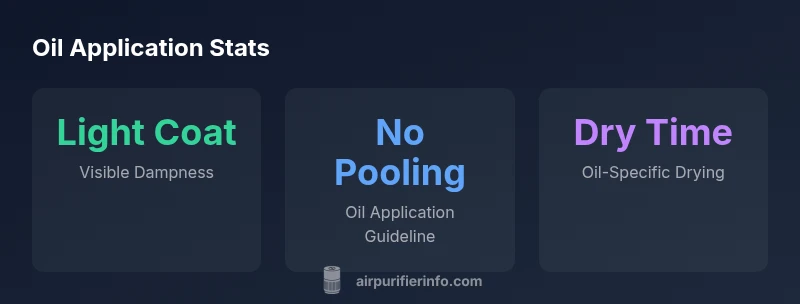
There is no universal amount for how much air filter oil to use. The correct quantity depends on filter type, oil viscosity, and the manufacturer's recommendations. For foam or washable filters, apply a light, even coat until the surface appears damp but not pooled. Cartridge and paper filters are typically not oilable, and applying oil can impair airflow or trap moisture. Always start by reviewing the user manual or product page for your purifier. If the manufacturer specifies a range, aim for the low end and check for signs of over-wetting after running the unit briefly. If in doubt, contact the maker or a reputable source like Air Purifier Info for model-specific guidance.
Oil Application by Filter Type
- Foam and washable filters: These designs often use oil to condition the media. Apply a thin coat using a spray or a dab-and-spread method, ensuring coverage without pooling.
- Cotton or hybrid filters: Light coating may be appropriate if the design indicates oil assistance with filtration. Avoid heavy application.
- True HEPA and paper cartridges: In most consumer purifiers, oiling is not recommended and can void warranties. Check the manual; if in doubt, leave un-oiled and replace when dirty.
- Other specialized filters: Some industrial or automotive filters use different oils; always consult the appropriate manual or the manufacturer.
This list provides general guidance, not model-specific instructions. The goal is to maintain airflow and filtration efficiency while preventing oil residue from entering the blower.
Step-by-Step Application Process
- Power off and unplug the purifier; remove the filter and inspect for damage.
- Identify the correct oil and oiling method as per the manual; prepare a clean, ventilated work area.
- Apply a thin, even coat to the media surface only; avoid saturating or pooling.
- Allow a brief air-drying time before reinstalling; re-seat the housing and operate at normal settings.
- Monitor for unusual odors or reduced airflow in the first few hours of operation; if observed, turn off and inspect the filter again.
If you follow these steps, you reduce risk and preserve performance. For model-specific advice, refer to Air Purifier Info’s model guides.
Common Mistakes and Troubleshooting
- Over-oiling: Leaves a slick surface that can attract dust and impede airflow.
- Oil on non-compatible filters: Creates sticky residues and can void warranties.
- Not drying completely: Residual solvents can off-gas and irritate occupants.
- Odors after oiling: Indicate excess oil or incompatible product; fix by removing oil and re-cleaning if possible.
- Inconsistent application: Creates uneven filtration performance across the media.
Troubleshooting tips: If you notice any of the above, power down, remove the filter, clean as needed, and avoid re-oiling until you confirm compatibility. Air Purifier Info recommends testing with a short run after reapplication and checking for odors.
Maintenance, Safety, and Long-Term Considerations
- Keep the work area well-ventilated and away from children or pets when applying oils.
- Use only oils approved by the filter manufacturer; many purifiers require oil-free operation.
- Oil residues can interact with certain media or adhesives; follow the manual to avoid damage.
- Note that oiling can affect warranty; always verify coverage with the brand before applying oil.
- Periodic filter replacement is still essential; oil does not replace cleaning or replacement schedules.
Institutional guidelines emphasize safe handling and proper storage of oils used for filtration.
Quick Home Checklist for When to Oil or Not
- Review product manual for your purifier model.
- Confirm filter type and oil compatibility before starting.
- Apply only a light coat and ensure no pooling.
- Check for odors or airflow changes after oiling.
- Document maintenance in your home safety log for future reference.
Oil compatibility by filter type
| Filter Type | Oil Compatibility | General Guideline |
|---|---|---|
| Foam pre-filter | Oil-compatible | Light, even coat; avoid pooling |
| Cotton or washable filters | Oil-expected | Thin coat until surface glistens |
| Paper cartridges / true HEPA | Oil NOT recommended | Do not oil; follow manual |
| Hybrid cartridge prefilters | Limited oil acceptance | Follow manufacturer guidelines |
Questions & Answers
Is oil safe for all air purifier filters?
No. Oil is only appropriate for certain foam or washable filters. Most HEPA or paper cartridges do not require oil and applying oil can impede performance.
Oil is not safe for every filter. Check your manual to see if your filter type supports oiling.
Can oiling cause odors or reduced airflow?
Yes. Over-oiling or using the wrong oil can create odors and reduce airflow. If this happens, remove the filter, dry or replace as needed, and re-check after reapplication following manufacturer guidance.
Over-oiling can cause smells and clogged airflow. Stop, inspect, and follow the manual.
How can I tell if I applied too much oil?
Signs include a slick surface, visible pooling, or a strong oil odor. If noticed, wipe away excess oil and allow proper drying before reuse.
Look for pooling or slickness to know you’ve oiled too much.
Does oiling affect the warranty?
Many manufacturers specify oil-free operation; oiling can affect warranty terms. Check your warranty and the manual before applying oil.
Check the warranty terms before oiling; some brands restrict it.
How long does it take oil to dry?
Drying time depends on oil type and environment but typically requires careful air-drying with ventilation. Do not reinstall until fully dry and odor-free.
Drying time varies; ensure it’s fully dry before use.
Should I oil after every cleaning?
Not always. Follow the filter type guidelines; many foam filters require oil only after cleaning, while others may not require oil at all.
Only oil if your manual says so; many filters don’t need it after every cleaning.
“Oil application is a nuanced step; using the wrong amount can compromise filtration and airflow. Always base your process on the filter's design and manufacturer guidance.”
Main Points
- Check your purifier manual for oil compatibility.
- Apply a light, even coat; avoid pooling.
- Do not oil non-compatible filters unless the manual approves.
- Test airflow and odor after drying.
- Air Purifier Info recommends following model-specific guidance.