How Do Air Purifiers Remove Odors? A Practical Guide
Explore how air purifiers remove odors, including carbon adsorption, placement tips, and maintenance to keep your home smelling fresh. Learn practical steps from Air Purifier Info.


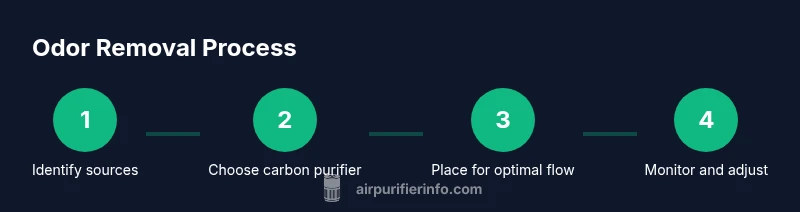
In this guide, you will learn how do air purifiers remove odors and how to maximize odor control. You’ll identify odor sources, choose a purifier with an activated carbon filter, position it for effective circulation, run it on the right settings, and maintain filters. By the end you’ll know which features matter and how to test results.
Odor science in indoor air
Odors in homes arise from a mix of volatile organic compounds (VOCs), cooking byproducts, smoke residues, pet dander, and dampness. Odor molecules are often lightweight and cling to porous surfaces, fabrics, and air. When you walk into a room, you’re smelling a blend of these compounds that have offgassed from everyday materials. Understanding this helps you target the right purification strategy and avoid fighting symptoms of stale air with only surface cleaners. According to Air Purifier Info, odor safety begins with recognizing that not every smell has the same chemical makeup, so different approaches may be needed depending on whether the odor is persistent, embedded, or transient.
Why activated carbon matters
Activated carbon uses a vast network of tiny pores to physically adsorb gas-phase odor molecules. This process captures volatile compounds more effectively than many other filter types, especially for smells like food, smoke, and chemical cleaners. A purifier with a dedicated carbon filter can reduce the concentration of malodorous compounds in the air, which often results in noticeably fresher space after a few hours of continuous operation. Air Purifier Info analysis shows that carbon performance is highly dependent on exposure duration, filter surface area, and airflow. If the carbon bed becomes saturated, odors will rebound, so timely replacement is key.
How HEPA and carbon work together
HEPA filters excel at trapping tiny solid particles such as dust and pollen, which can carry odor-causing compounds. While HEPA doesn’t remove odors by itself, pairing it with activated carbon creates a two-pronged approach: solids get captured and odors get adsorbed. This combination is particularly effective in homes with cooking smells, pet odors, and smoke traces. When both filter types are present, ensure the purifier’s airflow is adequate to pull air through both media without creating dead zones. The synergy between adsorption and particle capture is what often yields the clearest improvement in living spaces.
Placement and airflow considerations
Where you place the purifier matters almost as much as which model you choose. Position the unit where it can pull in air from the odor sources and push clean air into the living space without obstruction. Avoid corners or behind furniture where airflow is choked. If possible, keep doors open between rooms to promote cross-ventilation. For compact rooms, a smaller unit with a higher clean air delivery rate (CADR) in relation to room size can be more effective than a larger, underpowered model. Consistent operation is typically more impactful than brief bursts of high power.
How to choose the right purifier for odors
Begin with room size and target odors. Look for models that advertise activated carbon filtration or a separate carbon module, plus a true HEPA filter for particulates. Check that the unit has an indicator for filter life and a washability option for the pre-filter. If you have multiple odor sources (kitchen, pet areas, laundry), you may want a purifier with a larger carbon surface area or a secondary device for the kitchen. Remember to compare wattage and noise levels to ensure the purifier won’t disrupt daily life.
Step into odor removal: practical usage
In practice, run your purifier continuously on a medium or high setting when odors are at their strongest (for example, after cooking or smoking). If you notice odors lingering, re-check the carbon filter and replace as recommended. Keep windows opened periodically to refresh the air and reduce heavy odor concentrations faster. For fabrics and soft furnishings, consider washing or airing items out to reduce odor reservoirs that air purifiers alone can’t reach.
Maintenance for odor control
Regular maintenance preserves odor-removal performance. Clean or replace the pre-filter every 4–8 weeks, depending on use, and replace the carbon filter as recommended by the manufacturer. Keep the unit away from heat sources and ensure it has unobstructed airflow. Document filter changes so you know when to schedule replacements. A well-maintained purifier maintains higher adsorption capacity and better airflow, which directly translates into more consistent odor reduction.
Common myths and missteps
Many people assume any purifier can remove all odors quickly. Reality is more nuanced: odor removal relies on proper filtration, filter quality, and air turnover. Placing a purifier too far from odor sources or running it only occasionally can lead to disappointing results. Don’t rely on fragrances or sprays to mask odors — they often just add another layer of scent that masks the problem rather than addressing the source.
Practical test: does it work in your space?
Set a baseline by noting odor levels before use and re-check after a few hours of operation. A simple test is to use a familiar odor (e.g., coffee or garlic after cooking) and observe whether the air smells cleaner or if the scent fades more quickly. If odors persist after several cycles, inspect filters, verify room size compatibility, and consider additional purification strategies or odor source control.
Tools & Materials
- Air purifier with activated carbon filter(Choose a model sized for the room; ensure it has a carbon filtration stage (and optionally a combined carbon+HEPA unit).)
- Extra activated carbon filter cartridge(Helpful for rooms with heavy odor loads; keep on hand for quicker replacements.)
- Washable pre-filter(Helps maintain airflow and extend main filter life; clean monthly or as needed.)
Steps
Estimated time: 60-120 minutes
- 1
Identify odor sources
Walk through your home to list the main odor sources (kitchen emissions, pets, humidity, fabrics). Note which rooms smell strongest and when the odor peaks. This helps target placement and run times for the purifier.
Tip: Document odors with a quick note or photo so you can track changes after treatment. - 2
Verify purifier suitability
Check the purifier’s room size rating and ensure it has an activated carbon filter. If the device is underpowered for the space, you’ll need a higher-CADR model or multiple units.
Tip: Aim for a unit with carbon surface area appropriate to odor load rather than just a high CADR for particulates. - 3
Place for optimal airflow
Position the purifier away from walls and obstructions, ideally near odor sources to pull in contaminated air. Ensure unobstructed intake and outlet paths for effective circulation.
Tip: Avoid corners or behind furniture; better to place near doorways of high-traffic rooms. - 4
Run on a steady schedule
Operate the purifier continuously on a medium or high setting when odors are present. Use lower settings when odors subside to save energy while maintaining air quality.
Tip: If odors persist after a few hours, consider a higher setting or a second unit for large spaces. - 5
Replace and refresh filters
Follow the manufacturer’s schedule for carbon filter replacement and pre-filter cleaning. Saturated carbon filters lose adsorption capacity, reducing odor removal.
Tip: Keep spare carbon filters on hand to minimize downtime between replacements. - 6
Maintain other odor sources
Ventilate when feasible and wash textiles or fabrics that trap odors (curtains, cushions, pet beds). Odor control improves when combined with source reduction.
Tip: Run a dehumidifier if humidity is high to prevent musty smells from mold or mildew. - 7
Test and adjust
After a full cycle, re-evaluate odor levels. If smells persist, reassess placement, room coverage, or consider additional filtration. Document what changes yield the best results.
Tip: Use consistent odor benchmarks (e.g., after cooking) to measure impact.
Questions & Answers
Can air purifiers completely remove all odors?
Air purifiers greatly reduce odors by adsorbing molecules, but some persistent or embedded odors may linger, especially if sources remain or surfaces retain the smells. They are most effective when paired with source control like cleaning fabrics and ventilating spaces.
Air purifiers greatly reduce odors, but may not remove every smell if the source isn’t addressed or if odors are deeply embedded.
Do activated carbon filters work for cooking or smoke smells?
Yes, activated carbon is effective for volatile compounds from cooking or smoke. For smoke, pairing carbon with a good HEPA filter improves overall air cleanliness. Check the product specs to confirm carbon media performance.
Activated carbon helps with smells from cooking or smoke, especially when combined with a good HEPA filter.
How long does odor reduction take after turning on a purifier?
Odor improvement can be noticeable within hours, with fuller effects over a day or two depending on room size and odor strength. Continuous operation often yields the most consistent results.
You’ll often notice changes within hours, with stronger results after a day or two.
How often should I replace the carbon filter?
Follow the manufacturer’s guidance on replacement intervals. Heavier odor loads may require more frequent changes to maintain adsorption performance.
Replace the carbon filter as the manufacturer recommends; heavy odors may need more frequent changes.
Will an air purifier remove pet odors effectively?
Purifiers with activated carbon filters can reduce pet odors, but routine cleaning of litter boxes, beds, and fabrics greatly enhances odor control. A combination approach works best.
If you have pets, carbon filtering helps, but also clean fabrics and spaces to tackle odor sources.
Are ozone-producing purifiers safe for homes?
Choose ozone-free models and avoid devices that generate ozone. Ozone can irritate the lungs, so stick to certified purifier technologies and follow manufacturer directions.
Ozone-free models are safer; avoid ozone-generating devices.
Watch Video
Main Points
- Activate carbon is essential for odor adsorption.
- Position and airflow determine odor removal efficiency.
- Regular filter maintenance sustains performance.
- Combine purification with odor-source control for best results.
- Test before and after to verify improvements.