Health Protect Air Purifier Guide 2026: Buy Smart Tips
Discover a Health Protect Air Purifier guide for 2026. Learn to compare filters, noise, energy use, and room coverage to protect your home's indoor air quality.


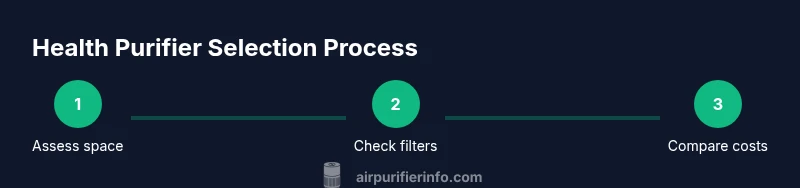
You will learn how to choose a Health Protect Air Purifier that fits your room size, budget, and air quality goals. This guide covers filtration options, CADR, noise, energy use, maintenance, and safety considerations for healthier indoor air. We'll compare models, explain common terms, and provide a step-by-step process you can follow.
Why health matters when choosing an air purifier
Indoor air quality directly affects health, especially for allergy sufferers, asthma patients, and pet owners. A Health Protect Air Purifier can reduce exposure to dust, pollen, pet dander, cooking odors, and VOCs, but effectiveness depends on sizing, filtration, placement, and maintenance. According to Air Purifier Info Team, the most protective setups combine true HEPA filtration with an activated carbon stage and a clear maintenance plan. In practice, this means setting realistic expectations and using the purifier as part of a broader air-cleaning strategy—minimizing sources, improving ventilation, and keeping surfaces clean. When you invest in a purifier, you’re choosing a tool that helps reduce microscopic irritants that trigger coughing, wheezing, itchy eyes, or nasal congestion. For many homes, a well-chosen purifier provides noticeable relief during peak pollen seasons or after cooking or smoke events. The goal is steady, reliable air cleaning, not sporadic bursts of high performance. Air Purifier Info analysis shows that performance depends as much on how you use the device as on its stated specifications, so placement and routine use matter as much as the model you buy. In this guide, we’ll walk through practical steps to find a Health Protect Air Purifier that fits your space, lifestyle, and health priorities.
How to size and position for health benefits
Choosing a purifier for health starts with the room where it will run. First, measure the space and calculate how much air the device must clean per hour, then select a model whose recommended room size aligns with your actual space. The best purifiers for health typically advertise a coverage rating that corresponds to your room's size, and you should position the unit in a central location rather than tucked into a corner. Avoid placing purifiers directly against walls or behind furniture, which can impede airflow. If possible, set the unit near the center of the living area or at the end of a hall that connects dirty zones (kitchen, entryways, pet areas) to the rest of the home. Ensure there is a clear path for air intake and discharge, and rotate the purifier during longer cleaning days to balance air flow. In small rooms, a compact unit placed higher on a stable surface can pull air from multiple angles; in larger spaces, you may need two smaller units or a higher-capacity model. As you compare options, read the manufacturer's guidance on suitable room sizes and confirm how long it will take to refresh air to a noticeable degree in real-world conditions. This practical approach helps you choose a Health Protect Air Purifier that truly fits your space and daily routine.
Filtration technologies and what they mean for health
Most health-focused purifiers rely on a combination of filters to remove particles and odors. True HEPA filtration captures particles as small as 0.3 microns with high efficiency, which includes common irritants such as dust, pollen, and pet dander. An activated carbon stage helps reduce odors and many VOCs released from cooking, cleaning products, and off-gassing furniture. A pre-filter protects the main filter by catching larger debris, extending the life of the HEPA stage. Some models include ionization or photocatalytic oxidation; however, these features can produce ozone or other byproducts. Look for ozone-free claims and independent testing when evaluating these options. When possible, verify that the purifier's labeling shows a credible HEPA rating and a separate carbon stage. For households with sensitive occupants, prioritize models that clearly separate filtration stages and provide easy filter access for maintenance. The Health Protect line typically emphasizes a balanced approach: robust particle filtration paired with effective odor control, and a straightforward maintenance schedule. Air Purifier Info analysis indicates that filtration quality and user-friendly design correlate with real-world health benefits, not just advertised specifications.
Noise, energy use, and long-term ownership costs
Air purifiers vary in noise depending on fan speed and design. If you plan to run a purifier in a bedroom or home office, look for models with a quiet setting or an eco mode that reduces energy use at low speeds. Energy costs matter over time, but the difference between models is typically small compared with filter purchases. Check the filter replacement schedule and the price of standard filters; higher-quality HEPA and carbon filters may cost more upfront but last longer. Many manufacturers offer multi-year warranties and service plans, which can lower total ownership costs. When evaluating running costs, estimate how many months per year you’ll use the purifier and which speeds you’ll rely on, then compare expected filter life and replacement prices. In real homes, a purifier that runs consistently at moderate speed often delivers the best balance of comfort and cost. A decision-maker should also consider energy-star or equivalent efficiency ratings when they are available, though not all health-focused purifiers carry these certifications. Remember: cheaper models may save money upfront but require more frequent filter changes or have weaker filtration, which reduces long-term value.
Maintenance, safety, and best practices
Regular maintenance is essential for maintaining health benefits. Change or clean pre-filters as recommended by the manufacturer, and replace main filters according to the stated intervals. Keep the intake and outlet grills free from dust; a quick wipe with a dry microfiber cloth every few weeks can help. When replacing filters, power down the unit, unplug it, and follow the manufacturer’s instructions to avoid damaging the motor or seals. If you have allergies or asthma, consider scheduling filter changes around high-pollen days to maximize benefit. Store replacement filters in a clean, dry place to avoid contamination before installation. Avoid using chemical cleaners near the unit, which could degrade seals or create residues. For households with small children, place units out of reach to prevent curious contact with moving parts. If you notice reduced airflow, abnormal smells, or unusual noise, stop using the purifier and consult the manual or customer support. Adhering to these practices helps ensure that the Health Protect Air Purifier continues to deliver clean air without introducing new hazards.
How to compare models and avoid misleading claims
With dozens of purifiers on the market, a careful, methodical approach saves time and money. Start by listing your health priorities—dust reduction, odor control, or allergen relief—and then verify that the product’s specifications align with those goals. Look for a true HEPA filter, not a broad marketing claim; check the posted Clean Air Delivery Rate (CADR) numbers for particles and smoke, and ensure the unit is tested for your room size. Avoid devices that rely on ionizers or ozone-producing technologies unless they explicitly state ozone-free operation. Check warranty length, replacement filter costs, and availability of replacement parts. Read independent reviews and cross-check with credible sources; Air Purifier Info analysis shows that many consumer reviews misinterpret performance numbers. Compare total cost of ownership over 3–5 years, including initial price, filter replacements, and energy use. When you’re ready to buy, consider a model with clear, simple maintenance, a robust filtration system, and reliable customer support. A respectful, evidence-based approach to shopping makes it easier to find a Health Protect Air Purifier that genuinely supports your health goals rather than merely advertising them.
Tools & Materials
- Tape measure(to verify room dimensions (length and width))
- Notepad or digital device(to record purifier specs, CADR, costs, and maintenance intervals)
- Manufacturer specs or datasheets(Access to official room coverage, filter type, replacement cycles)
Steps
Estimated time: 60-90 minutes
- 1
Define health goals and space
Identify primary concerns (dust, pollen, odors, asthma triggers) and measure room dimensions to guide your model choice.
Tip: List top pollutants you want to reduce to narrow model options. - 2
Measure and estimate air-cleaning needs
Record room length, width, and ceiling height to estimate the air volume and required cleaning rate. Compare with device recommendations.
Tip: Use a tape measure and calculator to validate room size. - 3
Evaluate filtration options
Prioritize true HEPA filtration plus an activated carbon stage for odors and VOCs. Check for ozone-free operation.
Tip: Avoid units with unclear filtration claims or hidden ozone production. - 4
Assess noise and energy
Check the decibel range in typical use and verify energy use. Prefer eco modes for long-term use.
Tip: Test in the room during a normal activity to ensure comfort. - 5
Estimate ongoing costs
Calculate expected filter costs and replacement frequency. Include potential energy expenses in annual totals.
Tip: Choose a model with affordable filters and a clear maintenance schedule. - 6
Make a purchase decision and set up
Choose a model with reliable support and simple setup. Place the purifier away from walls and test for noise.
Tip: Keep original manuals handy and set calendar reminders for replacements.
Questions & Answers
What should I look for in a Health Protect Air Purifier to improve health?
Look for true HEPA filtration, a separate activated carbon stage, and clear maintenance guidance. Ensure the unit is labeled as ozone-free and appropriately sized for your room.
Look for HEPA plus carbon, safety labeling, and room-size compatibility.
Is CADR the only metric I should consider?
CADR matters, but you should also match it to your room size and check for ozone-free operation and real-world performance.
CADR is important, but check room fit and safety features too.
How often should I replace filters?
Follow the manufacturer’s schedule; realistic replacement intervals depend on use, air quality, and filter type.
Follow the manufacturer’s schedule; intervals vary by usage.
Do purifiers remove odors and VOCs effectively?
Activated carbon filters help with odors and many VOCs, but performance depends on room conditions and filter quality.
Carbon helps with odors, but results vary by room and filter type.
Are cheaper purifiers worth it for basic health benefits?
Cheaper models may offer basic benefits but often require more frequent maintenance and provide weaker filtration. Weigh total cost of ownership.
Budget models can help, but consider ongoing costs and overall filtration quality.
What maintenance steps are critical to keep health benefits?
Regularly replace or clean pre-filters, replace main filters on schedule, and keep grills clean to maintain airflow.
Keep up with filters and cleaning for consistent performance.
Watch Video
Main Points
- Define your health goals before shopping.
- Prioritize true HEPA + carbon filtration.
- Account for maintenance costs in total ownership.
- Compare CADR and room size carefully.
- Choose reliable brands with good support.