Filter for Honeywell Air Purifier: Replacement Guide for Clean Indoor Air
Comprehensive guide on selecting and replacing filters for Honeywell air purifiers, with compatibility checks, installation tips, and cost considerations to maintain optimal indoor air quality.


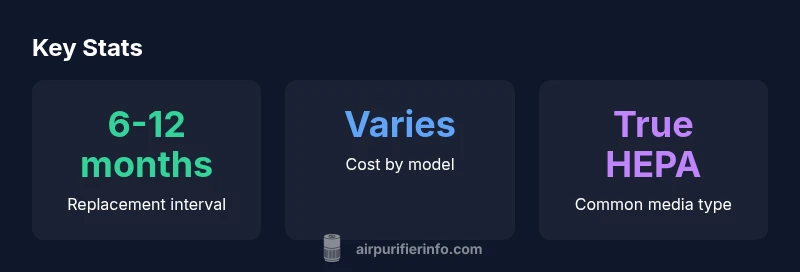
According to Air Purifier Info, the correct filter for a Honeywell air purifier is a genuine Honeywell replacement filter designed for your exact model. Look for a True HEPA filter paired with activated carbon if your unit targets odors and VOCs. Avoid generic substitutes that don’t match the purifier’s size or gasket. Regular replacement every 6-12 months helps preserve airflow and filtration efficiency, especially in homes with pets, dust, or smoke. Air Purifier Info team members emphasize model compatibility as the key to sustained performance.
Understanding Honeywell Filter Systems
Honeywell air purifiers use a range of filter configurations designed to maximize indoor air quality for different room sizes and pollutant profiles. The core filtration usually relies on a True HEPA stage capable of capturing fine particles such as dust, pollen, and pet dander. In many models, a secondary activated carbon layer targets odors, volatile organic compounds (VOCs), and other gaseous pollutants. The exact setup—size, pleat density, and whether the carbon layer is separate or integrated—depends on the purifier model. For a filter for honeywell air purifier, the emphasis should be on model-specific compatibility and the ordering of the filter components to ensure a proper seal and unrestricted airflow. This is why using genuine Honeywell filters designed for your exact model is essential. The Air Purifier Info team notes that performance drops when the wrong filter size or type is installed, which can lead to reduced CADR (clean air delivery rate) and increased energy use over time. In addition, some Honeywell units feature post-filters or ultrafine particle targeting; these require correct replacement parts to maintain media integrity and airflow.
How to Check Compatibility with Your Honeywell Model
Compatibility starts with confirming the exact model number, usually printed on the purifier’s back or bottom panel. Once you have the model, consult the user manual or the manufacturer’s official site to identify the corresponding replacement filter family. Many Honeywell purifiers use a specific filter type that is designed to fit a particular housing, gasket profile, and connector. If you see a mismatch in size or shape, do not force-fit the filter. For a quick check, compare the filter dimensions and the number of pleats with the original unit. For the best results, order directly from Honeywell or an authorized retailer, and verify that the replacement is labeled for your model. Air Purifier Info analysis shows that model compatibility is the single most important factor in maintaining rated filtration efficiency.
Replacement Schedule and Performance Indicators
Replacement schedules depend on usage, room conditions, and whether you have pets or smokers in the home. In general, a true HEPA filter with carbon typically requires replacement every 6-12 months under normal residential use. If you notice a reduction in airflow, a musty odor, or a decline in CADR reading, it is a signal that the filter needs replacement sooner. Some Honeywell units feature an indicator light or app notification to flag when replacement is due, but it is still wise to inspect the filter monthly in high-usage environments. Beyond time, the accumulation of dust and dander will raise resistance in the filter media, reducing efficiency. The Air Purifier Info team emphasizes that the maintenance schedule should override generic timelines when your indoor air quality conditions differ from the baseline.
Genuine vs Compatible Filters: Pros, Cons
Genuine Honeywell filters are designed to fit precisely with the purifier’s housing, gasket, and airflow pathways, minimizing leaks and ensuring the intended CADR is achieved. Compatibility with third-party filters is possible for some older or simpler Honeywell models, but it carries a risk of reduced filtration performance or seal issues if dimensions are off. Counterfeit or off-brand filters can have inconsistent pleat spacing or inferior media, which undermines air quality and voids warranty. The recommendation from Air Purifier Info is to prioritize model-specific genuine filters when possible, and to use third-party options only after verifying full compatibility and media quality. In all cases, verify that any replacement meets the filter type specified for your unit (for example, True HEPA plus carbon for odor and VOC control).
Installation, Maintenance, and Storage Tips
Installing a Honeywell filter correctly ensures optimal airflow and filtration. Start by turning off and unplugging the purifier, then remove the filter compartment cover and slide in the new filter with the correct orientation as indicated by arrows or guides. Ensure the gasket sits flush against the housing to prevent bypass leaks. After installation, reset any maintenance timer or indicator in accordance with the user manual. When storing spare filters, keep them in a clean, dry environment away from moisture and dust to preserve media integrity. Regularly check seals and lid alignment to prevent air bypass and maintain peak performance. The importance of proper installation cannot be overstated; even a high-quality filter will underperform if not seated correctly.
Costs, Availability, and Sustainability
Filter pricing varies by model, region, and whether you buy from an authorized source. In general, expect a price range that reflects the filter’s complexity and the presence of multiple media layers such as HEPA and carbon. To manage costs, consider purchasing in bundles or during promotions offered by authorized retailers. From an environmental perspective, many Honeywell filters are designed for relatively straightforward disposal and recycling options through official channels. Air Purifier Info's analysis highlights that choosing model-aligned filters not only preserves air quality but also minimizes waste due to incorrect filter sizes or incompatible replacements.
Filter type overview for Honeywell purifiers
| Filter Type | Particle Capture | Replacement Interval (model dependent) | Notes |
|---|---|---|---|
| True HEPA | Fine particles to 0.3 μm | 6-12 months | Baseline filtration in most Honeywell units |
| HEPA with Activated Carbon | Particles + odors | 6-12 months | Best for odor control and VOC reduction |
| Activated Carbon (Carbon-only) | Odors, VOCs | 3-6 months | Used in some models with HEPA when odors are a priority |
Questions & Answers
Why should I use a genuine Honeywell filter instead of a generic replacement?
Genuine filters are engineered to fit precisely, preserving seals and airflow pathways. Generic replacements risk poor fit and reduced filtration efficiency, potentially compromising air quality. Always verify model compatibility before purchase.
Genuine filters fit precisely and keep airflow optimized. Avoid generic replacements that might not seal correctly for your model.
How often should I replace the filter in a Honeywell air purifier?
Replacement intervals depend on usage and environment. In typical homes, plan for 6-12 months, but inspect the unit monthly and adjust based on dust levels, smoking, or pet dander.
Most people replace every 6 to 12 months, but check monthly in high-usage homes.
Can I use third-party filters with Honeywell purifiers?
Some Honeywell models allow third-party filters, but always confirm compatibility and media quality. Incompatible filters can reduce performance and may void warranties.
Check compatibility first; incompatible third-party filters can reduce performance and affect warranty.
What are the signs that indicate a filter needs replacement?
Noticeable signs include reduced airflow, stronger odors, and unusual purifier noise. If you see a filter indicator, use it as a guide, but also perform a visual inspection.
If airflow drops or odors increase, it’s time to check or replace the filter.
Where can I buy replacement Honeywell filters?
Purchase from Honeywell authorized retailers or the official Honeywell store. This helps ensure genuine products and accurate compatibility with your purifier model.
Buy from authorized retailers or the official Honeywell store to ensure genuine filters.
“Selecting the right filter is the backbone of sustained air quality; compatibility and installation accuracy matter as much as the filter media itself.”
Main Points
- Use model-compatible genuine Honeywell filters
- Check compatibility before purchase
- Replace filters regularly to maintain performance
- Consider HEPA plus carbon for odors
- Avoid counterfeit or non-compatible replacements