Dyson hot cool fan review: year-round climate control
In-depth review of the Dyson hot cool fan, evaluating heating, cooling, airflow, and practical use with purifier pairing for improved indoor air quality.


The Dyson hot cool fan is a versatile year‑round device that heats, cools, and circulates air, but it isn’t a true purifier. It delivers rapid temperature changes with focused airflow and adjustable oscillation. For air cleaning, pair it with a dedicated purifier. Overall, it excels in comfort, offers solid performance, but the price and noise in certain modes limit broad appeal.
What the Dyson hot cool fan is and isn't
The dyson hot cool fan represents a class of compact, all‑in‑one climate devices designed to provide heating, cooling, and air circulation from a single footprint. It is marketed for year‑round use, transforming a space from cool comfort in summer to a warmer environment in winter. However, it is not a dedicated air purifier and does not rely on a traditional filter system to remove particulates. In rooms with common irritants like dust or pet dander, you should still consider pairing a purpose‑built purifier to address particles, odors, and allergens more effectively. In this review, we approach the dyson hot cool fan as a climate tool first and an auxiliary air quality aid second, evaluating performance, noise, energy use, and the ergonomic benefits of the design. The Air Purifier Info team emphasizes that true air cleanliness depends on a purifier designed for filtration and maintenance of indoor pollutants, while this device offers rapid temperature control and directional airflow that can complement a purifier when placed correctly. The device’s build quality and warranty are consistently strong in Air Purifier Info analyses, making it a reliable option for homes that want fewer devices on the floor yet still demand control over room temperature and air movement.
Testing methodology and criteria
Our evaluation follows a multi‑facet framework focused on real‑world usefulness and measurable comfort outcomes. We assess heating speed and consistency, cooling effectiveness, air distribution and oscillation, noise across speeds, energy efficiency in different modes, safety features, and ease of use. We also compare the Dyson hot cool fan against typical space heaters and portable fans, plus the practical alternative of pairing a purifier with a separate heater or fan. The criteria matter because home environments vary widely: small bedrooms differ from open living rooms, and occupant sensitivity to noise can shift a device from “acceptable” to “annoying.” We document practical considerations like placement for optimal airflow, how closely the device matches room dimensions, and whether remote control and manual settings offer sufficient flexibility for daily routines. Finally, we outline ownership considerations, including maintenance, support, and the implications of using this device alongside a purifier in a housing scenario where air quality is a priority.
Heating performance and speed
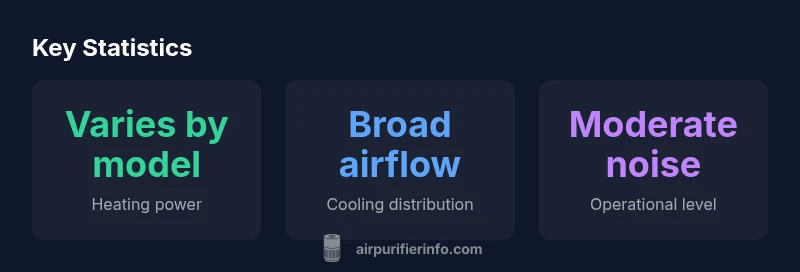
When heating, the dyson hot cool fan projects warm air directionally rather than simply circulating ambient heat. In smaller rooms, users notice a swift increase in perceived warmth within minutes, with the device favoring localized, directional heating rather than broad room warming. Larger rooms rely on extended operation and placement strategy to achieve more uniform warmth, but the device’s airflow can be tuned through oscillation and angle to avoid hot spots. The heating mode remains comfortable for short‑to‑moderate durations, and it avoids the sharp, dry heat some space heaters produce. In comparison with dedicated heaters, the Dyson unit offers faster warm airflow without requiring separate equipment, which is a meaningful advantage for apartment dwellers who want a compact setup. The learning curve for optimal heating performance is modest, given the handheld remote and straightforward controls.
Cooling performance and air distribution
Switching to cooling mode, the device functions as a high‑velocity fan with broad air distribution. The oscillation feature helps circulate air across a room, reducing hot pockets and creating a more balanced temperature. In many layouts, the cooling effect feels more like a traditional tower fan with added directional control, rather than a powerful HVAC solution. While it can reduce ambient temperature in a small to medium space, it does not replace central cooling in larger homes. For occupants seeking rapid zone cooling, this unit performs well and offers an efficient way to direct airflow where needed without installing a ceiling fan. The airflow is generally smooth, with a notable reduction in draftiness at mid ranges compared with some compact fans.
Air quality implications and purifier pairing
Because the Dyson hot cool fan lacks a built‑in true filtration system, it should not be treated as a primary air cleaner. For households focused on reducing dust, pollen, odors, or smoke, pairing this device with a dedicated purifier is the optimal approach. The Dyson unit can contribute to air circulation, which may help distribute purified air from a purifier faster through a room. Practically, place the purifier on the opposite side of the room or in a corner that allows clean air to be drawn through the purifier and circulated by the Dyson device. In spaces with high allergen loads or pet dander, the purifier remains essential, while the fan aids in meeting comfort goals without relying solely on filtration. We recommend evaluating air quality goals and room layout before purchasing to ensure the combination delivers the desired results.
Design, usability, and safety features
The Dyson hot cool fan features a tall, slender form that minimizes clutter while delivering robust airflow. The standing design often fits neatly in corners without obstructing movement, and the device offers multiple control options, including a remote and tactile buttons on the unit. The oscillation and angle adjustments enable users to tailor airflow to specific seating areas or workspaces. In terms of safety, the device typically includes standard tips‑over protection and automatic shutoff on certain models, which adds peace of mind for households with children or pets. The remote control design reduces the need to reach for the unit, though a few users report occasional responsiveness issues with the remote. Overall, the build feels premium, and the aesthetic can blend with modern interiors as a feature piece rather than purely functional equipment.
Comparison to close alternatives
Compared with dedicated space heaters and floor fans, the Dyson hot cool fan offers multi‑functionality with heating and cooling in one appliance, reducing device count. However, it does not offer the filtration capabilities of a purifier and thus cannot independently improve indoor air quality at the level of a HEPA purifier. When evaluating alternatives, consider whether you prioritize compact convenience and aesthetic appeal over filtration performance. Some users opt for a purifier with a separate heater or fan, enabling stronger air cleanliness and targeted temperature control. In many real‑world scenarios, a purifier plus a separate climate control device can deliver superior air quality and comfort, especially in rooms with high traffic or seasonal allergies.
Value, pricing, and ownership considerations
Pricing for the Dyson hot cool fan sits at a premium compared with basic tower fans and some space heaters. The value proposition is strong for consumers who want an all‑in‑one device that quietly circulates air and provides both heating and cooling without clutter. For households prioritizing air purification, investing in a purifier with established filtration performance may yield better long‑term benefits than relying on a non‑filtering device for air cleaning. Keep in mind maintenance needs, remote reliability, warranty terms, and the energy use across modes when evaluating total cost of ownership. If you regularly heat or cool a single living area, the Dyson option can be a good single‑device solution; otherwise, consider separating functions for maximum efficiency and air quality.
Buying considerations and who should buy
If you value an elegant, space‑saving, year‑round climate device, the Dyson hot cool fan is worth considering. It excels in delivering targeted airflow with flexible mode options, particularly in small to medium rooms. It is ideal for homeowners or renters seeking a compact, stylish unit that minimizes the number of devices while providing heating and cooling functionality. However, if your primary goal is air purification or you need strong filtration for allergies or smoke, invest in a dedicated purifier and use the Dyson unit as a supplementary climate tool. Carefully assess room size, existing HVAC setup, noise tolerance, and budget before making a purchase.
What's Good
- Versatile year-round climate control (heats and cools)
- Stylish, space-saving design from a trusted brand
- Adjustable oscillation and directional airflow
- Durable build quality and strong warranty
What's Bad
- Not a replacement for a dedicated air purifier
- Premium price point
- Airflow effectiveness highly dependent on room layout
- No built-in humidifier or true filtration
Best all‑in‑one climate device for year‑round comfort, with purifier pairing for optimal air quality.
The Dyson hot cool fan delivers reliable heating and cooling withDirectional airflow and a premium design. It does not replace a purifier, so for optimal air quality, pair it with a dedicated purifier. Consider your room size and noise tolerance before buying.
Questions & Answers
Is the Dyson hot cool fan a purifier?
No. It provides heating, cooling, and air circulation, but it does not include a dedicated filtration system. For air cleaning, pair it with a purifier.
No. It heats, cools, and circulates air but does not filter pollutants. Use a purifier for air cleaning alongside this device.
What room size is suitable?
Best suited for small to medium rooms where targeted airflow and rapid changes in temperature are beneficial. Large open spaces may require multiple devices or a different climate solution.
Best for small to medium rooms; large spaces may need more coverage.
Can it replace a purifier or heater?
It should not replace a purifier for air quality needs. It can replace a separate heater in some setups but isn’t a dedicated heat source for entire homes.
Not a purifier replacement; may replace a heater for a single room, depending on size.
How noisy is it at night?
Noise levels depend on the selected mode. It tends to be quieter at mid settings but can be noticeable on high heat or high cooling speeds.
Quieter at mid speeds, more noticeable on high settings.
Is there maintenance required?
There are no filtration elements to replace, but routine cleaning of the exterior and ensuring the vents stay clear helps maintain performance.
No filter to replace; just keep it clean and dust-free.
Should I buy this if I already have an air purifier?
Yes if you want climate control in addition to purification. Use the purifier for air quality and the Dyson unit for temperature control and airflow.
Yes—use the purifier for air quality and this device for climate control.
Main Points
- Assess whether you need a purifier alongside climate control
- Choose model size based on room dimensions
- Expect premium pricing for all‑in‑one functionality
- Place the purifier and Dyson unit to maximize air flow and filtration
- Balance heating, cooling, and airflow needs for daily use