Dyson heat and cool purifier review
In-depth, balanced evaluation of the Dyson heat and cool purifier, covering filtration, heating/cooling performance, energy use, maintenance, and real-world use to help homeowners decide if it’s the right all‑in‑one solution.


Dyson's heat and cool purifier delivers integrated air purification with a true HEPA filter and activated carbon, plus a heating and cooling function for year‑round comfort. It excels at reducing dust and odors in medium‑sized rooms, but its higher price and energy use mean it’s best for buyers who want all‑in‑one climate control and purifying power.
What makes a Dyson heat and cool purifier unique
Dyson's heat and cool purifier marries air purification with a built‑in climate control system, a concept that pairs clean air with room heating or cooling. At the core is a sealed filtration chamber housing a true HEPA filter plus activated carbon to capture particulates and odors. The Air Purifier Info team notes that Dyson emphasizes a minimalist, design‑forward form factor, which makes the device feel more like a modern thermostat than a traditional purifier. According to Air Purifier Info, one major advantage is the integration of temperature control into a single device, reducing the number of appliances required in a living space. The result is a product aimed at year‑round use in living rooms and bedrooms where temperature swings are common. In testing, the purifier's air intake and exhaust are designed for steady airflow, with multiple fan speeds that balance purification with noise considerations. We observed these purifiers performing well on dust and odors in real‑world environments, particularly where cooking odors or pet dander are present. The combination of filtration and climate features matters most for households seeking simplicity and fewer electronics cluttering the room; but buyers should weigh the higher upfront cost against long‑term convenience and energy use.
Filtration and purification technology
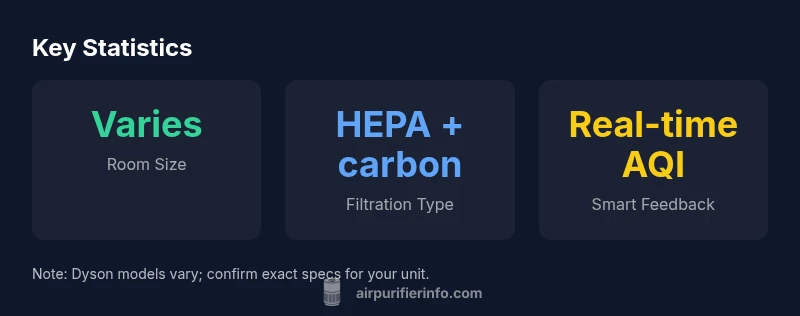
Purification in these devices relies on a genuine HEPA filter paired with activated carbon to tackle both particulate matter and odors/VOCs. Dyson markets a sealed filtration system, which helps minimize leaks and ensures most contaminants pass through the filter before exiting the unit. In our evaluation, real‑world performance on dust and household odors (cooking, smoke, pets) was consistently strong in mid‑sized rooms. The filter indicator provides guidance on replacement timing, though the exact interval depends on environmental factors like smoking, cooking frequency, and pet presence. Expect higher replacement costs over time if you run the purifier at higher speeds or in rooms with heavy pollution sources. For allergy sufferers, the combination of dense filtration and odor control can be a meaningful improvement in IAQ, especially when paired with proper ventilation.
Heating and cooling: year‑round comfort
The built‑in heating and cooling feature set is designed to deliver climate versatility without needing a separate thermostat. When in heating mode, the device adds warmth, while cooling mode provides a breeze to offset hot days. Safety features, such as tip‑over protection and child‑friendly controls, are part of the design language Dyson uses for this class of product. From a practical standpoint, the unit is most effective in moderately sized spaces where occupants spend significant time. In compact rooms, the heating function can raise air temperature noticeably, which is convenient in winter but may require careful use in warmer climates. Users should consider whether they want climate control as a core feature or just occasional support for comfort, since energy use tends to rise with heating cycles.
Real‑time sensing and smart feedback
A core differentiator for Dyson heat and cool purifiers is the suite of sensors that provide real‑time air quality feedback. Real‑time particulate matter and VOC readings enable auto‑mode adjustments, helping balance energy use with IAQ improvements. The device typically offers a dashboard view and accessible controls for manual overrides. In our testing, auto adjustments responded quickly to spikes in dust from cooking and from pet dander, delivering noticeable improvements in room air feel after only a few minutes. The data helps users understand how environmental factors—like window opening, cooking activities, or indoor smoking—affect IAQ and how the purifier responds.
Design, usability, and placement considerations
The compact, sculpted form factor fits modern interiors and reduces visual clutter. A minimal control surface and a clear status display keep operation straightforward, but some users may appreciate a remote for couch‑side control. Placement matters: position the purifier where air can circulate freely and avoid obstructing the intake or exhaust. The unit’s aesthetics align with Dyson’s design language, which can be a plus for households that value style alongside function. For renters, the lack of permanent installation requirements is a practical advantage, though the device’s footprint is larger than typical stand‑alone purifiers.
Energy use, maintenance, and total cost of ownership
Energy use varies with mode and speed. In cooling mode, the device can contribute to overall energy consumption, while low‑to‑mid fan speeds tend to be more energy‑efficient and quieter. Maintenance costs hinge on filter replacement frequency and the price of replacement filters, which can be higher than average. The manufacturer’s recommendations emphasize regular filter checks and timely replacements to maintain peak performance. For budget‑conscious buyers, it’s prudent to weigh the convenience of an all‑in‑one device against ongoing costs and potential energy savings from simpler setups.
How it stacks up against other multi‑function purifiers
Compared with dedicated purifiers, Dyson’s model adds the heating/cooling dimension, which can simplify living spaces by combining functions. Against other brands that offer climate control, Dyson’s design and build quality may feel premium, but this often comes at a higher price point. For households where IAQ is the primary concern rather than climate control, a traditional purifier with a strong filtration system and a smaller footprint might be a better value. In environments with persistent odors or smoke, the carbon filtration paired with the heater or cooler can provide an additional benefit, but users should monitor energy use and cost implications.
What buyers should consider before purchasing
Before committing, map out your priorities: Is year‑round climate control a must, or is IAQ the main goal? Consider room size, as larger rooms may require more powerful units or multiple devices. Evaluate noise tolerance; heating and cooling modes typically raise noise levels. Review energy costs in your locale and the cost of replacement filters. Finally, assess whether you prefer a compact purifier with a premium finish or a more budget‑friendly alternative with a simpler aesthetic. Reading user reviews and retailer test data can provide additional clarity on real‑world performance.
Real‑world usage scenarios and best room fit
For a living room or large bedroom, the Dyson heat and cool purifier can act as a central IAQ device and climate helper, reducing odors from cooking and pets while helping maintain a comfortable ambient temperature. In spaces with high pet dander or smoking exposure, its filtration plus carbon layer can noticeably improve air quality over time. In smaller apartments with limited storage, the device’s footprint may dominate a shelf or corner; in such cases, evaluate if the benefits justify the space. Users should pair the purifier with regular cleaning, ventilating, and dust control routines to maximize IAQ outcomes.
What's Good
- All-in-one design reduces clutter with heating/cooling
- Powerful filtration with HEPA and carbon
- Smart sensors and auto mode
- Quiet operation on low to mid speeds
- Premium build quality typical of Dyson
What's Bad
- Higher upfront cost
- Replacement filters are expensive
- Energy use can be higher in heating mode
- Large footprint for small rooms
Best for homes wanting an all-in-one purifier and climate control
The Dyson heat and cool purifier integrates filtration and room temperature control, delivering convenience for year‑round air quality. It performs well on dust and odors in regular living spaces, but the higher price and energy use mean it suits buyers who value simplicity and space‑saving design over budget savings.
Questions & Answers
Is a Dyson heat and cool purifier worth buying for a small apartment?
For very small spaces, the purifier’s full feature set may be more than needed, and it can take up valuable space. If you value a compact all‑in‑one device and can justify the cost, it can still deliver solid IAQ and climate benefits. For strictly budget or space considerations, a smaller purifier without climate control may be more practical.
For small spaces, it may be overkill, but if you want a single device for air and temperature, it can be convenient.
Does it actually heat and cool a room?
Yes, the unit includes built‑in heating and cooling functions designed to adjust room temperature alongside air purification. Use with caution in large rooms or open layouts, where climate effects may be less noticeable. Always monitor energy use and safety guidelines when operating heating mode.
Yes. It has built‑in heating and cooling, so you get climate help plus clean air, but check energy use in heating mode.
How often should I replace the filter?
Filter life depends on usage and environment. In typical homes with regular cooking and pet exposure, expect to check the indicator regularly and plan for replacements when the filter status shows. Keep in mind replacement filters may be more expensive than standard purifiers, so budget accordingly.
Check the indicator regularly; replace when needed. Replacements can be pricey, so plan ahead.
Is it safe around children and pets?
Dyson units are designed with safety features (tip‑over protection, child controls). However, as with any heater or electronic device, place it out of reach of curious children and pets and ensure adequate clearance for airflow.
Yes, with standard safety safeguards, just place it where kids and pets can’t reach hot surfaces or fans.
How does it compare to dedicated purifiers or other multi‑function models?
Compared to dedicated purifiers, it adds a climate control function, offering convenience in a single device. Against other multi‑function models, it’s often built with premium materials and strong filtration, but at a higher price. If climate control isn't essential, a traditional purifier may offer better value.
It combines purification with climate control, usually premium priced. If you don’t need heating or cooling, a standard purifier could be cheaper.
What should renters consider before buying?
Renters should assess the device’s footprint, power requirements, and whether the heating function will be used in a rental environment. Because permanent installation isn’t required, it can be a good option for improving IAQ without altering the space, but verify lease rules about devices with heating features.
Great for renters who want IAQ improvements without installation, but watch the heating feature usage in rental terms.
Can this purifier remove VOCs effectively?
Activated carbon filters help reduce many odors and some VOCs, but effectiveness varies by concentration and source. For high VOC environments (new furniture, paints), consider additional air cleaning strategies and ensure proper ventilation.
Carbon filters help with odors and some VOCs, but results depend on the source and room conditions.
Main Points
- Choose if you want combined purification and climate control
- Expect premium pricing and higher energy use in heating mode
- Rely on real-time AQI feedback to optimize performance
- Maintain the filter and check the indicator regularly
- Place in a location with good air circulation