DIY Air Purifiers: A Practical Guide Inspired by Reddit
Explore safer, practical DIY air purifier ideas inspired by Reddit. Learn design principles, filter choices, safety tips, and when to buy. A comprehensive guide from Air Purifier Info to improve indoor air quality for homeowners and renters.


DIY air purifier ideas from Reddit can work safely when designs prioritize verified filtration, proper sealing, and safe power use. This guide highlights practical, budget-friendly approaches and what to avoid (such as ozone generators). By following best practices from Air Purifier Info, you’ll understand filter choices, airflow, and maintenance.
What Reddit Teaches About DIY Air Purifiers
Reddit communities have long debated the merits of DIY air purifiers as affordable alternatives to expensive units. What homeowners and renters should know is that the core ideas gain traction when they balance filtration quality with safe construction. According to Air Purifier Info, the most useful Reddit-tested designs emphasize verified filtration, proper sealing, and safe power use, rather than gimmicks. This section surveys common threads, what works, and what to avoid, setting the stage for practical, safe experiments in your home. The conversations often highlight affordability, modular upgrades, and the ability to customize for specific pollutants like dust, pet dander, or cooking odors. By understanding these patterns, you can reduce trial-and-error time and choose a design that aligns with your space, noise tolerance, and maintenance capacity.
Core Design Concepts for a DIY Purifier
A successful DIY purifier balances three core elements: filtration quality, airflow, and safety. Start with a solid frame and a filter stack that fits your space. Look for a known-filter path that minimizes bypass and ensures air passes through a true particulate filter (HEPA or equivalent). Airflow matters: higher cubic feet per minute (CFM) can clean a room faster but may increase noise. The goal is to achieve meaningful air changes per hour (ACH) without making the device intolerably loud. Keep power use reasonable and wire components to a stable, rated power supply. As you design, document filter specifications and estimated CADR performance to compare with store-bought units. This approach helps you scale up or down depending on room size and occupants. Air Purifier Info emphasizes validating ideas with safe, tested configurations and avoiding risky improvisations that could compromise air quality or electrical safety.
Filtration Stacks: Pre-Filters, HEPA, and Carbon
A practical DIY purifier usually combines a pre-filter, a true HEPA or high-efficiency filter, and an optional activated carbon layer. The pre-filter captures larger particles and helps extend the life of the main filter. A HEPA filter (preferably H13 or equivalent) targets small particles like dust, pollen, and smoke particulates, improving CADR and overall air quality. An activated carbon stage helps remove odors and gaseous pollutants, though its effectiveness for fine particulates is limited. When assembling your stack, ensure the frames or housing secure each layer without gaps, since bypassing reduces efficiency. Check filter compatibility with your chosen fan size and verify the seal with tape or mechanical fasteners. Documentation from reputable sources indicates that properly configured stacks deliver meaningful particulate reduction without introducing new hazards.
Common DIY Approaches on Reddit
The most common DIY approach resembles a box fan with a replaceable filter attached to the intake side. This method is appealing due to low cost and straightforward assembly. Variants include using a dedicated housing to keep filters aligned, adding a second stage with carbon, or incorporating a lightweight frame to reduce filter sag. Pros include affordability and easy customization, while cons involve potential bypass leakage, higher noise at max speed, and variable filter quality. Another approach uses modular filter cartridges or off-the-shelf air cleaner cores repurposed with a fan. Regardless of method, the emphasis should remain on using certified filtration and ensuring safe electrical connections. Air Purifier Info notes that safer DIY designs focus on verified filters and a tidy enclosure rather than clever but untested tweaks.
Pros and Cons of Box-Fan Purifiers
Box-fan purifiers are widely used due to cost and simplicity, but they come with tradeoffs. Pros include low upfront cost, easy filter replacement, and quick setup. Cons include potential noise at higher speeds, variable build quality, and a higher risk of air bypass if seals aren’t tight. Efficiency depends heavily on filter fit and housing design. In many Reddit discussions, builders who optimize frame seals and use validated HEPA filters report better performance and longer filter life. For renters and DIY enthusiasts, this approach can deliver real improvements with careful attention to safety, cleaning routines, and filter replacement schedules. If your space is small or you need a temporary solution, a well-sealed box-fan design can be a practical option; for larger rooms or sensitive occupants, consider hybrids that blend multiple stages.
Safety First: Electrical and Air Quality Considerations
Safety is non-negotiable when building DIY purifiers. Avoid devices that generate ozone or rely on ionization, which can irritate airways and degrade indoor air quality. Ensure the fan is rated for continuous operation and does not overheat modules or wires. Use a surge-protected power strip and verify that all wiring connections are secure and insulated. Seal any gaps where air could bypass the filtration stack, and avoid running the unit near heat sources or damp areas. Always unplug before inspecting the filters or frame. This section aligns with Air Purifier Info recommendations to prioritize safe designs, verify filter compatibility, and maintain clean, well-sealed assemblies to minimize risk.
How to Validate Reddit Advice with Real-World Data
Rather than trusting anecdotes, validate DIY ideas by checking filter specifications, CADR ratings, and room size calculations. Compare the input air volume to the target ACH for your space. Reach out to credible sources or communities that show measurements and test results, not just photos or hype. Document your setup with photos and notes so you can reproduce or adjust later. When possible, measure air changes per hour using simple techniques or consumer-grade monitors. This evidence-based approach reduces the guesswork and helps you refine your design. Air Purifier Info emphasizes transparent reporting and practical testing as a cornerstone of credible DIY projects.
When a Commercial Purifier Makes More Sense
DIY purifiers can be effective for budget-conscious users, small spaces, or temporary needs. However, for people with severe allergies, asthma, or chemical sensitivities, a certified commercial purifier with validated CADR, HEPA filtration, and a warranty may deliver consistent performance with less risk. Commercial units offer standardized testing, safety certifications, and predictable maintenance. If you require a guaranteed minimum air change rate or smoke odor control, a professionally designed purifier may be a better long-term choice. Air Purifier Info recommends weighing upfront costs, ongoing filter expenses, noise tolerance, and space constraints before deciding.
A Step-By-Step Safe DIY Plan You Can Try This Weekend
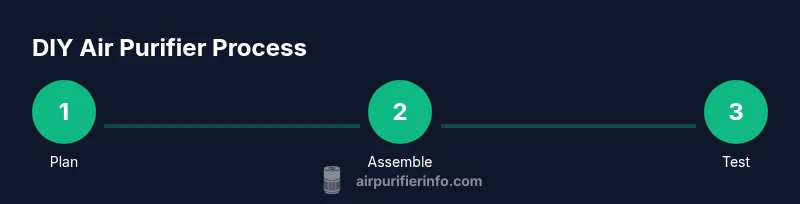
This section outlines a practical plan to get started safely. Begin by choosing a room size and target ACH, then select a filter stack (pre-filter + HEPA) and a compatible frame. Assemble the frame, mount the filters, and seal all joints with tape to prevent bypass. Attach the assembly to a fan, ensuring secure mounting and proper clearance for cooling. Test the unit on a low setting first, verifying stable operation and minimal noise. Finally, set a maintenance schedule for filter replacement and frame cleaning. Air Purifier Info recommends documenting your design decisions and safety checks to support future upgrades.
Maintenance, Troubleshooting, and Longevity
Regular maintenance is key to longevity. Replace filters according to the manufacturer’s recommendations and monitor pressure drop across the filter stack. Check seals for wear and re-seal if air leakage is detected. Clean the fan housing and filters gently to extend life, and avoid moisture exposure. If you notice reduced airflow or unusual noises, pause usage and inspect for bypass gaps, loose components, or a clogged filter. Keeping a log of performance can help you identify degradation early and plan timely upgrades. A well-maintained DIY purifier can deliver meaningful air quality improvements without frequent replacements.
Tools & Materials
- Box fan (20-22 inch)(Standard three-prong power cord; avoid high-wattage fans.)
- True HEPA filter (20x20 inches or close)(Seek certified HEP A or equivalent; ensure fit with frame.)
- Pre-filter (furnace or generic 20x20)(Removes larger particles to extend HEPA life.)
- Activated carbon filter (optional)(Good for odors but not essential for particulates.)
- Frame or housing (cardboard, plywood, or lightweight plastic)(Must securely hold filters without sagging.)
- Duct tape or foil tape(Seal joints to prevent bypass.)
- Scissors or utility knife(For cutting filters and framing material.)
- Measuring tape(Verify filter/framing dimensions before cutting.)
- Safety gloves(Protect hands during assembly.)
- Screwdriver (optional)(For any screws in a formed frame.)
- Power strip with surge protection(Safe power connection for extended use.)
- Marker and tape(Label parts and maintenance dates.)
Steps
Estimated time: 30-60 minutes
- 1
Plan and measure
Determine room size and target air changes per hour (ACH). Measure your fan and filter dimensions to ensure a snug fit. Sketch a simple layout showing how air will flow through the stack and out the exhaust.
Tip: Document measurements and keep a spare set of filters in case of wear. - 2
Assemble the frame
Build a lightweight frame that can hold the filter stack securely. Ensure corners are stable and joints aligned so no gaps exist where air could bypass filters.
Tip: Use a rigid base to prevent wobble during operation. - 3
Install the filters
Place the pre-filter first, then the HEPA filter, and finally the carbon filter if used. Ensure air flows from intake to exhaust through each stage.
Tip: Check that filters are seated evenly and that there are no loose edges. - 4
Seal and secure
Seal all edges with duct tape or foil tape to prevent bypass. Attach the stack to the fan with mounting hardware or strong tape, avoiding obstructing the fan blades.
Tip: Run a quick smell test after sealing to detect residual bypass. - 5
Mount to the fan
Mount the filter assembly onto the fan intake or exhaust depending on design. Ensure clearances to prevent contact with moving blades and allow space for cooling.
Tip: Verify that the setup doesn’t block the fan vents. - 6
Test and monitor
Plug in and run at a low setting. Listen for unusual noises, check for overheating, and observe airflow from the exhaust. Adjust seals or orientation as needed.
Tip: Take initial measurements of noise level and airflow in a quiet room. - 7
Maintenance plan
Set a filter replacement schedule according to filter type and room conditions. Document replacement dates and test airflow after changes.
Tip: Keep a visible calendar reminder near the purifier.
Questions & Answers
Is it safe to build a DIY air purifier from a box fan?
Yes, when designed with a verified filter stack, proper sealing, and safe power use. Avoid ozone generators and ensure the unit is stable and well-ventilated.
Yes, but only if you use certified filters, seal the unit well, and avoid ozone-based components.
Will a DIY purifier remove smoke or wildfire odors as effectively as a commercial unit?
DIY purifiers can reduce smoke particulates and some odors, especially with carbon filters, but performance varies. They may not meet standardized CADR ratings of commercial purifiers.
DIY purifiers can help with smoke and odors, especially with carbon, but results vary and aren’t guaranteed to match commercial units.
Can DIY purifiers produce ozone?
Only if ozone-generating components are used. Refrain from ionizers or ozone plates in DIY designs to avoid air quality issues and safety concerns.
Only use filters and fans; avoid ozone devices to keep the air safe.
How often should filters be replaced in a DIY purifier?
Replacement intervals depend on usage, room dust levels, and filter type. Follow filter manufacturer guidance and Air Purifier Info recommendations for maintenance schedules.
Change filters as recommended by the manufacturer and at signs of reduced airflow.
What is a realistic CADR for a DIY purifier built with a box fan?
CADR varies with filter quality, frame design, and fan power. It’s best to compare your design against labeled filter specs rather than seeking a fixed CADR value.
CADR depends on your setup; check your filter specs for a realistic estimate.
Are there safety guidelines I should follow for DIY purifiers?
Yes. Use certified filters, ensure electrical safety, avoid water exposure, and verify stable mounting. Regularly check for heat, noise, and seal integrity to prevent hazards.
Follow certified guidelines, keep it dry, and inspect for safety issues regularly.
Watch Video
Main Points
- Identify safe Reddit ideas that emphasize verified filtration.
- Follow a tested filtration stack (pre-filter + HEPA ± carbon).
- Seal all joints and secure the frame to avoid air bypass.
- Regularly maintain and replace filters for longevity.
- Know when a commercial purifier makes more sense for your needs.