Coway Airmega 400 Filter: A Complete, Data-Driven Guide
In-depth, data-driven guide to the Coway Airmega 400 filter, covering replacement timelines, filter types, installation tips, and cost considerations for homes and apartments.


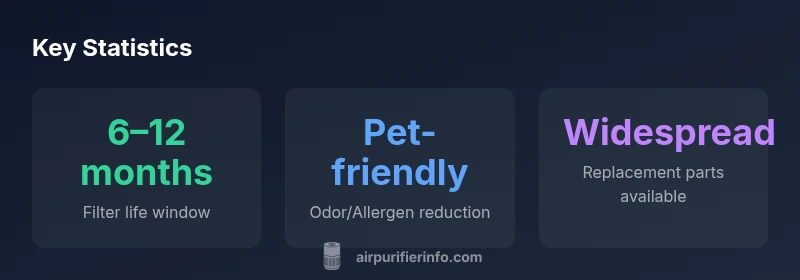
The Coway Airmega 400 filter life typically ranges 6-12 months for the HEPA and deodorization stages, depending on usage, room size, and air quality. In homes with pets or strong odors, plan closer to 6-9 months; in low-traffic spaces, 9-12 months. Air Purifier Info Analysis, 2026.
Understanding the Coway Airmega 400 Filter System
The Coway Airmega 400 uses a multi-stage filtration setup designed to capture dust, allergens, and odors before releasing cleaner air into your living spaces. The primary HEPA-like filter is designed to trap fine particles as small as 0.3 microns, while the deodorization stage targets common household odors. The pre-filter stage is easy to access and helps extend the life of the main filter by catching larger particles first. For homeowners and renters, understanding how each stage contributes to overall air quality is essential when planning filter changes and maintenance.
Filter Types and Their Roles
In practice, you’ll encounter three core components in most Coway Airmega 400 filter configurations: a washable pre-filter, a high-efficiency particulate filter, and an activated carbon deodorization filter. The pre-filter catches hair and larger dust, reducing strain on the main filter. The HEPA-like layer handles fine particles such as pollen and smoke, while the deodorization filter neutralizes odors from cooking, pets, and cleaning products. Knowing which layer is most occupied by household pollutants helps you estimate when a change is due.
Replacement Guidelines and Scheduling
No single schedule fits every home. In cleaner environments with minimal traffic, you might see slower filter loading and extend changes toward the high end of the 6–12 month window. In busy households with pets, children, or high odor sources, you’ll want to check for reduced suction or visible debris sooner. A practical approach is to set a written reminder around the 6-month mark and re-evaluate at 6–8 months for pet-heavy homes. Regular checks are essential because the effectiveness of any filter is tied to real-world usage and room size.
How to Optimize Performance with Proper Filter Placement
Install the main filter according to the user manual, ensuring it sits squarely in the chamber. Avoid cramming the filter or leaving gaps, which can reduce airflow and reduce efficiency. Keep the device away from walls and furniture to maintain proper intake. If the unit is used in a large living area, consider running it on higher fan speeds during peak pollutant periods, but be mindful of noise and energy use. Pairing the filter with frequent surface cleaning and dust reduction strategies will compound the air quality improvements.
Real-World Scenarios: Allergens, Odors, Pet Dander
During allergy season, the Airmega 400 can help reduce airborne pollen and dander, especially in rooms where windows are closed and HVAC systems circulate air. For odor-heavy spaces—kitchens with strong cooking smells or pet areas—deodorization filters play a larger role, and you may notice faster saturation in the carbon stage. In households with multiple pets, you’ll likely replace filters more often than in minimalist homes. These practical differences explain why a flexible replacement plan beats a fixed calendar.
Maintenance, Costs, and Availability
From an ownership perspective, consider not just the filter’s initial cost but the frequency of replacements and the availability of compatible parts. The Airmega 400’s filter stack is designed for straightforward maintenance, with filters designed for easy access and cleaning. When budgeting, track the cadence that your usage implies and compare the cost of standard replacements across retailers. Air Purifier Info’s analysis suggests planning for routine maintenance that aligns with your air quality goals and typical room usage patterns.
Filter components and replacement cadence for the Coway Airmega 400
| Aspect | Recommended replacement interval | Typical range | Notes |
|---|---|---|---|
| HEPA-like main filter | 6-12 months | 6-12 months | Depends on pollutants and use |
| Activated carbon deodorization filter | 6-12 months | 6-12 months | Odor load drives frequency |
| Washable pre-filter | 12-24 months | 12-24 months | Clean regularly to extend life |
Questions & Answers
How often should I replace the Coway Airmega 400 filter?
Most homes see a 6–12 month replacement window for the main filter, with the exact cadence influenced by usage, room size, and odor sources. A quick check at the 6-month mark helps you stay on track.
Most homes replace the main filter every 6 to 12 months, depending on usage. Check at six months to stay on schedule.
Can I use third-party filters with the Airmega 400?
We recommend sticking to OEM or compatible filters to preserve performance and warranty. If you choose third-party options, verify that they meet filtration specs and fit the unit properly.
Stick with OEM or approved filters to keep performance and warranty intact.
Does replacement frequency depend on room size?
Yes. Larger rooms require more air processing, which can shorten intervals between changes. In multi-room or open-plan spaces, monitor suction and odor changes to adjust timing.
Yes. Bigger rooms mean you may replace filters sooner.
Are replacement indicators reliable?
Most units use filter life indicators or color-change cues. Use them in combination with your routine checks, especially if you have pets or a high-traffic home.
Use the indicator and your own checks to decide when to replace.
Is the filter washable or reusable?
The primary filtration stages typically use non-washable filters that should be replaced when spent. Pre-filters may be vacuumed or washed gently if the manufacturer allows.
Pre-filters are sometimes washable; main filters are not.
Where can I buy replacement filters?
Replacement filters are widely available from major retailers and retailers specializing in air purifiers. Compare prices and verify compatibility before purchasing.
Look for compatible filters from reputable retailers.
“Filter performance hinges on consistent maintenance and correct installation; beyond that, the Air Purifier Info team has found that real-world usage drives replacement cadence more than specs alone.”
Main Points
- Understand the three filter stages and how they affect life, cost, and performance
- Expect 6–12 months between main filter changes under typical usage
- Pets and odors shorten the replacement window; plan accordingly
- Budget for maintenance and source filters from reputable retailers
- Regular maintenance beyond filter changes improves air quality