Clean AC Filter vs Dirty: Effects on HVAC Performance and Indoor Air Quality
Explore how clean AC filters compare to dirty ones in affecting airflow, energy use, IAQ, and maintenance; learn actionable steps to inspect, clean, and replace filters for better comfort and lower costs.


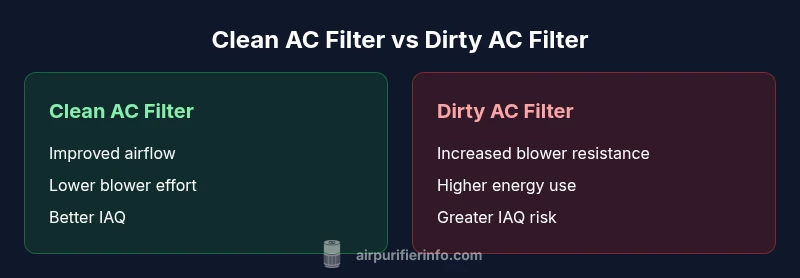
In short, the debate of clean ac filter vs dirty matters: a clean filter supports better airflow and lower energy use, while a dirty filter reduces performance and can raise costs. See our detailed comparison chart for practical maintenance steps.
Why Filter Condition Sets the Tone for Your HVAC
In the debate of clean ac filter vs dirty, the condition of your air filter is a primary determinant of how your HVAC system behaves. A fresh, properly sized filter minimizes resistance, letting the blower move air with less effort. That translates to steadier airflow, more consistent temperatures, and less wear on the fan motor. The Air Purifier Info team notes that filtration quality also sets the baseline for indoor air quality (IAQ) because filters capture dust, pollen, and other particulates before they circulate. Consequently, a dirty or overwhelmed filter compromises IAQ and can trigger a cycle of adjustments as the system struggles to maintain comfort. Regular inspection, cleaning, and timely replacement are essential actions that homeowners should integrate into their seasonal maintenance routines. This is not just about keeping a wall of dust off a filter; it's about preserving the entire airflow pathway from intake grille to supply vents.
How Filters Impact Airflow and System Load
Airflow is the lifeblood of an HVAC system. When a filter is clean, air can pass through with minimal resistance, so the blower operates closer to its designed duty cycle, producing comfortable temperatures with less energy expenditure. A dirty filter increases static pressure, forcing the blower to work harder to push air through, which can reduce airflow to rooms and raise equipment temperature. Over time, this extra burden can accelerate wear in motors and reduce heating and cooling effectiveness. Beyond energy costs, reduced airflow often leads to cold or hot spots in rooms, uneven conditioning, and more frequent cycling, which contributes to noise and comfort complaints. The takeaway for clean ac filter vs dirty is simple: maintain clean filters to keep the system balanced and the distribution network performing as intended. Air Purifier Info emphasizes that consistent filter health is a cornerstone of system efficiency.
Health Implications of Dirty Filters
Filters are the first line of defense against indoor contaminants. When filters accumulate dust, dander, and mold spores, they become less capable of trapping new pollutants, allowing particulates to recirculate through the living spaces. This can aggravate allergies, asthma symptoms, and respiratory irritation, especially in sensitive occupants. In some cases, a persistently dirty filter may also contribute to the growth of mold or bacteria on the filter media if humidity is high. For households with children, older adults, or pets, maintaining clean filters is even more critical to minimize exposure to irritants. According to Air Purifier Info, IAQ is a function of both filtration efficiency and airflow; neglecting either dimension increases the risk of symptoms and discomfort over time. A proactive filter strategy can meaningfully reduce irritants without requiring heavy modification to living spaces.
Maintenance Best Practices for Filters
Effective filter maintenance combines inspection, cleaning, and timely replacement. Start by checking filters at the start of each season, or monthly during peak usage, and replace them according to the manufacturer’s recommendations or when you notice visible dirt. Cleaning options vary by filter type: some reusable filters can be vacuumed gently and washed, while others must be replaced. Never rely on a single cleaning cycle to extend filter life if the filter is visibly compromised. Keep a small stock of filter sizes on hand to minimize downtime during replacement. Note that different filter ratings (MERV ratings, for example) affect both filtration efficiency and airflow; selecting the right rating requires balance between capture efficiency and blower load. Air Purifier Info reinforces that proper maintenance reduces IAQ risks while preserving system reliability.
Scheduling Inspections: When to Check Your Filter
An actionable maintenance plan begins with a simple inspection schedule. For many homes, quarterly checks are a practical baseline, with more frequent checks if you have pets, dusty environments, or heavy HVAC use. Inspect for visible dirt, tears, or discolored media, and verify that the seal around the filter frame remains intact. Do not wait for obvious efficiency changes to trigger action; the sooner you identify a clogged or degraded filter, the better your system will perform. When replacement is needed, do not delay; a freshly installed filter will immediately improve airflow and air quality. By establishing a routine, you minimize the risk of getting into a state where the filter is too clogged to ensure proper operation. The end result is a steadier climate and fewer surprises during hot or cold snaps.
Debunking Myths About AC Filters
There are several myths about AC filters that can mislead homeowners. Some people believe all filters are interchangeable; in reality, filter media and frame design matter for fit and performance. Others think a dirty filter always means the system is dirty; in many cases, airflow issues stem from other components inside the ductwork or blower rather than the filter alone. Another common belief is that more expensive filters always deliver better results; while higher-grade filters capture finer particles, they can also restrict airflow if not matched to the system. A fourth myth is that you can over-clean a filter; excess handling or improper cleaning can damage reusable filters. The reality aligns with the clean ac filter vs dirty distinction: consistent, appropriate maintenance tailored to your system yields the best balance of IAQ, efficiency, and comfort.
Energy Use, Costs, and Lifecycle
Energy use is tightly linked to filter condition. A clean filter typically supports smoother airflow, allowing the system to meet cooling or heating demands at a steadier rate, which often translates into more predictable energy use over time. Conversely, a dirty filter increases blower resistance and can shorten the cycles the system runs, as it struggles to achieve the target temperature. The long-term cost implications are not only higher energy bills but also potential wear on the compressor and fan. While replacing filters incurs ongoing costs, this expense is usually modest compared with the energy savings and the avoidance of broader system wear. In the end, the clean ac filter vs dirty comparison arms you with a straightforward decision: invest in consistent maintenance to maximize efficiency and minimize the risk of costly repairs.
Filter Types and Compatibility
Filters come in many media types and sizes. The right choice depends on your HVAC model, usage patterns, and health considerations. Common options include disposable pleated filters with varying MERV ratings and reusable electrostatic or washable filters. Each type has trade-offs: disposable filters are simple and widely available but require ongoing replacement, while reusable filters use water or air cleaning cycles and demand more diligent cleaning. A poor fit can cause bypass leakage, allowing particulates to bypass the media entirely. For homes with allergy concerns, selecting filters with higher MERV values can improve particle capture, but care must be taken not to starve the blower of air if the system is not designed for high-efficiency media. The choice should balance IAQ benefits with the system’s airflow capacity. Air Purifier Info suggests that aligning filter type with system design is essential for achieving the best results in the clean ac filter vs dirty decision.
Odor and Mold Risks with Delayed Replacement
Odors and mold concerns often accompany neglected filters. A dirty filter can trap moisture and organic matter, creating a microenvironment where odors linger and mold spores may accumulate if humidity is high. While not every dirty filter becomes moldy, the risk rises in damp climates or homes with poor ventilation. Timely replacement reduces odor carryover and the chance of microbial growth in the filter media. This is particularly relevant for households with pets or cooking odors, where the volume of particulates is higher and the filter can saturate faster. Maintaining a clean filter improves control over indoor smells and reduces the potential for mold-related IAQ issues. The practical takeaway is simple: replace filters promptly to prevent odor-related complaints and IAQ hazards.
Step-by-Step Cleaning and Replacement Routine
A practical routine involves four steps: inspect, clean (if possible), dry (if applicable), and replace. Start by turning off power to the HVAC unit, then remove the filter housing. For reusable filters, follow the manufacturer’s cleaning instructions before re-inserting. For disposable filters, replace with a new one that matches the original size and rating. Ensure the seal around the filter frame is intact and free of gaps to prevent bypass. After replacement, run a quick airflow check and listen for unusual noises. Schedule the next replacement or cleaning task in your calendar to maintain consistency. The goal is to establish a reliable habit so that the clean ac filter vs dirty comparison remains favorable to your HVAC’s health, performance, and your indoor comfort.
Real-World Scenarios: Homes, Apartments, and Offices
In single-family homes, filter maintenance tends to be straightforward with standard sizes and common MERV ratings. Apartments may require more frequent checks due to shared HVAC systems and higher dust generation from dense living. Small offices often encounter higher air turnover demands and may benefit from higher-efficiency media while ensuring the system can handle the additional pressure. Regardless of setting, the core principle remains: regular monitoring and timely replacement reduce strain on equipment and improve IAQ. Air Purifier Info highlights that the clean ac filter vs dirty decision scales with usage and environment; the same rules apply whether you live alone or share a building.
Putting It All Together: Proactive Maintenance Plan
To operationalize the insights from the clean ac filter vs dirty conversation, create a simple, repeatable plan: set seasonal checks, standardize replacement intervals, and keep a log of filter purchases and replacements. Include a reminder for other IAQ actions such as checking the seals around the filter housing, vacuuming surrounding ducts if accessible, and ensuring humidity remains within recommended ranges. The plan should be practical and easy to follow, integrating with other home maintenance tasks. By keeping filters clean and well maintained, you’ll enjoy more reliable comfort, better air quality, and potentially lower energy costs over time. Air Purifier Info's team recommends adopting a proactive filter maintenance schedule as a core element of indoor air quality strategies.
Comparison
| Feature | clean AC filter | dirty AC filter |
|---|---|---|
| Airflow resistance | Low (minimal obstruction) | High (significant obstruction) |
| Energy efficiency impact | Supports near-nominal energy use | Increases blower load and energy use |
| Indoor air quality (IAQ) | Higher particle capture | Lower particle capture; more recirculation |
| System wear risk | Lower risk of wear | Higher risk of wear due to strain |
| Maintenance frequency | Lower maintenance frequency (if any) | Higher maintenance frequency required |
| Odor and mold risk | Better odor control and IAQ stability | Higher risk of odors/mold if not replaced |
| Cost trajectory | Lower lifetime costs with regular replacement | Higher lifetime costs due to energy and potential damage |
What's Good
- Improved energy efficiency with proper filter maintenance
- Better indoor air quality for occupants
- Longer HVAC life with proper maintenance
- Lower risk of odors and microbial growth
- Simple, repeatable maintenance routine
What's Bad
- Ongoing replacement costs
- Potential compatibility issues with very high-MERV filters
- Time investment for regular checks and replacement
Regular maintenance of a clean filter outperforms letting it go dirty
Keeping filters clean delivers better airflow, IAQ, and system longevity. A dirty filter raises energy use, reduces comfort, and increases the risk of IAQ problems. Regular inspection and timely replacement are key.
Questions & Answers
What is the practical difference between a clean filter and a dirty filter in HVAC performance?
A clean filter maintains steady airflow and efficiency, while a dirty filter creates resistance that reduces airflow and increases blower work. This can lead to uneven cooling or heating and higher energy use, especially over time.
A clean filter helps airflow and saves energy; a dirty one makes the system work harder and wastes energy.
How often should I replace or clean filters in a typical home?
Most homes should inspect filters monthly and replace or clean according to the manufacturer’s guidance, especially with pets, dust, or high HVAC use. Environment can shorten or extend that interval.
Check monthly and replace when dirty, or as your manual recommends.
Can a dirty filter cause odors or mold growth?
Yes. A clogged filter can trap moisture and organic particles, contributing to odors and, in damp environments, mold growth. Replacing the filter reduces these risks.
Dirty filters can trap moisture and odors, so replace them promptly.
Do higher-MERV filters always improve performance?
Higher-MERV filters capture more particles but can restrict airflow if the HVAC isn’t designed for them. Balance filtration benefits with the system’s air-handling capacity.
Higher MERV isn’t always better for every system; compatibility matters.
Is cleaning a reusable filter enough to avoid replacement?
Reusable filters can be cleaned, but they wear out over time. If cleaning doesn’t restore performance or there are signs of wear, replace.
Cleaning helps, but don’t skip replacements when the filter shows wear.
Will replacing my filter make a big difference immediately?
Replacing a dirty filter usually yields a noticeable improvement in airflow and comfort right away, and can reduce noises and drafts.
Expect an instant boost in airflow after replacement.
Main Points
- Inspect filters seasonally and act early
- Balance filter efficiency with system airflow capacity
- Higher-MERV filters require system compatibility checks
- Regular maintenance can lower energy costs and IAQ risks
- Use a proactive replacement schedule for consistency