Can You Use an Air Purifier and Heater at the Same Time? A Practical Guide
Explore whether you can run an air purifier and a space heater at the same time, plus safe placement, device sizing, and maintenance tips to improve comfort and indoor air quality.


Yes, you can run an air purifier and a space heater at the same time in most rooms, but you should plan placement to avoid blocked airflow, monitor temperatures, and ensure electrical capacity matches both devices. Use devices with safety features like auto shutoff, tip-over protection, and overheat protection. Keep cords away from walkways and ensure the purifier intake and heater outlet are not concatenated in a single airflow path.
can you use air purifier and heater at the same time
Yes, you can use an air purifier and a space heater at the same time, but you should approach it with a safety first mindset and a plan for airflow. In most living rooms and bedrooms, the purifier cleans airborne particles while the heater raises comfort temperature. The core idea is to prevent heat sources from disrupting airflow or creating hot spots and to ensure electrical load stays within the home’s wiring limits. According to Air Purifier Info, many households see improved comfort and air quality when safety minded, properly sized devices run in tandem. The key is to optimize placement, verify that the purifier does not block the heater’s intake or outlet, and to avoid running devices at maximum power for extended periods. Start by choosing a purifier with a reputable CADR and a heater with overheat protection, and ensure both devices have built in safety features like tip over switches and auto shutoff. With careful planning, you can enjoy warmth and cleaner air simultaneously.
How air purifiers and heaters interact in indoor air quality
Air purifiers and heaters influence different aspects of a room’s climate. A purifier primarily reduces particulate matter, dust, pollen, and some VOCs, which can improve perceived air freshness. A heater increases room temperature and can affect relative humidity; warmer air holds more moisture during the day but can dry out air if humidity is not managed. Air Purifier Info analysis shows that when the purifier is appropriately sized for the room, it accelerates pollutant reduction without interfering with the heater’s function. The purifier’s airflow should not be directed straight at the heater, and both devices should have stable placement to prevent vibrations or unwanted airflow blockage. In most cases, the combined use creates a more pleasant environment even in cold seasons, provided safety protocols are followed.
Safety considerations when running both devices
Running an air purifier and a heater requires attention to electrical safety, heat source safety, and occupant awareness. Never place heaters near drapes, paper, or clutter that could ignite. Choose electric heaters with automatic shutoff if tipped or overheated. Keep the purifier and heater on firm, nonflammable surfaces and maintain at least a few inches of clearance around both units to ensure proper ventilation. Use a grounded outlet and avoid daisy-chaining through power strips. Always follow manufacturer guidelines for both devices and consider an electrician’s advice if you plan to run multiple appliances on the same circuit. Air Purifier Info emphasizes that staying mindful of wattage load and airflow will minimize risk while providing clean air and warmth.
Placement and airflow optimization
Positioning matters as much as device quality. Place the purifier where its intake is unobstructed and in a location that circulates air across the room rather than trapping air behind furniture. The heater should be placed away from walls and fabrics, ideally on a cool, stable surface, with cords routed to avoid trip hazards. If possible, orient the purifier so its outlet directs air toward the center of the room while the heater vents away from seating areas to avoid heat buildup near occupants. Avoid corners where air can stagnate or where the purifier intake and heater outlet share the same airflow path. Small changes in placement can dramatically improve comfort and safety.
Sizing electrical load and device selection
Before turning both devices on, estimate the total electrical load with caution. Do not exceed typical circuit limits and spread high wattage devices across multiple outlets on different circuits when available. Favor electric heaters with built in safety features and a purifier with efficient filtration that suits the room size. If you are unsure about circuit capacity, consult a licensed electrician. Air Purifier Info notes that aligning device wattage with room size and season can help minimize energy waste while keeping air clean and temperatures comfortable.
Features to look for in each device
Choose an air purifier with a high CADR appropriate for the room size, a true HEPA filter, and activated carbon for odors and VOCs. Look for energy efficient operation and a clean airflow design that minimizes turbulence near the heater. For heaters, prefer models with auto shutoff, tip-over protection, and overheat protection. Consider features such as built in timers or smart plugs to regulate usage and reduce energy draw during non occupied times. Together, these features improve safety and efficiency without compromising air quality or comfort.
Practical scenarios by room size
In a compact bedroom or office, run a compact purifier and a small electric heater on a stable surface with clearances. For medium living rooms, use a purifier sized for the space and a heater on a stable stand away from seating. In larger spaces, you may need multiple purifiers or a more powerful unit with a well proportioned heater, while maintaining safe distances from walls and furniture. Always monitor humidity and air quality levels with a simple hygrometer and a basic air quality app to adjust settings as needed.
Maintenance, monitoring, and when to stop
Regular filter changes ensure ongoing air cleaning effectiveness, and routine heater maintenance prevents performance issues. Clean purifier vents and sensors as recommended by the manufacturer and replace filters on schedule. Check cords and outlets for heat buildup or wear. If you notice unusual smells, excessive haze, or overheating indicators, turn off devices and investigate. If humidity remains high or low for extended periods, adjust settings or reduce usage until conditions stabilize.
Quick-start checklist for using both devices
- Verify room size and device ratings align with room; 2) Place purifier intake away from heater air flows; 3) Ensure heater has safety features; 4) Use a timer or smart plug to cap run time; 5) Monitor air quality and temperature; 6) Regularly inspect cords, outlets, and filters; 7) Stop use if you notice signs of risk or poor performance.
Common mistakes to avoid
Avoid placing the purifier directly in the heater's airflow path or near the heater outlet. Do not overload circuits or use a damaged extension cord. Do not ignore safety features or bypass manufacturer guidelines. Finally, do not assume that clean air equals good air quality without monitoring humidity and VOCs. Following a cautious approach helps you enjoy warmth and fresh air without compromising safety.
Tools & Materials
- Air purifier(Choose a unit sized for the room (CADR appropriate) and with auto mode.)
- Space heater(Electric heater with tip-over switch and overheat protection.)
- Heavy-duty extension cord(Use only if the heater is within cord length; rated for the wattage.)
- Timer or smart plug(Automatic shutoff for safety; helps manage energy use.)
- Room thermometer or hygrometer(Helps monitor temperature and humidity)
Steps
Estimated time: 20-40 minutes
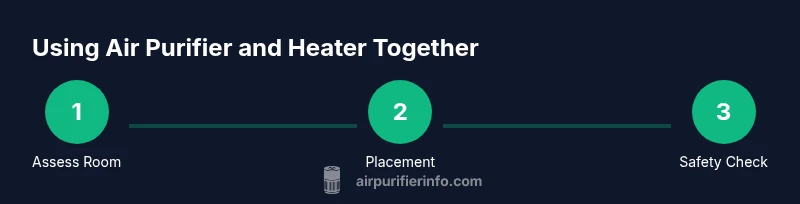
- 1
Assess room size and electrical load
Estimate the room size and compare it with the purifier CADR and heater wattage. Ensure the combined electrical load remains within safe limits for the circuit. If in doubt, consult an electrician.
Tip: Always check the circuit’s limit and avoid plugging both devices into power strips. - 2
Place devices with clearances
Position the purifier away from the heater’s airflow to prevent recirculation of warm air through the purifier. Keep the purifier intake unobstructed and the heater away from walls and fabrics.
Tip: Use a stable surface for the heater and ensure cords are neatly routed. - 3
Enable safety features
Turn on the heater’s auto shutoff and the purifier’s any safety modes. Ensure tip-over protection is active on the heater.
Tip: Prefer devices with UL or equivalent safety certification. - 4
Set a practical run schedule
If possible, use a timer or smart plug to prevent continuous operation. Schedule purifier cycles to overlap with heating for comfort and air quality.
Tip: Avoid leaving devices on high power when the room is unoccupied. - 5
Monitor air quality and temperature
Keep a simple reading from a hygrometer and an air quality monitor to adjust settings. Fine tune to balance warmth, humidity, and clean air.
Tip: Note any odor, haze, or irritation and adjust or turn off devices as needed. - 6
End session safely
Turn off both devices and unplug when leaving the room for extended periods. Inspect cords for heat after use and store devices properly.
Tip: Do not unplug while the heater is hot; let it cool first.
Questions & Answers
Is it safe to run an air purifier and heater at the same time?
Yes, it can be safe when you follow safety guidelines, maintain proper placement, and ensure the electrical system can handle the load.
Yes, it can be safe to run both devices together if you follow safety steps and monitor airflow and temperature.
What should I check before using both devices?
Check room size, device ratings, cord length, and circuit capacity. Verify safety features like auto shutoff and tip-over protection.
First check room size, device ratings, and safety features before turning them on.
Can running both devices affect humidity or air quality?
Yes. Heaters change humidity and air patterns; purifiers improve air quality by removing particles. Humidity should be monitored to avoid drying or excessive moisture.
Running both can change humidity; monitor it and adjust settings as needed.
Should I use a long extension cord?
Only if the cord is rated for the combined load and there is no heat buildup; otherwise, plug directly into a wall outlet.
Avoid under sizing cords; use a proper outlet instead when possible.
What safety features are most important?
Look for tip-over switches, overheat protection, auto shutoff, and certified components from reputable brands.
Prioritize safety features like tip-over and auto shutoff.
When should I stop using both devices together?
If you notice unusual heat, smells, excessive humidity or poor air quality, discontinue use and inspect devices.
Stop using them if you notice any warning signs or performance issues.
Watch Video
Main Points
- Assess room size and electrical load before use
- Maintain safe clearances around purifier and heater
- Choose devices with safety features and proper certification
- Monitor air quality and humidity for comfort and safety
- Use timers to manage energy use and prevent overheating