Can an Air Purifier Be Installed in HVAC System? A Practical Guide
Learn whether you can install an air purifier within your HVAC system, how it works, sizing, installation options, and maintenance considerations for homeowners and renters.


Yes, you can install a purifier within many HVAC systems, but compatibility varies by unit. A whole-house purifier or inline duct module is typically placed in the air handler or main supply duct to treat all circulating air. Installation should consider the system’s airflow, static pressure, and electrical access, and is best done by a qualified technician.
How HVAC-integrated purifiers work
Integrated purifiers place a filtration module in the HVAC airflow path, usually in the air handler or main supply duct. They use HEPA or activated carbon media to capture particles and odors as air passes through. Because the purifier adds additional filtration, you may see improved allergen reduction, especially for dust, pollen, and pet dander. It’s essential that the purifier’s airflow rating matches your system’s CFM to avoid excessive pressure drop. In-duct and whole-house models differ in installation location, maintenance access, and electrical needs. A properly selected unit maintains comfort while minimizing noise and energy use, and it should adhere to local electrical codes. For homeowners wondering can an air purifier be installed in hvac system, the answer hinges on finding a compatible mounting point and adequate airflow. A professional assessment ensures optimal performance.
Pros and cons of adding a purifier to your HVAC
Pros include convenient, whole-home filtration without frequent portable unit changes, improved odor control with activated carbon, and efficiency in removing airborne pollutants from common living spaces. Cons can include higher upfront costs, potential changes in airflow and pressure that require balancing, and ongoing maintenance like filter replacements. Renters should check lease terms and building restrictions, as some installations may require landlord approval. Overall, an HVAC-integrated purifier can be a strong option for allergy relief and odor control when properly sized and installed.
Tools & Materials
- HVAC purifier module compatible with your system(Select model rated for your system's CFM; ensure duct compatibility)
- Phillips screwdriver set(For mounting brackets and panels)
- Voltage tester(Verify power source before wiring)
- Duct tape or foil tape(Sealing around joints to prevent leaks)
- Multi-meter or electrical connector kit(Electrical connections must be safe)
- Replacement filters/media(Matching size and media type per purifier spec)
- Safety gloves and eye protection(Personal protection during installation)
- Dry-fit gauge or manometer (optional)(To measure pressure drop before and after install)
Steps
Estimated time: 60-180 minutes
- 1
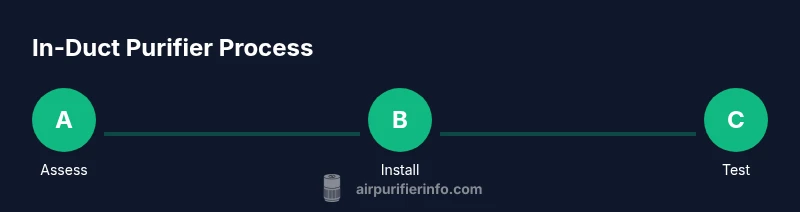
Assess compatibility and plan layout
Survey the HVAC system type, duct access, and mounting options. Confirm there is enough clearance near the air handler and ensure the purifier is rated for your system's CFM. Document the exact model numbers and consult the purifier manual for installation requirements.
Tip: Take photos of the existing duct layout and label wires before starting. - 2
Power down and safety check
Turn off the HVAC system at the breaker and verify there is no residual power. This reduces the risk of electric shock while mounting and wiring the purifier.
Tip: Use a lockout tag if others could restart the system during work. - 3
Prepare mounting location and duct access
Clear the installation area, remove any obstructions, and dry-fit the purifier mounting brackets. Verify the chosen location aligns with airflow direction for optimal filtration.
Tip: Ensure there is a nearby electrical outlet or conduit access as required by the unit. - 4
Mount purifier module and secure
Attach the purifier housing to the chosen location and tighten brackets per manufacturer guidance. Check for clearances to avoid contact with moving parts and ensure vibration isolation.
Tip: Avoid overtightening screws which could warp panels. - 5
Connect ductwork and electrical connections
Seal duct joints with foil tape, connect any required ducts, and wire the purifier to the control or power source following the manual. Verify all connections are secure and insulated where needed.
Tip: Double-check that wiring matches color codes and safety standards. - 6
Balance airflow and test operation
Restore power and run the system to observe airflow and noise. Listen for leaks and measure any unexpected pressure drop. Install filters and verify the unit cycles as intended.
Tip: If you notice reduced airflow, consult a technician to rebalance the system. - 7
Document maintenance plan and train occupant
Record installation details, replacement filter schedule, and maintenance steps. Brief household members on operation and safety, including filter change intervals and signs of reduced performance.
Tip: Set calendar reminders for filter replacements to maintain performance.
Questions & Answers
Can any HVAC system support an in-duct purifier?
Not every system supports inline purifiers; older or smaller units may require duct modifications or may be incompatible with certain purifier interfaces.
Not every HVAC system supports inline purifiers; some require duct changes or are incompatible.
What influences the upfront cost and ongoing costs of installation?
Costs vary widely based on system type, purifier model, installation complexity, and maintenance plans. Expect differences between inline duct modules and whole-house units.
Costs vary based on system type, purifier model, and maintenance plan.
Will adding an HVAC purifier affect energy use or airflow?
A properly sized purifier should minimize extra energy use while adding filtration. Incorrect sizing can cause a small drop in airflow or louder operation.
If sized correctly, energy use should be modest and airflow stable.
Do renters have viable purifier options?
Renters can consider portable purifiers or seek landlord approval for a temporary HVAC integration if allowed by the building. Portable options avoid structural changes.
Renters can use portable purifiers or seek approval for limited HVAC work.
How often should filters be replaced after installation?
Follow the purifier’s manufacturer schedule, typically every 6–12 months, depending on usage, air quality, and filter media type.
Replacement frequency depends on use and air quality, usually 6–12 months.
Are there safety concerns with installing in HVAC?
Yes. Electrical wiring, duct sealing, and system balancing require care. Hire a licensed professional to mitigate fire and CO risks and ensure code compliance.
Safety is important; use a licensed professional for wiring and duct work.
Watch Video
Main Points
- Assess compatibility before choosing a purifier.
- Size the unit to minimize pressure drop and ensure effective filtration.
- Prioritize professional installation for safety and performance.
- Maintain filters regularly to sustain air-quality benefits.