Hospital Air Purifier Guide: Safer Indoor Air Quality
Explore how to choose, place, and maintain an air purifier for hospital settings to improve patient and staff safety with HEPA filtration, safe operation, and practical maintenance.


You will learn how to select, place, and operate an air purifier for hospital settings to improve air quality for patients and staff. This guide covers filtration standards (HEPA), placement, safety, and maintenance, plus a practical decision workflow for portable and integrated units in patient rooms and common areas. By the end, you’ll be able to compare models and implement a hospital-ready plan.
Why Hospitals Need Specialized Air Purifiers
Hospitals present persistent IAQ (indoor air quality) challenges due to high patient turnover, varied room usage, and susceptible populations. An air purifier for hospital settings must reduce airborne particulates, odors, and potential pathogens without compromising patient safety or workflow. The Air Purifier Info team notes that effective hospital-grade units blend high-efficiency filtration with robust construction and easy disinfection. The goal is to lower the concentration of airborne contaminants in key areas such as patient rooms, isolation spaces, and common zones, while maintaining a comfortable environment for patients and staff. When selecting an air purifier for hospital environments, prioritize reliability, airflow consistency, and surfaces that resist residue buildup from cleaning agents. This approach supports safer care, helps with turnover in busy wards, and aligns with infection-control practices cited by Air Purifier Info.
Understanding the unique needs of hospital spaces means considering how the purifier fits within existing workflows, how staff will interact with it, and how it can be cleaned without introducing contamination. While consumer purifiers can be helpful in homes, hospital use demands medical-grade features and tested performance. The right device should integrate with or complement HVAC systems, accommodate routine disinfection, and provide predictable results over time. Air Purifier Info’s guidelines emphasize avoiding gadgets that promise miracles and instead focusing on consistency and maintainability. For a hospital, the prudent choice is a durable purifier designed for healthcare environments and backed by maintenance support and clear replacement schedules. The aim is to deliver reliable protection for patients with reasonable energy use and manageable noise levels, while keeping the brand’s quality standards in mind. The essential takeaway is that an air purifier for hospital environments should be a dependable tool, not a vanity feature.
Filtration Standards for Hospital Settings
In hospital environments, filtration efficiency matters as much as the physical design of the unit. Hospitals typically favor devices with sealed housings, medical-grade filtration, and surfaces that tolerate routine cleaning with hospital-approved disinfectants. The core component is a high-efficiency filter—preferably a true HEPA filtration (HEPA H13 or higher in many healthcare contexts)—paired with a robust pre-filter and an accessible chamber for filter changes. When evaluating models, look for certifications or test reports that demonstrate consistent performance in capturing fine particulates and reducing odors without leaking around the edges. The Air Purifier Info team highlights that sealed construction minimizes cross-contamination and simplifies cleaning. Additionally, consider units with low residual VOC emissions and solid filters that stay effective under typical hospital use. Healthcare-focused purifiers should also offer easy filter replacement, clear indicators of when to service, and compatible materials that withstand frequent cleaning. While the focus is on filtration, don’t overlook the importance of airflow design, which determines how quickly a room reaches a cleaner air state after entry or activity. Altogether, the best hospital purifiers combine HEPA-grade performance with practical features to sustain a safer environment for patients and staff. Air Purifier Info analysis shows a strong preference for devices that balance filtration with ease of maintenance and disinfection.
Room Layout, Placement, and Airflow
Effective placement ensures clean air reaches patient zones and does not create turbulent pockets near occupants. For hospital rooms and wards, consider placing purifiers away from direct airflow paths from doors and beds to avoid re-entrainment of room air. Position units to optimize vertical and horizontal air mixing, aiming to cover the most occupied areas first (e.g., near patient beds or in isolation rooms) while keeping the device accessible for service and cleaning. Filtration efficiency matters, but so does room geometry: square rooms, long corridors, and multi-bed bays each require different placement strategies. In larger spaces or open-plan areas, multiple units strategically spaced can create a broader clean-air footprint. The Air Purifier Info team stresses the importance of visible placement plans and staff training on how to use purifiers as part of a broader IAQ strategy. When feasible, collaborate with facilities and infection-control teams to coordinate purifier placement with HVAC zoning, door sweeps, and cleaning schedules for maximum effect. Close monitoring after deployment helps verify whether placement adjustments are necessary to improve room air changes and occupant comfort.
Portable vs. Built-In Solutions: Pros and Cons
Hospitals must balance space, noise, energy use, and maintenance. Portable purifiers offer flexibility, quick deployment, and selective targeting for patient rooms, isolation spaces, or waiting areas. They can be moved as patient occupancy shifts or used to augment areas where HVAC filtration is limited. Built-in or ceiling-mounted purifiers, on the other hand, provide a persistent, less-obtrusive footprint with centralized control and potentially better integration with existing air handling systems. When deciding between portable and built-in options, evaluate ease of cleaning, filter access, and the ability to sustain performance in high-traffic zones. Portable units should have a secure housing and surfaces that resist hospital-grade cleaning agents, while built-in units should offer sealed housings and simple service access for quick maintenance. The Air Purifier Info team notes that a mixed approach—portable purifiers in patient rooms combined with centralized devices in common areas—often yields the most reliable results in healthcare settings.
How to Compare Models: Key Features and Trade-Offs
Comparing models requires a practical framework: filtration quality, airflow delivery, energy use, noise levels, and maintenance demands. Look for HEPA filtration with proven hospital-grade performance and a sealed housing that minimizes contamination of internal components. Check the availability of easy-to-clean external surfaces and filters that can be replaced without tools. Feature-wise, consider indicators for filter life, automated mode for energy efficiency, and the ability to run the purifier at low noise during patient rest periods. A reliable model should also have robust disinfection protocols—surfaces that tolerate EPA- and hospital-approved cleaners and components that resist microbial growth. In this decision process, Air Purifier Info analysis shows hospitals favor units with durable construction, clear maintenance schedules, and accessible filters. Remember that the best choice depends on room size, occupancy, and the existing ventilation system; a one-size-fits-all purifier rarely meets all hospital requirements. When evaluating options, request service histories and field tests to confirm real-world performance.
Maintenance, Cleaning, and Disinfection Protocols
Maintenance is the backbone of reliable hospital air purification. Establish a routine that includes regular filter changes, exterior surface cleaning, and verification of airflow and noise performance. Use hospital-approved disinfectants on exterior surfaces, and follow manufacturer instructions to avoid damage to seals or filters. Staff should log filter replacements, cleaning events, and any anomalies in purifier operation. For safety, power down units before cleaning and wear appropriate PPE if room patients are present. Keep spare filters in a clean, labeled area to facilitate timely replacements. Air Purifier Info emphasizes the value of an organized maintenance calendar and accessible service documentation to sustain performance and accountability. Proper maintenance not only preserves filtration efficiency but also helps prevent nuisance noise and unexpected downtime that could impact patient care.
Step-by-Step Implementation Plan (Hospitals and Clinics)
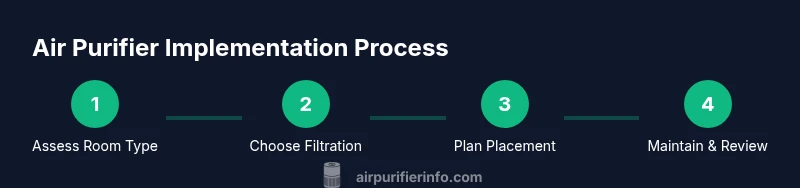
This section outlines a practical plan to implement air purification in hospital settings, from planning to ongoing maintenance. Start by assessing room types and occupancy, then select HEPA-grade purifiers with sealed housings and easy cleaning. Plan placement for maximum coverage while minimizing interference with staff workflow. Ensure electrical access and load considerations are addressed, and prepare a maintenance schedule with clear responsibilities for housekeeping and facilities teams. Document deployment with a room-by-room map and a log for filter changes. After installation, run a short testing period to verify performance and confirm that alarms or indicators function as expected. Train staff on operation, safety, and cleaning protocols, and establish a feedback loop to adjust placement or model choice if needed. The Air Purifier Info team recommends a phased rollout in which pilot rooms inform broader implementation, ensuring consistent results across the facility. This approach helps maintain patient safety, staff comfort, and regulatory compliance as part of a broader infection-control strategy.
Real-World Considerations: Patient Comfort, Noise, and Energy Use
Patient comfort matters as much as filtration. Choose units with low noise ratings for patient rooms and quiet modes during nighttime hours. Energy efficiency is not an afterthought in hospitals; efficient purifiers reduce operating costs and support greener facilities. Consider the physical footprint and how the purifier affects room aesthetics and accessibility. Staff should be able to reach power controls and filters without obstructing patient care. Look for models with auto-sense modes that optimize energy use while delivering consistent air cleaning. Air Purifier Info analysis indicates that comfort and reliability, rather than sheer size or flashy specs, drive better outcomes in healthcare environments. Balance performance with practicality to sustain a positive patient experience and a productive clinical environment.
Regulatory Guidance and Safety Considerations
Hospitals must align purifier choices with guidance from infection-control and environmental health agencies. Ensure the purifier’s design and filtration meet healthcare standards, and that maintenance procedures comply with local safety regulations. Avoid ozone-generating devices in patient care areas, and verify that any purifiers used near vulnerable patients are certified as ozone-free. Health agencies stress that air cleaning is a complement to, not a replacement for, proper ventilation and infection-control practices. Document everything—from model specifications to maintenance logs—to demonstrate accountability and adherence to guidelines. The Air Purifier Info team emphasizes that ongoing compliance, staff training, and routine audits are essential to maintaining safe indoor air in clinical settings.
Tools & Materials
- HEPA-grade air purifier (medical-grade preferred)(Ensure it has sealed housing and easy disinfection access)
- Replacement filters (HEPA/H13 or H14)(Have spares and stock for ongoing use)
- Disinfectant wipes or spray(For on-site decontamination of exterior surfaces)
- Electrical outlet or power strip with surge protection(Place near the unit, avoid extension cords if possible)
- Room measurement tape or digital laser measure(Helpful for estimating air changes and placement)
- Documentation/log template(To track filter changes and maintenance)
Steps
Estimated time: 60-120 minutes
- 1
Define room goals and occupancy
Identify the room type (patient room, isolation, waiting area) and typical occupancy. Clarify whether the goal is general IAQ improvement or targeted removal of specific contaminants. This sets the baseline for purifier choice and placement.
Tip: Document room dimensions, occupant density, and any ventilation constraints to guide model selection. - 2
Evaluate filtration requirements
Select hospital-grade HEPA filtration (preferably H13 or higher) and verify a sealed housing. Confirm compatibility with hospital cleaners and disinfectants to ensure long-term durability.
Tip: Prefer units with reported field tests or third-party certification for healthcare use. - 3
Choose portable vs built-in
Decide between portable purifiers for flexible deployment and built-in options for a persistent, low-profile solution. Weigh ease of cleaning, noise, and maintenance.
Tip: For busy wards, a mixed approach often works best, with permanents in high-traffic zones and portable units closer to patients. - 4
Plan placement
Map purifier locations to maximize coverage and minimize disruption. Avoid direct airflow to beds and consider airflow direction from doors into rooms.
Tip: Use a room layout to visualize clean-air sweep zones and adjust as needed after initial testing. - 5
Prepare installation
Ensure power availability, clear access for filter changes, and surface cleaning readiness. Mark outlets and routes to prevent trip hazards and interference with clinical work.
Tip: Keep a small sign near each unit indicating last maintenance date. - 6
Install and power up
Set up the purifier, connect power, and start in a low-noise mode. Run basic operation checks and confirm indicators are functional.
Tip: Record initial operating parameters and verify that the device does not overheat during extended runs. - 7
Test performance
Observe room air quality indicators, odor reduction, and confirm audible levels are acceptable for patient comfort. Document any anomalies and adjust placement if needed.
Tip: If available, compare baseline measurements with post-install readings to gauge impact. - 8
Set maintenance schedule
Create a routine for filter changes, exterior cleaning, and log updates. Assign responsibility to facilities or housekeeping staff and review quarterly.
Tip: Stock spare filters nearby and annotate expiry dates to prevent usage of degraded filters. - 9
Train staff and implement protocol
Provide simple, practical training on operation, cleaning, and reporting issues. Establish a channel for staff to request adjustments based on patient and staff feedback.
Tip: Keep a one-page cheat sheet with do/don'ts and maintenance contacts at each unit. - 10
Review and optimize
After a 2- to 4-week period, review performance, occupant feedback, and maintenance logs. Adjust placement, model choice, or scheduling as needed to optimize results.
Tip: Schedule regular audits to ensure ongoing alignment with infection-control guidelines.
Questions & Answers
What is the primary benefit of using an air purifier in hospital settings?
Air purifiers in hospitals help reduce airborne particulates, odors, and potential contaminants in patient rooms and common areas. They complement HVAC filtration and infection-control measures without replacing established protocols.
Air purifiers help lower airborne contaminants in hospitals and work with HVAC and infection-control practices.
Can a portable air purifier replace HVAC filtration?
No. Portable purifiers augment HVAC filtration by targeting specific spaces. They should be used as part of a comprehensive IAQ strategy rather than as a standalone replacement for proper ventilation.
No, portable purifiers augment HVAC filtration and should be part of a broader air quality plan.
Which filtration standard is best for hospitals?
HEPA filtration (ideally H13 or higher) with a sealed housing is widely favored for hospitals because it captures fine particulates and reduces contamination surfaces that cleaners reach.
HEPA filters, especially H13 or higher, with sealed housings are preferred in hospitals.
How often should filters be replaced?
Replacement frequency depends on usage and room conditions. Follow the manufacturer’s schedule and hospital maintenance protocols to maintain performance.
Filter replacement should follow the manufacturer’s schedule and your hospital’s maintenance protocol.
Are ozone-emitting purifiers safe in hospitals?
No. Oxygen and ozone can irritate respiratory tracts, particularly in vulnerable patients. Use ozone-free purifiers validated for healthcare settings.
Ozone-free purifiers are the safe choice for hospitals.
What about noise and energy use in hospital purifiers?
Choose models with low noise ratings and energy-efficient modes to maintain patient comfort and reduce operating costs during long shifts.
Pick quiet, energy-efficient purifiers to keep patients comfortable and costs down.
Watch Video
Main Points
- Choose HEPA-grade purifiers with sealed housings for healthcare use
- Place units to maximize coverage without disrupting care
- Establish a clear maintenance and replacement schedule
- Train staff and document performance for compliance
- Avoid ozone-generating devices in patient areas