Air Purifier for Smoke: How to Choose and Use Safely
Learn how to pick and operate an air purifier for smoke to improve indoor air quality. This guide covers filtration, room sizing, placement, maintenance, and safety for smoke from cooking, wildfires, or cigarettes.


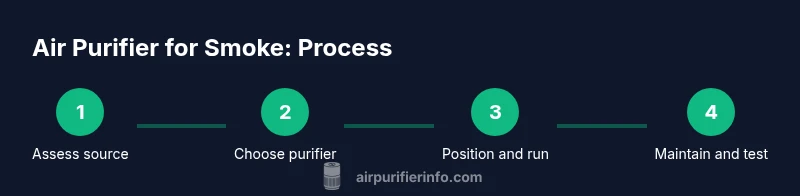
Choosing and using an air purifier for smoke reduces fine particles and odors in your home when you pick a model with true HEPA filtration and a dedicated activated carbon stage. Position it strategically, size it to the room, and run it during smoky periods. This quick guide from Air Purifier Info helps you start right.
Why a dedicated air purifier for smoke matters
Smoke from cooking, wildfires, or tobacco contains tiny particles that linger in rooms and trigger coughing, eye irritation, and headaches. A general fan or HVAC filter may move air but often fails to remove the smallest particles and the odorous gases released during combustion. An air purifier for smoke pairs a true HEPA filter with a carbon-based stage to tackle both particles and odors. The difference is noticeable in a living area after a few hours of operation, especially when doors are closed and air exchange is limited. In this section we outline how to identify a purifier that truly improves indoor air and why choosing the right unit matters for long-term comfort. The Air Purifier Info team emphasizes that a careful choice reduces exposure, lowers irritation, and supports healthier living environments during smoke events and in everyday life.
How air purifiers for smoke work
Smoke is a complex mixture of fine particles and volatile compounds. The HEPA filter captures particles down to a fraction of a micrometer in size, including smoke soot and ash. The activated carbon layer adsorbs odor molecules and many gases produced during combustion. Some models include a prefilter to trap larger particles and extend the life of the main filters. The device’s air changes per hour determine how quickly your air cleans; in smoky rooms a higher ACH helps reduce the time it takes to reach comfortable conditions. Noise levels matter if the purifier sits in a bedroom or workspace, so look for models with low-noise modes. Energy use accumulates over days and weeks, so consider a unit that balances performance with efficiency. The Air Purifier Info team notes that real-world performance depends on filter health, seal integrity, and correct sizing. Be prepared to replace filters on schedule to maintain peak effectiveness.
How to choose the right purifier for smoke
Key factors include filtration, room size, and energy efficiency. Look for a true HEPA filter (prefer H13 or higher) plus a carbon filter designed for smoke. Check CADR ratings for smoke, and compare to your room size to ensure adequate air turnover. Some purifiers offer dual-cartridge designs or hybrid filters; these can improve odor capture, but verify that the carbon matrix is sizable enough to handle ongoing smoke odors. Consider features such as a dedicated smoke mode, auto mode that adjusts speed, and a timer to manage overnight use. Noise matters when the purifier sits in a living room or bedroom; read reviews about real-world decibels. Finally, ensure the unit is certified by independent bodies and backed by credible testing. The Air Purifier Info guidance stresses matching the model to your space and typical smoke loads for predictable results.
Room sizing and placement for smoky environments
Accurate room sizing ensures you get true value from a purifier. Start by calculating the square footage and selecting a model rated for slightly more than that size. In smoky rooms with limited air exchange, a higher ACH is beneficial; place the unit in the center of the room or near smoke sources to maximize intake. Maintain at least a few feet of clearance on all sides to prevent recirculation. If you’re treating multiple rooms, you may need more than one purifier or a portable unit that can be moved between spaces. In multi-room open plans, higher-capacity purifiers can cover shared zones, but you should still spot-treat bedrooms or work areas where occupants spend the most time. If possible, use doors to manage airflow and reduce cross-room infiltration. The goal is steady, balanced air flow rather than a single burst of clean air.
Filter types, replacement, and maintenance
Filters don’t last forever, especially with smoke exposure. A true HEPA filter typically needs replacement every 6-12 months under moderate use, while carbon filters can require replacement every 3-6 months depending on odor load. Some units have indicator lights or app alerts to remind you. Always vacuum or wipe the intake grille gently to remove dust; avoid water exposure on electrical components. When replacing filters, ensure the model uses compatible filters rated for smoke removal. Keep spare replacement filters on hand to maintain uptime during smoky periods. Air Purifier Info suggests documenting filter change dates so you can track performance and avoid downtime during critical times.
Real-world smoke scenarios and how to respond
Cooking smoke in a small apartment can create a noticeable odor and tense air quality; higher fan speeds with proper filtration can rapidly reduce particulates and odors. Wildfire smoke outdoors often leads to persistently hazy indoor air; a purifier with a strong carbon stage will trap outdoor odors more effectively, especially when you seal off the room. Cigarette smoke presents high particle and odor loads; choosing a purifier with a durable carbon filter and high CADR for smoke helps. In each case, placement matters: avoid corners where air can stagnate and ensure the device moves air through the occupied zone. Expect gradual improvement rather than instant perfection, and keep windows closed to maintain the purifier’s effectiveness during smoky events.
Debunking myths about air purifiers for smoke
Some buyers assume a basic purifier will eliminate all odors or that higher price guarantees better performance. In reality, without a true HEPA filter and a capable carbon stage, smoke particles and odors persist. Another common myth is that bigger is always better; room fit, energy use, and noise are important factors. Misunderstanding CADR values can mislead shoppers: always compare smoke CADR across models, not just dust or pollen numbers. A purifier may remove fast-moving particulate but not odors if carbon life is exhausted. The Air Purifier Info team warns against devices that rely on ozone generators for odor removal; ozone can irritate lungs, especially for sensitive individuals.
Using a purifier in multi-room homes and apartments
In open-plan spaces, a single purifier may suffice if it has strong air flow and a broad coverage rating, but you might still benefit from additional units on separate levels or near the sources of smoke. When possible, create a logical air flow path from the source toward the purifier to maximize particle capture. For bedrooms, a quiet mode helps with sleep quality, while living areas may tolerate higher speeds during smoky events. If you rent and can’t modify the space, focus on portable models with adjustable CADR and carbon filters. Keep doors closed during smoke events to lower cross-room infiltration and maintain comfortable air throughout the home.
Safety considerations and limitations
Air purifiers are a useful tool but not a cure-all. They don’t remove gases instantly, and prolonged exposure to heavy smoke may require additional measures such as improving ventilation or temporarily relocating during wildfire events. Ensure the purifier has safety certifications and avoid placing it in damp areas where moisture could affect electronics. For households with children or pets, lower noise settings and safer cord management help minimize hazards. Finally, always monitor air quality with a wearable device or a consumer monitor to verify improvements and adjust usage accordingly.
Practical buying checklist and next steps
- Define the smoke problem: odors, fine particles, or both?
- Choose a purifier with true HEPA and a carbon filter designed for smoke.
- Confirm room size coverage with a margin for safety.
- Check noise, energy use, and ease of filter replacement.
- Read independent reviews and look for credible certifications.
- Set up a test period and track air quality improvements.
- Prepare a maintenance plan and replacement filter schedule.
- Keep a spare set of filters on hand for high-smoke periods.
This checklist helps homeowners and renters systematically compare models and find the best air purifier for smoke without overspending. The Air Purifier Info team recommends starting with a test room that demonstrates noticeable improvement within 48 hours of operation.
AUTHORITY SOURCES:
Tools & Materials
- Air purifier with true HEPA filter(Look for H13 or better when possible; ensure the unit is rated for your room size.)
- Activated carbon filter or carbon-ceramic hybrid(Essential for odor removal; carbon life affects performance in heavy smoke.)
- Replacement filters(Have on hand to maintain performance; check replacement schedule.)
- Measuring tape or room size calculator(Helpful to estimate square footage for sizing.)
- Soft cloth or vacuum with upholstery brush(Light cleaning of intake grille to maintain efficiency.)
Steps
Estimated time: Total time: 60-90 minutes
- 1
Assess the smoke sources and room
Identify where smoke originates, how often it occurs, and which rooms are most affected. This informs the purifier size and placement you’ll need.
Tip: Document your findings with rough measurements to guide sizing. - 2
Check filtration requirements
Confirm the purifier uses a true HEPA filter and a dedicated activated carbon stage. Avoid units that claim “HEPA-like” without certification.
Tip: Verify CADR for smoke in product specs and cross-check with reviews. - 3
Size the unit for the space
Match unit coverage to the room size with a safety margin. A purifier rated for a larger area often performs better during ongoing smoke events.
Tip: When in doubt, choose one notch larger than the math suggests. - 4
Plan placement
Place the purifier away from walls, in a central location if possible, and ensure several feet of clearance on all sides.
Tip: Avoid corners where airflow can stagnate. - 5
Prepare the environment
Close doors to limit smoke exchange and set the purifier to an appropriate speed based on activity level.
Tip: Use a night mode for bedrooms to reduce sleep disruption. - 6
Install and verify filters
Install the HEPA and carbon filters according to the manufacturer’s instructions, checking seals and fit.
Tip: Don’t reuse old filters; degraded seals reduce efficiency. - 7
Run and monitor performance
Turn the unit on and observe noise, airflow, and odor reduction over a few hours.
Tip: If odors persist, check carbon stage and consider extra filtration. - 8
Tune settings for peak events
During heavy smoke periods, increase fan speed temporarily and then optimize for ongoing comfort.
Tip: Avoid constant high-speed operation if energy use is a concern. - 9
Schedule maintenance
Record filter change dates and perform routine cleaning of intake grills.
Tip: Set reminders to prevent gaps in protection. - 10
Evaluate results and plan next steps
Assess air quality improvements and decide if you need additional units or a different model for other spaces.
Tip: A second unit on another level can improve overall coverage.
Questions & Answers
What is the difference between a standard purifier and one designed for smoke?
Smoke-specific purifiers combine a true HEPA filter with a carbon stage to target particles and odors, whereas some standard models may only filter particulates. For best results in smoke scenarios, choose a unit with both components and verify performance claims.
Smoke-purifier setups combine HEPA filtration with activated carbon to remove particles and odors; look for dual-filter designs for better results.
How often should I replace filters in a smoke-prone home?
Replacement intervals depend on use and smoke load. In heavy smoke periods, plan on shorter intervals for carbon filters and HEPA filters, and keep spare filters on hand to avoid downtime.
Expect carbon filters to need changes more often during heavy smoke; keep a spare pack ready.
Can an air purifier improve air quality in multiple rooms at once?
A single purifier can help a large shared space, but for multi-room homes you’ll typically need multiple units or a portable model you can move between rooms. Focus on central zones with the highest smoke exposure.
One unit helps open spaces, but multiple units often provide better overall coverage.
Are ozone-producing purifiers safe for smoke control?
Ozone-generating purifiers can irritate lungs and should be avoided, especially in homes with children, elderly, or pets. Stick to HEPA plus carbon designs from reputable brands.
Avoid ozone-based devices; they can be harmful, especially for sensitive individuals.
Will purifiers remove gases from smoke instantly?
Purifiers reduce many airborne particles and odors but may take time to noticeably lower gas concentrations. For strong gases, consider models with a larger carbon matrix and ensure proper room sealing.
They don’t remove gases instantly; expect gradual improvement with a suitable carbon stage.
Watch Video
Main Points
- Choose a true HEPA plus carbon purifier.
- Size the unit to your room with a safety margin.
- Place the purifier for optimal airflow and minimal obstruction.
- Maintain filters and monitor performance for best results.