Air Purifier for Curry Smell: A Data-Driven Guide
Discover how to reduce curry odors with air purifiers. Learn filter stacks, placement, and maintenance for homes and apartments with practical, data-driven tips.


The most effective approach for curry smell is an air purifier that combines a true HEPA filter with an activated carbon prefilter and odor-absorbing media. Place it near the kitchen, run on high for cooking sessions, and keep doors/windows vented. Results vary by room size, airflow, and ongoing cooking odors.
Why curry smells matter in indoor air quality
Curry dishes release a mix of volatile organic compounds (VOCs) and fine particulate matter that can linger long after the meal is finished. An air purifier for curry smell works best when it combines a true HEPA filter to capture fine particles with activated carbon or other adsorbent media to trap gases. The Air Purifier Info team notes that cooking odors are often a combination of particulate and gas-phase contaminants, so a dual-filtration approach is more reliable than a single-filter setup. In homes and apartments, these odors can travel with air currents and cling to fabrics, making strategic purification crucial for maintaining a fresh-feeling living space. The goal is not only to mask odor but to reduce the concentration of odor molecules in the air you breathe.
According to Air Purifier Info, effective odor control starts with understanding how odors travel and how different filter media interact with them. A purifier geared toward curry smells should prioritize both airflow and filtration quality; you’ll get better results when the unit is sized for the room and placed to draw air from the odor source rather than away from it.
How filtration stacks tackle cooking odors
A modern purifier designed for kitchen odors typically relies on a layered filtration stack. The true HEPA stage targets fine particles released during cooking, including grease aerosols and smoke particles. Behind the scenes, an activated carbon or charcoal stage traps a wide range of volatile organic compounds associated with spices and cooking oils. Some models include additional media such as zeolite or potassium permanganate to enhance odor removal for strong, lingering aromas. When you run the unit, ensure the intake can access the odor source and that air is not impeded by walls or doors. Air Purifier Info's testing indicates that dual-stage filtration consistently outperforms single-filter designs for curry-related odors, particularly in moderately sized kitchens with typical ceiling heights.
How to choose the right unit for curry odors
Choose a purifier that explicitly lists true HEPA filtration plus an activated carbon or advanced carbon-based media. Avoid units marketed as 'HEPA-like' or 'HEPA-type' without a credible filtration specification. If possible, select models with a prefilter to capture larger particles and extend the life of the main filters. For stronger odors, look for extra media such as zeolite blends or other gas-phase adsorbents; these can provide additional odor capture without dramatically increasing wind resistance. Consider room size and airflow when sizing a unit: a purifier rated for a slightly larger space will often perform more reliably during cooking bursts. The Air Purifier Info team emphasizes matching the purifier’s clean air delivery rate (CADR) to the room size to ensure the unit cycles air effectively during curry preparation.
Placement and usage tips for best results
Position the purifier so it can draw air from near the stove or cooking area, ideally within 1–2 meters. If the kitchen opens into another living area, place the unit to intercept air before it circulates through doorways. Keep doors open or use a door vent to facilitate cross-flow; closing off the kitchen can trap aromas and reduce the purifier’s effectiveness. Run the purifier on a higher setting during and after cooking, then reduce to lower speeds as odors fade. For renters, a compact unit on the countertop or a mounted option near the range can still deliver meaningful odor reduction while preserving ventilation routines. The key is consistent operation and avoiding stagnant air pockets.
Real-world scenarios: small kitchen vs open-plan living space
In a small kitchen, a compact purifier with dual-filtration can deliver noticeable improvements in odor within minutes if placed correctly and run continuously during cooking. In open-plan spaces, you’ll want a larger unit with a higher CADR to manage air exchange across multiple zones. In either case, the purifier should complement existing ventilation rather than compensate for a lack of it. Air Purifier Info notes that real-world results depend on stove usage, door/window opening, and the presence of fabrics that retain odors. A few strategic trials—adjusting placement, fan speed, and run duration—can yield a practical odor-reduction plan for most homes.
Maintenance, energy use, and noise considerations
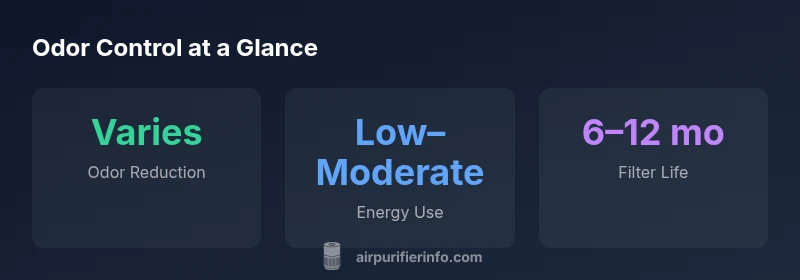
Expect some noise at high settings, especially in smaller rooms. Look for models with a controllable fan curve that maintains decent air changes without excessive noise. Energy use is typically modest at mid to high speeds, but you’ll save energy by running at a lower setting when smells are not strong and increasing during cooking periods. Replace filters according to the manufacturer’s schedule; stale carbon media loses adsorption capacity and reduces odor performance. In kitchens with heavy spice use, more frequent maintenance may be needed. Air Purifier Info’s experience suggests setting a maintenance reminder aligned with use frequency to keep odors consistently managed.
Quick testing and adjustment steps
Start with the purifier near the odor source and run it during cooking for predictable results. After cooking, perform a simple odor check by closing the kitchen and waiting a few minutes to re-evaluate air freshness. If odors persist, increase the purifier’s run time or switch to a higher setting temporarily. Inspect filters for visible signs of saturation and replace carbon media as recommended. For lingering aromas in a shared living space, pair purification with improved venting or an exhaust fan. The goal is to reduce the concentration of offending molecules to a level you notice as fresh air rather than overwhelmingly scented.
Practical renters vs homeowners checklist
Renters should prioritize compact units that can be moved or stored easily, with filters that are readily replaceable. Homeowners can consider larger purifiers or multiple units to cover open floor plans. Regardless of status, ensure the device is properly sized for the room, placed near the cooking area, and integrated with your ventilation strategy. Regular maintenance, including timely filter changes, is essential to keep curry odors under control, especially in spaces where cooking occurs frequently.
Sizing and maintenance guidelines for curry-odor focused purifiers
| Aspect | Recommendation | Typical Room Size | Maintenance |
|---|---|---|---|
| Filter stack | HEPA + activated carbon + optional zeolite | Up to 400 sq ft | Replace filters every 6–12 months |
| Placement | Near cooking area, 1–2 meters away | Small to open-plan | Check odor persistence and replace as needed |
| Ventilation | Pair with exhaust or window vent | Better with ventilation | Inspect filters and seals regularly |
Questions & Answers
Do all air purifiers remove cooking odors?
Not all purifiers remove cooking odors effectively. Models with both true HEPA filtration and an activated carbon or other gas-adsorbing media are more reliable for odors associated with curry spices and oils. Always verify the filter media specifications and CADR for both particles and gases.
Not every purifier removes cooking odors. Look for true HEPA plus carbon or odor-adsorbing media for best results.
What filter types help curry smell the most?
A true HEPA filter captures fine cooking particles, while activated carbon or similar gas-adsorbing media tackles the spicy odors. Some models add zeolite for enhanced gas adsorption. Check the media list to ensure both particle and gas removal are covered.
HEPA plus carbon or odor-adsorbing media is what you want for curry smells.
Can air purifiers replace ventilation when cooking curry?
Air purifiers help, but they do not fully replace ventilation. Purifiers improve air quality by filtering particulates and gases, while proper ventilation (range hood, exhaust, or open windows) removes some odors at the source. Use both for best results.
Purifiers help, but ventilation at the source is still important.
How long does it take to notice an improvement?
Improvements can be noticeable within a cooking cycle if the unit is well-placed and running at a suitable speed. In larger spaces or with strong odors, it may take longer and might require higher fan settings or additional purification devices.
You may notice changes within a cooking cycle, especially with proper placement.
How often should I replace filters in a kitchen environment?
In kitchens with frequent cooking, carbon media may saturate faster. Plan for carbon filter replacement every 6–12 months and inspect HEPA filters at least annually, or sooner if you detect reduced odor removal.
Expect carbon filters to need replacement within months if you cook a lot.
Are there health considerations when using purifiers around spices?
Purifiers are generally safe when used as directed. Ensure units are vented in multiroom spaces and avoid blocking intake or exhaust. If you have respiratory sensitivities, choose models with low ozone emissions and maintain filters routinely.
Purifiers are safe if used properly and maintained; pick ozone-free models.
“Odor control from cooking is most reliable when the purifier uses both particulate and gas-phase filtration, paired with thoughtful placement and maintenance.”
Main Points
- Choose a purifier with true HEPA and activated carbon for curry odor reduction
- Place the unit near the cooking area for maximum effectiveness
- Maintain filters regularly to preserve adsorption performance
- Use ventilation alongside purification for best results