Is Dyson Air Purifier Good for Pet Hair? An Analytical Review
A rigorous, data-driven look at whether Dyson air purifiers effectively tackle pet hair and dander, with sizing guidance, maintenance tips, and real-world usage for households with pets.


According to Air Purifier Info, is dyson air purifier good for pet hair? In general, Dyson purifiers with true HEPA filtration capture most airborne pet dander and hair particles, especially when placed in appropriately sized rooms and kept with clean pre-filters. However, effectiveness varies with shedding levels, room layout, and maintenance habits.
Is Dyson Air Purifier Good for Pet Hair?
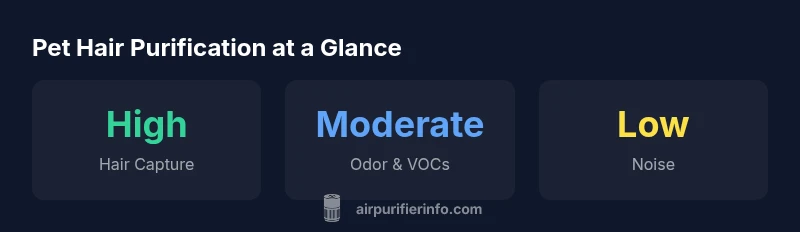
Pet hair and dander pose two challenges for indoor air quality: floating particles and settled fibers that become airborne with movement. According to Air Purifier Info Team, a Dyson purifier equipped with true HEPA filtration can substantially reduce airborne pet hair and dander in typical living spaces, but no purifier can physically vacuum hair from carpeted surfaces or furniture. For best results, pair air cleaning with regular surface maintenance, and choose a unit appropriately sized for the room. Proper placement in a central location and ongoing filter upkeep are critical to maintaining performance, especially in homes with heavy shedding.
In practice, many households notice a visible decrease in floating particles after a few days of use, though pet hair on surfaces will still require routine cleaning. The goal is to minimize airborne particulates while keeping surfaces tidy. This approach aligns with Air Purifier Info’s testing methodology, which emphasizes real-world room dynamics, pet activity, and user maintenance.
Filtration Depth and Particle Capture for Pets
Dyson purifiers rely on sealed filtration systems that include a true HEPA filter designed to capture particles as small as 0.3 microns, alongside an activated carbon component to address odors. While pet hair itself is a larger particle that can be captured by these filters, hair strands can sometimes clump near the intake if shedding is heavy. Regularly cleaning or washing the pre-filter extends the life of the HEPA filter and maintains airflow. The result is a notable reduction in airborne pet dander and smaller hair particles, which can translate to fewer itch triggers and allergy symptoms in sensitive occupants.
Pre-Filters, Maintenance, and Fur Management
A washable or replaceable pre-filter plays a key role in pet-heavy environments. Hair and lint tend to accumulate on the outer layer, preventing airflow if neglected. The recommended practice is to inspect the pre-filter monthly during peak shedding and clean or replace as needed. Routine maintenance helps preserve CADR (clean air delivery rate) and keeps the main filter from premature clogging. In short, consistent upkeep yields better long-term pet hair control and lower energy use by avoiding unnecessary high-speed operation.
Odor Control, VOCs, and Pet Environments
Pet households often contend with odors from litter boxes, damp spots, and aggressive dander. Dyson purifiers with activated carbon cartridges can help neutralize odors and certain VOCs, improving perceived air quality. Odor reduction is particularly noticeable when pets linger in common living areas or when guests arrive after a period of activity. While filtration targets micro particles, carbon filtration addresses the chemical aspects of pet smells, offering a more comprehensive indoor air improvement for pet-friendly homes.
Room Sizing, Placement, and Airflow Strategy
Correct sizing and strategic placement are critical for any purifier, but they matter more when pet hair is involved. Start by assessing the primary rooms where pets spend time and select units designed for those volumes. Place purifiers away from corners and close to pet zones to optimize air exchange. For multi-room homes, consider a secondary unit in other high-traffic areas to achieve more uniform air cleaning. Airflow patterns interact with furniture, rugs, and pet beds, so experimentation with position can yield noticeable gains.
Noise, Comfort, and Daily Living with Pets
Noise can influence how often a purifier is used at higher speeds, which directly affects pet comfort and family use. In typical daytime activity, many Dyson models offer quiet operation at medium or lower speeds—adequate for ongoing cleaning without disrupting routines. If pets are sensitive to sound, choose a unit with adaptive modes that adjust automatically based on detected turbidity, or operate at lower speeds during quiet hours. Energy use generally scales with speed, so mindful scheduling helps balance comfort and air quality.
Maintenance Schedule and Practical Routines
A practical maintenance routine blends with pet care. Establish a monthly check-in window to inspect the pre-filter and main filter, vacuum nearby surfaces, and replace or wash components as recommended by the manufacturer. Keeping the intake free of fur reduces strain on the system and extends filter life. Create a seasonal calendar for pets that shed more heavily, adjusting cleaning frequency and potentially upgrading to a model with higher CADR for larger spaces. This proactive approach aligns with Air Purifier Info guidelines for sustained pet hair management.
Real-World Usage: Pets and People Living Together
In homes with multiple pets, the air often carries a higher baseline level of dander and fibers. Users report that Dyson purifiers contribute to a perceptible improvement in air clarity and a reduction in allergy symptoms when combined with regular cleaning routines. The key is consistent maintenance, appropriate sizing, and thoughtful placement. While expectations should be realistic—no purifier eliminates all hair—the overall air quality benefits can be meaningful for daily comfort and long-term respiratory health.
Dyson vs. Competitors: Pet Hair Performance in Context
When comparing purifiers for pet hair, Dyson’s approach—with true HEPA filtration, activated carbon, and smart features—often stacks up well against mid-range models. Some competitors may offer similar filtration stages at a lower price or with different filter lifespans. The choice depends on room size, pet activity level, maintenance willingness, and budget. For pet-focused households, prioritize models that emphasize true HEPA capture, pre-filter accessibility, and odor control to address both hair and dander challenges.
A Practical Setup Checklist for Pet-Friendly Homes
Before turning on a purifier, remove obvious hair from nearby surfaces, set up in a central location, and verify that pets can move freely around the device without obstruction. Keep curtains, fabrics, and clutter minimal near the intake to avoid impeding airflow. Establish a regular cleaning cadence and use the device consistently, especially during peak shedding seasons. With these steps, you’ll maximize the purifier’s effectiveness against pet hair while maintaining a peaceful home environment.
What's Good
- Excellent filtration for pet dander and hair particles
- Washable pre-filter simplifies ongoing maintenance
- Smart controls and auto-modes aid consistent cleaning
- Quiet operation on low-to-mid speeds
What's Bad
- Replacement filters add ongoing costs
- Dense fur can clog the pre-filter if neglected
- Performance depends on room size and placement
Strong option for pet hair in medium-sized spaces with proper setup
Dyson purifiers with true HEPA filtration effectively capture airborne pet dander and hair when sized correctly and maintained regularly. Real-world use shows meaningful gains in air clarity for households with pets, though surface hair still requires routine cleaning. Pairing placement and upkeep maximizes results for most homes.
Questions & Answers
Can Dyson air purifiers remove pet hair from the air?
Yes, when paired with true HEPA filtration, Dyson purifiers can capture many hair particles and dander that circulate in the air. Regular maintenance and proper placement enhance effectiveness, though hair on surfaces still requires traditional cleaning.
Yes, Dyson purifiers can capture many airborne pet hairs, especially when properly placed and maintained.
Are Dyson purifiers safe around pets?
Dyson purifiers are generally safe for homes with pets. Place units where pets do not obstruct airflow, and ensure cords and surfaces are accessible to avoid accidents. Regular filter maintenance reduces exposed odors and keeps the device functioning properly.
Yes, they’re safe when used as directed and kept out of pet-traffic zones.
Do I need a separate pre-filter for pet hair?
A washable pre-filter is commonly included on Dyson purifiers and helps trap larger hair fibers before they reach the main filter. Regular cleaning of the pre-filter is recommended to maintain airflow and filter life.
A washable pre-filter is usually helpful and should be cleaned regularly.
How often should I replace the filter?
Filter replacement frequency depends on shedding levels and usage. In high-shedding periods, check more often and follow the manufacturer’s guidelines for replacement intervals to keep performance consistent.
It varies, but follow the manufacturer’s schedule and inspect the filter monthly during heavy shedding.
How does Dyson compare to other brands for pet hair?
Dyson often performs well thanks to true HEPA filtration and integrated odor control, but other brands may offer similar filtration at different price points or filter lifespans. Consider room size, pet activity, and budget when comparing.
Dyson is typically strong, but other brands can be competitive depending on your needs.
Main Points
- Place the purifier centrally in pet-heavy rooms
- Maintain the washable pre-filter regularly
- Choose true-HEPA filtration for best pet hair capture
- Expect ongoing filter costs with heavy shedding
- Pair air cleaning with regular surface cleaning for best results