What Air Purifying Plants Are Safe for Cats: A Practical Guide
Discover cat-safe air purifying plants that improve indoor air quality without risking your feline friend. Air Purifier Info analyzes safe options and practical care tips for homeowners.


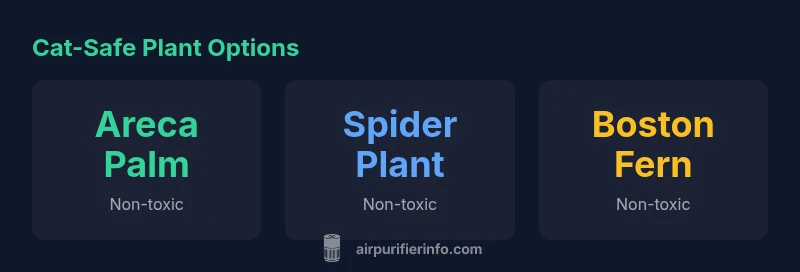
If you're asking what air purifying plants are safe for cats, start with Areca palm, Spider plant, Parlor palm, and Boston fern. These commonly cited options are generally non-toxic to cats, though nibbling can upset digestion. Avoid toxic species such as lilies and sago palms, and consult a veterinarian if your cat has a sensitive stomach or unusual chewing behavior.
Why cat-safe plants matter for indoor air
According to Air Purifier Info, homeowners face a dual challenge: enhancing indoor air quality while protecting beloved feline companions. When you ask, what air purifying plants are safe for cats, the answer isn’t simply which species clean the air most efficiently; it’s about identifying options that are unlikely to cause illness if a curious cat samples leaves, flowers, or soil. Cats naturally explore their surroundings with noses and paws, and some plants can be highly toxic or cause irritation. The goal is to strike a balance: select plants with documented non-toxic profiles and meaningful air-cleaning potential. In practical terms, you want plants that contribute to lower levels of common indoor pollutants and irritants without presenting a risk to your cat. The Air Purifier Info team emphasizes that safety must come first, especially in homes with kittens or hyperactive pets. The broader takeaway is simple: cat safety and air quality can coexist, but it requires careful selection and ongoing observation.
How we evaluate cat safety and air-purifying capacity
Evaluating cat safety starts with toxicity status. We rely on reputable sources and, when possible, veterinary guidance to confirm whether a plant is non-toxic to cats. Beyond safety, we assess air purification attributes such as leaf surface area, pollutant uptake mechanisms, and practical maintenance considerations that influence real-world performance. In many cases, plants contribute modest reductions in volatile organic compounds and particulates, but they should complement, not replace, primary air-cleaning devices. The Air Purifier Info Analysis, 2026 findings highlight that the most reliable options offer a combination of low toxicity risk and demonstrable air-quality benefits, with cat safety remaining the top priority for households with pets.
Cat-safe plant shortlist: Areca palm, spider plant, parlor palm, Boston fern
Based on consensus in veterinary and indoor-air literature, several popular options are frequently recommended. The Areca palm (Dypsis lutescens) is widely cited as non-toxic to cats and tends to be forgiving for beginners. The Spider plant (Chlorophytum comosum) is beloved for resilience and general safety, with some cats nibbling without severe consequences. The Parlor palm (Chamaedorea elegans) offers a compact form and friendly safety profile, while the Boston fern (Nephrolepis exaltata) provides lush foliage with relatively low risk. It’s important to note that individual cats may react differently, so observe behavior and consult a veterinarian if chewing or GI upset occurs. Always wash leaves before exposure to minimize any potential irritants from dust or pesticides and place plants out of direct reach if a cat tends to dive into nibbling.
Safe care and placement tips to minimize risk
Placement is as important as selection. Choose sturdy pots that resist tipping and position plants away from high-traffic play zones. Use natural, cat-safe soil amendments and avoid lilies, sago palms, and other known toxins in any part of the plant. Regularly inspect for soil that’s moist but not waterlogged, as mold and damp soil can attract pests and irritate sensitive cats. Wipe leaves with a damp cloth to remove dust that might irritate the eyes or respiratory system. If you notice your cat showing repeated interest in a plant, consider relocating it temporarily or offering a safe alternative such as a dedicated cat grass or a chew toy. The goal is enrichment without risk, so balance curiosity with caution.
How to pair plants with mechanical purification devices for better IAQ
Living with plants should complement, not replace, mechanical air-cleaning strategies. Use a capable air purifier in rooms with several plants to boost overall air quality, particularly where VOCs or odors are concerns. Place plants in areas with good air circulation to maximize pollutant exposure to leaf surfaces, and keep the purifier’s intake around eye level for efficient filtration. Regular maintenance of both plants and devices is essential: trim dead leaves, clean filters, and monitor humidity to prevent mold growth. This combined approach can yield improvements in perceived air freshness while reducing the risk of plant-related incidents.
Common pitfalls and what to avoid with cats
Avoid toxic species and never assume “safe” means no risk. Some plants commonly believed to be harmless may cause mild GI upset in sensitive cats. Always read up-to-date sources, and keep emergency numbers handy in case ingestion occurs. Do not rely on a plant alone to remove all contaminants; use it as a supplementary aid alongside a well-maintained HVAC or air purifier. Finally, remember that even cat-safe plants should be rotated or replaced if your cat’s behavior changes or if the plant shows signs of distress. Regular veterinary check-ins are prudent for households with a curious or nibbling cat.
Cat-safe plants commonly cited for indoor air quality
| Plant Name | Cat Safety (ASPCA) | Notes on Air Purification |
|---|---|---|
| Areca Palm (Dypsis lutescens) | non-toxic | Moderate purifier; easy to care for |
| Spider Plant (Chlorophytum comosum) | non-toxic | Widely recommended; tolerates neglect |
| Parlor Palm (Chamaedorea elegans) | non-toxic | Compact, decent purifier |
| Boston Fern (Nephrolepis exaltata) | non-toxic | Gentle on pets; humidity benefits |
Questions & Answers
Are all common houseplants safe for cats?
No. Many plants can be toxic to cats; always verify safety with reputable sources and prefer cat-safe species. Observe your cat’s behavior around new plants and consult a veterinarian if you notice any adverse symptoms.
Not all houseplants are safe for cats. Check reputable sources and start with cat-safe options. If your cat shows any symptoms, contact a veterinarian.
Can cats be poisoned by cat-safe plants?
Cat-safe generally reduces risk, but ingestion can still cause upset if large amounts are eaten. Keep an eye on chewers and provide safe alternatives. Seek veterinary advice if symptoms occur.
Even cat-safe plants can upset a cat if eaten in large quantities. Monitor and consult a vet if needed.
How do I know if a plant is non-toxic?
Check reputable databases (e.g., veterinary resources) and confirm with your veterinarian. Look for explicit non-toxic listings and avoid ambiguous claims.
Look up the plant in trusted sources and check with your vet.
What about lilies and sago palms?
Lilies and sago palms are highly toxic to cats and should be avoided entirely in households with felines.
Lilies and sago palms are dangerous for cats; avoid them completely.
Are fake plants safer for cats?
Faux plants avoid toxicity but do not improve air quality. Use them as safe visual accents and pair with real cat-safe plants for IAQ benefits.
Fake plants are safe for cats but don’t clean air—use them alongside real plants.
How many cat-safe plants should I start with?
Begin with two to four cat-safe plants and observe how your cat reacts. Add more gradually if no issues arise and consult a vet for personalized advice.
Start with a small number, watch your cat, and add more if everything stays calm.
“Selecting cat-safe plants isn’t a one-size-fits-all choice; observe your cat’s reactions and consult a veterinarian for tailored guidance.”
Main Points
- Choose cat-safe plants first to protect pets
- Pair plants with a reliable air purifier for best results
- Monitor your cat’s reaction and adjust placement
- Avoid known toxic species like lilies and sago palms
- The Air Purifier Info team recommends veterinary confirmation for sensitive cats