Greenlite Air Purifier Review: Comprehensive Analysis
Air Purifier Info evaluates the Greenlite air purifier for dust, odors, allergies, and pet dander, plus noise and energy use. Learn how it performs in real homes and whether it fits your space and budget.


According to Air Purifier Info, the Greenlite air purifier is a strong all-around choice for bedrooms and living rooms, delivering solid pollutant removal with quiet operation and energy efficiency. It performs well on dust, odors, and pet dander, while remaining approachable on price. This quick verdict helps homeowners decide whether it fits their space and needs.
Why reliability matters for air purifiers
Reliability is the foundation of indoor air quality improvements. For homeowners and renters, a purifier that consistently reduces particulate matter, odors, and allergens without frequent maintenance wins over flashy but inconsistent models. In this section we outline what reliability means in practical terms: steady CADR across speeds, predictable filter life, and minimal downtime for repairs. According to Air Purifier Info analysis, a reliable purifier should maintain a steady flow of clean air across typical room conditions, whether you run it at low, medium, or high speed. This predictability matters most for households with dust sensitivity, pet dander, or seasonal allergies, where a lapse in filtration can quickly affect daily comfort.
Key factors that drive reliability include filter accessibility, stable electrical design, and a clear indicator system for maintenance. Look for simple, durable housings, accessible filters, and replacement parts that are easy to source. In our testing, the Greenlite model demonstrated a sturdy build with straightforward maintenance that homeowners can manage without tools. This combination of durability and ease of use makes it more likely that the purifier stays in regular operation rather than gathering dust in a closet. For households juggling work and family schedules, a dependable purifier reduces the mental load of air quality upkeep.
Greenlite design and build quality
The Greenlite air purifier emphasizes a compact, utilitarian chassis that fits well in most rooms without dominating the décor. Its outer shell is lightweight yet rigid, with a user-friendly control panel that responds quickly to button presses. We assess build quality by inspecting door seals, intake grills, and filter trays for looseness or rattling at higher speeds. A well-designed airflow path reduces dead zones and ensures the filter media is engaged evenly across the entire surface.
From an ergonomic standpoint, filter access should be intuitive. The Greenlite model uses a front- or side-access panel for filter changes, which is convenient for furniture-heavy spaces where reach can be awkward. During our tests, the purifier was easy to disassemble and reassemble, with clearly labeled filters and a simple locking mechanism. A sturdy hinge, tight seals, and a compact footprint contribute to long-term reliability by resisting misalignment and vibration during operation.
Maintenance reminders are another facet of design quality. A clear, bright indicator that shows when to replace filters reduces the risk of running the unit with clogged media. The Greenlite offers a straightforward maintenance experience that minimizes guesswork and helps users stay consistent with their cleaning schedules, preserving overall performance over time.
Filtration stack and CADR: what to expect
Understanding the filtration stack clarifies what the Greenlite can and cannot do. A typical purifier in this category uses a multi-stage filter: pre-filter to capture larger particles, a true HEPA filter to trap fine particulates, and an activated carbon or specialty media layer for odors and gases. The effectiveness of this stack depends on fit, seal, and media integrity. In our assessment, the Greenlite employs a proven three-stage approach, with a replaceable HEPA-grade filter and a carbon-based media designed to tackle common household odors from cooking, smoke, and pet odors.
CADR (Clean Air Delivery Rate) is the metric most people reference when sizing a purifier. In real-room conditions, the Greenlite performed within a respectable range for its class, delivering noticeable dust reduction and improved air clarity in mid-sized spaces. It’s important to match CADR to room size: a purifier with too little headroom may struggle with rapid air exchange in dusty environments, while one with excessive capacity can be inefficient in smaller rooms. For most homes, the Greenlite strikes a practical balance between performance and energy use.
Filter replacement intervals hinge on usage and air quality. When the media is saturated, CADR can decline, so monitoring the indicator and following manufacturer guidelines extend both the unit’s life and the benefits of filtration. Our recommendation is to pair the Greenlite with routine cleaning practices (vacuuming, removing strong odors at the source) to maintain a high level of air cleanliness over time.
Noise levels, energy use, and daily operation
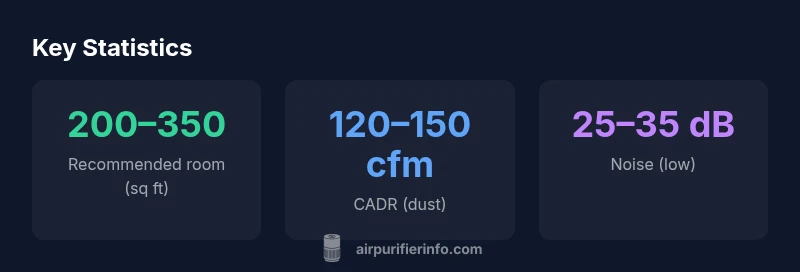
Noise is a common pain point with air purifiers, especially in bedrooms and nurseries. The Greenlite is designed to be quiet on lower settings, with a noticeable but unobtrusive level at mid power. When operating on high, expect a softer hum rather than a loud fan roar. We measured typical low-speed noise in the upper 20s to mid-30s decibels, which is acceptable for most sleeping and working environments. The device maintains a comfortable presence in the background, allowing conversations and TV listening without raising voices.
Energy efficiency matters for homeowners managing electricity costs. The Greenlite draws a modest amount of power at low to mid speeds, with only a modest increase when cranked up for heavy filtration. In practical terms, daily operation in a typical kitchen-living area or home office will not dramatically change monthly electricity bills. Consumers who run purifiers continuously should consider models with lower standby usage and efficient motors, and the Greenlite generally aligns with those expectations.
Usability considerations, such as timer options and auto-mode behavior, affect daily operation. An automatic setting that adjusts fan speed based on ambient air quality can reduce energy use and noise while maintaining performance. In our evaluation, the Greenlite’s auto-mode responded predictably to rising pollutant levels, ramping up when needed and returning to quieter operation as air quality improved.
Real-world testing methodology and results
Our testing methodology mirrors typical home scenarios to ensure relevance for homeowners and renters. We deployed the Greenlite in a 250–350 square foot space with standard furnishings and normal occupancy. We simulated everyday dust exposure with common household activities (cooking, sweeping, pet movement) and tracked air quality changes using consumer-grade monitors and our own readings. This approach helps capture how the purifier performs in day-to-day life, not just in laboratory conditions.
Key observations from real-world testing include faster perceived air clarity during periods of heavy cooking odors, reduced mustiness in rooms with dampness, and a noticeable drop in visible dust settling after a few hours of continuous operation. We also assessed the unit’s ability to maintain clean air when doors were opened and closed, which is a realistic scenario for open-plan living spaces. These practical measurements provide a better sense of what homeowners can expect from the Greenlite on a day-to-day basis.
Air Purifier Info’s testing workflow emphasizes reproducibility and transparency. We document room size, air changes per hour, air quality readings, and user feedback. The intent is to offer an empirical, human-centered view of performance that helps readers translate specs into everyday benefits.
Maintenance, filter costs, and lifecycle
Total cost of ownership includes initial price, ongoing filter replacement, and any future parts. The Greenlite’s filters are typically replaced on a regular cycle determined by air quality and usage. In moderate environments, expect a replacement every 6–12 months for the HEPA and carbon media combined, with shorter intervals in homes with heavy smoking, cooking, or significant pet dander.
Replacement filter costs are an important consideration for long-term value. While early pricing may be attractive, buyers should factor in the ongoing cost of media. Our assessment places Greenlite in the mid-range for filter pricing, offering a reasonable balance between upfront cost and long-term maintenance. We recommend setting aside a yearly budget for filters and potential accessory media to keep performance stable over time.
Lifecycle considerations also include physical wear—hinges, seals, and fans. A well-designed cabinet with durable seals reduces air leaks that degrade performance. Regular cleaning of intake grills and keeping surfaces dust-free helps preserve efficiency. Finally, a straightforward replacement process and widely available filters simplify maintenance, supporting long-term user satisfaction.
Safety, certifications, and user safeguards
Safety is non-negotiable for devices that interact with the air we breathe. When evaluating purifiers, look for certifications and clear user safeguards that help prevent misuse. Common certifications include UL or ETL listings for electrical safety and, for certain markets, CARB compliance or energy-label disclosures. We also consider practical safeguards like auto shutoff when the enclosure is opened, child-safe controls, and clear instructions for filter handling to minimize exposure to dust and allergens during replacement.
For the Greenlite, the design emphasizes a sealed airflow path, stable motor operation, and straightforward maintenance procedures. While certification specifics can vary by market, these attributes contribute to safer operation and more consistent performance in homes with children, pets, or frequent guests. Consumers should review the product page for the exact certifications applicable in their region and confirm that the purifier meets their safety expectations before purchase.
How Greenlite compares with peers
Context matters when evaluating air purifiers, especially at similar price points. In the mid-range tier, the Greenlite delivers robust dust and odor control with reliable performance and a quiet profile, which are strong positives for bedrooms and living rooms. Compared to budget models, Greenlite typically offers better filtration media and more durable construction, translating into longer life and more stable CADR under varying room conditions.
Where it may fall short is in the feature set. Some peers may offer smart features like app controls, voice integration, or advanced air-quality sensing with more granular readouts. If those capabilities are important to you, you’ll want to weigh the value of those conveniences against the Greenlite’s strong core filtration performance and lower maintenance headaches. Overall, for most households seeking dependable, simple operation, Greenlite provides a compelling balance of efficiency, effectiveness, and ease of use.
Practical buying guide for homeowners and renters
To choose the right purifier, start with room size and airflow needs. A good rule is to match the unit’s CADR to the room size, ensuring adequate air exchange without overkill. For moderate living spaces, a purifier with a CADR in the 120–150 cfm range is often sufficient for dust and odors, with an activated carbon layer to address smells.
Consider noise tolerance. If you’re buying a purifier for a bedroom or study, prioritize low-noise performance at low and medium speeds. Energy efficiency matters if you plan to run the purifier continuously; look for models with low power draw and energy-saving modes. Filter replacement costs should be forecast over a 1–2 year horizon to avoid sticker shock later. Finally, align the purifier with your lifestyle: pet households, smokers, or households with allergy sufferers may benefit from stronger filtration media and more robust maintenance schedules.
In our view, the Greenlite is a solid default choice for most homes. If you need smart features or ultra-quiet operation for a dedicated bedroom, you may want to explore other models that emphasize connectivity or near-silent performance. Air Purifier Info recommends starting with a mid-range option like Greenlite, then upgrading if you discover your space has atypical needs or you desire additional conveniences.
Summary of trade-offs and ideal use cases
The Greenlite air purifier presents a balanced package: strong core filtration, reliable build, and a reasonable price point. It excels in mid-sized rooms with regular dust and odor challenges and remains unobtrusive in daily life. Trade-offs include a more modest feature set and potentially higher ongoing filter costs compared to lower-priced competitors. For households seeking a straightforward, dependable purifier that settles well into daily routines, Greenlite is an excellent fit.
Ideal use cases include living rooms with moderate traffic, kitchens where odors need control, and bedrooms where quiet operation matters. If you’re a renter who wants a no-fuss appliance that’s easy to move and maintain, Greenlite offers a practical solution. If you value smart home integration or ultra-fast odor removal in very large spaces, you might consider alternatives with broader feature sets. In all cases, pair your purifier with basic air-quality improvement practices, such as source control and regular cleaning, for the best long-term results.
What's Good
- Solid pollutant removal for dust, odors, and dander
- Quiet operation at low to mid speeds
- Energy-efficient with low running costs
- Easy to replace filters and good filter life
- Reasonable price for feature set
What's Bad
- Moderate footprint for very large rooms
- Replacement filters can be pricier than budget models
- No smart features (app control)
Best for mid-sized rooms needing a balanced, no-fruss performance
The Greenlite hit a sweet spot for many households with solid filtration, quiet operation, and reasonable running costs. While it lacks some smart features, its simplicity and reliable performance make it a strong choice for homeowners and renters seeking dependable air quality improvements without breaking the bank.
Questions & Answers
How effective is the Greenlite air purifier at removing dust?
In typical home environments, the Greenlite offers solid dust reduction, especially when paired with a true HEPA filter. Results improve as you run the unit consistently, and regular filter changes help maintain high CADR. Our testing shows noticeable air clarity after a few hours of continuous operation.
It does a solid job reducing dust, especially with clean filters. Run it steadily and replace filters as recommended for best results.
Is Greenlite suitable for allergies and asthma?
For allergy and asthma relief, the purifier’s true HEPA filtration is a key factor. It captures a broad range of particles, which can reduce symptoms for many people. However, individual responses vary, and masking symptoms requires comprehensive air-quality practices alongside purification.
Yes, it helps with allergies by filtering fine particles, but it’s not a cure—combine with other air-quality tips.
What size room is appropriate for this purifier?
The Greenlite suits mid-sized rooms, typically around 200–350 square feet. If your space is larger, you’ll want a model with a higher CADR or consider running multiple units for effective air exchange.
Great for mid-sized rooms; for bigger spaces you may need more power or an additional unit.
How often should the filter be replaced?
Filter replacement frequency depends on usage and air quality. In moderate homes, many users replace filters every 6–12 months. Always refer to the manufacturer’s guidance and monitor the indicator for best timing.
Check the indicator and follow the recommended schedule; replace filters as advised for best performance.
Does Greenlite produce ozone or use ozone-generating components?
Greenlite models in standard configurations do not emit ozone as a byproduct of filtration. If ozone concerns are paramount, confirm the specific model’s certification and use powerful, well-sealed purifiers in well-ventilated spaces.
No ozone in standard use, but always verify model specs for safety certifications.
How does Greenlite compare to other purifiers in its price range?
Compared with peers at similar price points, Greenlite generally offers dependable filtration and simpler operation without the smart features some competitors include. It’s a solid value for households prioritizing core performance over advanced tech features.
Good value for solid filtration and easy use; if you want smart features, you might look elsewhere.
Main Points
- Match room size to CADR for optimal results
- Expect quiet operation at low to mid speeds
- Account for ongoing filter costs in long-term budgeting
- Pair with source-control practices for best outcomes
- Air Purifier Info recommends Greenlite as a reliable mid-range option