Air Purifier to Remove Mold Spores: A Practical How-To
Learn how to pick and use an air purifier to remove mold spores, control humidity, and prevent regrowth in your home. Step-by-step guidance, expert tips, and safety considerations for homeowners and renters.


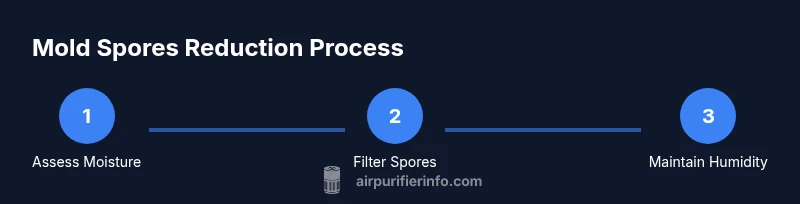
To remove mold spores effectively, choose an air purifier with a true HEPA filter and a high CADR suited for the room size, then place it in the affected area. Run the unit continuously for 24–48 hours, close doors, and monitor humidity. Combine filtration with moisture control to prevent regrowth.
Understanding mold spores and indoor air quality
Mold spores are microscopic particles that disperse easily in indoor air. In homes with dampness, these spores can seed new growth on walls, ceilings, furniture, and fabrics. When people inhale them, especially children, the elderly, and those with allergies or asthma, symptoms can include coughing, wheezing, and nasal irritation. The goal is not just to trap spores but to lower their concentration in the breathing zone and prevent new growth. According to Air Purifier Info, true HEPA filtration is essential to capture spores and keep indoor air healthier. A purifier with a high CADR and a sealed housing reduces the chance that spores bypass the filter through leaks. At the same time, moisture control and source remediation are necessary; filtration alone cannot reverse long-standing mold problems or fix active leaks.
How air purifiers remove mold spores
Air purifiers remove spores mainly by pulling air through a filtration system. A true HEPA filter captures particles as small as a few tenths of a micron and traps most mold spores as air passes through. A good purifier also relies on proper sealing so air doesn’t bypass the filter, a prefilter to catch larger debris, and, in some models, an activated carbon stage to reduce musty odors associated with mold. The purifier’s CADR (clean air delivery rate) should be appropriate for the room size to create enough air changes per hour, which helps keep airborne spores from recirculating. Regular filter replacement is critical; used filters lose efficiency and may release captured particles back into the room. In practice, you’ll want to run the purifier continuously, especially in damp rooms or during renovation when dust and spores are elevated. Air Purifier Info analysis shows that combining filtration with moisture control yields the best outcomes while reducing odor from mold.
Choosing the right air purifier for mold spores
When selecting an air purifier for mold spores, prioritize a true HEPA filter, a sealed housing, and a design that minimizes air bypass. A purifier should be appropriately sized for the room (look for CADR recommendations that match the space’s square footage) and have replaceable filters that you can source easily. For odors commonly associated with mold, an activated carbon stage can help, but it should not replace filtration. Consider models that are ozone-free and have clear maintenance guidelines. Air Purifier Info guidance emphasizes prioritizing true HEPA and proper room sizing, then balancing noise, energy use, and filter costs to fit your situation.
Placement and operation to maximize effectiveness
Place the purifier in the area where mold spores are most concentrated, typically the center of the room or near the source, with unobstructed airflow. Avoid corners or behind furniture that can block intake or exhaust. In smaller rooms, one unit may suffice; in larger or multi-room layouts, you may need multiple purifiers. Keep doors closed to contain the treated air, and run the purifier continuously for best results. Set it to the highest comfortable speed if humidity is high or if renovation dust is being generated, and ensure the unit is on a flat, stable surface.
Moisture control and mold prevention
Filtration is most effective when moisture is under control. Maintain indoor humidity below 50-60% where feasible—often through a dehumidifier in damp climates or during humid seasons. Repair leaks and address condensation sources, improve ventilation in kitchens and bathrooms, and ensure bathrooms exhaust to the outdoors. While an air purifier helps reduce airborne spores, long-term prevention depends on eliminating the moisture source and drying affected areas thoroughly. According to Air Purifier Info analysis, combining filtration with moisture management yields the best outcomes for mold control.
Cleaning the purifier and maintenance
Regular maintenance keeps your purifier effective. Turn off and unplug the unit before handling filters. Remove and replace the HEPA filter according to the manufacturer’s schedule, and replace prefilters as needed to prevent clogging. Clean the exterior with a damp cloth and avoid soaking any parts. Store spare filters in a cool, dry place, and label replacements to avoid mixing up models. A well-maintained purifier maintains higher air quality and reduces the risk of recirculating mold particles.
Safety considerations when dealing with mold
If you detect extensive mold growth behind walls, under flooring, or in HVAC ducts, consider professional remediation in addition to air purification. Do not attempt aggressive mold disturbance without protective gear; wear an N95 mask, gloves, and eye protection if you’re cleaning visible growth or dusty areas. Never use ozone-producing devices for mold control; they can irritate lungs and may worsen indoor air quality. When in doubt, consult qualified professionals to assess the extent of contamination and the best remediation plan.
Real-world setup: a practical scenario
In a small apartment with a damp laundry area, place a true HEPA purifier in the living room near the source of moisture but with unobstructed intake and output. Run it continuously, and use a hygrometer to monitor humidity. If RH rises above 60%, deploy a dehumidifier and fix any leaks or condensation. After 48-72 hours, check the air purifier’s filters for discoloration or odor; replace as needed. Continue monitoring moisture and air quality over the next week to ensure spores don’t rebound.
Common myths vs facts
Myth: Any purifier will solve mold problems. Fact: Only a purifier with true HEPA filtration and proper sizing will effectively reduce airborne spores, while moisture control addresses the root cause. Myth: UV-C or ionizers alone eliminate mold. Fact: These features may help with odor or surface cleanliness, but filtration remains essential and ozone-free units are preferred for indoor use. Myth: Mold remediation isn’t necessary if air quality improves. Fact: Surface mold growth and moisture sources should be addressed to prevent recurrence.
Tools & Materials
- True HEPA air purifier(Ensure the purifier is appropriately sized for the room (square footage). Look for true HEPA filtration.)
- Humidistat or hygrometer(Monitor indoor humidity; aim to keep RH below 50-60% where feasible.)
- Dehumidifier(Use in rooms where humidity remains above 60-65% for extended periods.)
- Leak repair materials (caulk, sealant)(Fix water sources before relying on filtration for long-term control.)
- Replacement HEPA filters(Have spare filters on hand per purifier model's guidance.)
- Safety PPE (gloves, N95 mask)(Use when mold is disturbed or in contaminated areas.)
- Soft cloths and mild detergent(For exterior cleaning of the purifier; unplug before cleaning.)
Steps
Estimated time: 2-7 days
- 1
Assess mold presence and moisture sources
Survey the affected area to identify visible mold growth and moisture sources. Note damp spots, leaks, and condensation patterns. This helps determine how many purifiers are needed and what moisture-control steps to take.
Tip: Document areas with the highest moisture for targeted remediation. - 2
Choose a purifier designed for mold spores
Select a true HEPA purifier with a suitable CADR for the room size. Ensure the unit is sealed to prevent air bypass and that replacement filters are readily available.
Tip: Avoid ozone-generating devices; choose models explicitly labeled ozone-free. - 3
Place purifier strategically
Position the purifier in the zone where air exchange is most needed, avoiding corners and furniture that block intake or exhaust. In large spaces, consider multiple units for even coverage.
Tip: Keep doors to the room closed to maximize efficiency. - 4
Run purifier continuously and monitor humidity
Keep the purifier running at a steady pace, especially during damp conditions or after cleaning. Use a hygrometer to track RH and adjust humidity controls as needed.
Tip: If RH routinely exceeds 60%, add a dehumidifier or improve ventilation. - 5
Inspect and replace filters
Check filters weekly during initial setup. Replace the HEPA and prefilters according to the manufacturer’s schedule to maintain performance and prevent re-release of trapped spores.
Tip: Keep spare filters on hand to minimize downtime. - 6
Reassess mold signs and address moisture sources
After 48–72 hours, reassess the space for visible mold growth and lingering odors. Address moisture sources—leaks, condensation, or ventilation gaps—to prevent recurrence.
Tip: If you still see growth, escalate remediation with a professional.
Questions & Answers
Can an air purifier remove mold spores from walls and fabrics?
Air purifiers reduce airborne spores but do not eliminate mold growth on walls or fabrics by themselves. Surface cleaning and moisture remediation are required for lasting results.
Purifiers reduce airborne spores, but you still need to clean surfaces and fix moisture to stop mold growth.
What should I look for in an air purifier to remove mold spores?
Look for a true HEPA filter, a sealed housing, and a CADR appropriate for your room size. Avoid ozone-generating devices and check replacement filter availability.
Choose true HEPA, sealed design, and the right size for your room; avoid ozone generators.
Will ozone generators help with mold removal?
No. Ozone generators can irritate airways and are not recommended for typical indoor mold control. Use ozone-free purifiers with proper filtration.
Ozone generators are not recommended for mold in homes.
How long does it take to reduce mold spore levels with an air purifier?
Air purifier effectiveness depends on room size, moisture, and infestation level. Running continuously for 24–48 hours can reduce airborne spores, but surface remediation and moisture control are needed for longer-term change.
Expect varies; 24–48 hours can reduce airborne spores, but moisture control matters.
Do air purifiers remove mold spores from HVAC systems?
Purifiers in living spaces help with indoor air quality but do not fully treat air inside ducts. Cleaning ducts and addressing moisture sources improves overall results.
They help in rooms but won’t clean inside ducts by themselves.
Watch Video
Main Points
- Choose true HEPA purifiers sized for your room.
- Maintain indoor humidity below 50-60% to prevent mold growth.
- Run continuously and replace filters as recommended.
- Address moisture sources to prevent recurrence.
- Do not use ozone-based devices for mold remediation.