Dyson TP01 Filter Guide: Replacement, Lifespan & Costs
A practical, data-informed guide to Dyson TP01 filter replacement cadence, lifespan expectations, costs, and maintenance for homeowners and renters seeking clean indoor air.


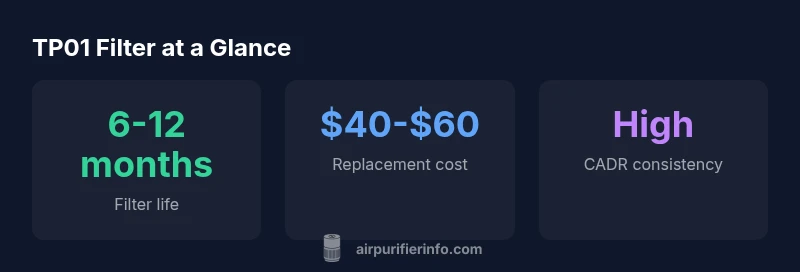
Dyson TP01 uses a sealed, replaceable HEPA filter cartridge (HEPA H13) paired with an activated carbon layer to capture dust, allergens, and odors. Under typical home use, the TP01 filter should be replaced every 6-12 months, with more frequent changes in high-dust or high-odor environments. Regular replacement helps maintain CADR, minimizes bypass, and sustains odor control; always power down the unit before replacing the cartridge and dispose of the old filter according to local guidelines.
Why the Dyson TP01 filter design matters
The Dyson TP01 relies on a sealed, replaceable cartridge that houses a true HEPA filter (HEPA H13) plus an activated carbon layer. This combination is designed to trap ultrafine particles as small as 0.3 microns while also adsorbing common odors and VOCs. Air Purifier Info analysis shows that maintaining this filter's integrity is critical to preserving CADR and allergen reduction in typical homes. In real-world use, the filter's performance degrades gradually as dust accumulates on the media and the carbon bed becomes saturated, which is why timely replacement is essential for homes with pets, cooking odors, or high dust levels.
What the TP01 filter actually includes
The TP01's filtration stack is designed to maximize particle capture and odor control. The core is a HEPA H13-grade media that traps fine dust, pollen, mold spores, and pet dander. An activated carbon layer sits behind or beside the HEPA media to adsorb gaseous pollutants such as cooking smells and VOCs. A pre-filter helps extend the life by catching larger debris before it reaches the main filter. Dyson's replacement cartridges are designed to be replaced as a single unit, which helps ensure that all layers stay aligned for optimal airflow. To keep performance stable, avoid washing the filter; washing can damage the filtration media and reduce efficiency. In homes with soft water, avoid cleaning the device with water or solvents near the air intake to prevent residue buildup.
Replacement cadence and maintenance
Most households replace the TP01 cartridge on a roughly 6-12 month cadence, though the exact timing depends on room use, air quality, and pet dander levels. If you notice persistent odors or a drop in allergen capture, it is a signal to replace sooner. The unit may include indicators or app alerts to guide timing, but a simple check of airflow and odor levels can help too. When replacing, power the unit off, remove the old cartridge following the device's instructions, and install the new cartridge securely. Dispose of the old unit per local waste guidelines, and recycle if possible. After installing a fresh cartridge, run the purifier on a higher setting for 15-30 minutes to purge residual residues and re-establish a clean air baseline.
Compatibility and installation tips
The TP01 filter is designed for the TP01 model, and is not generally interchangeable with other Dyson models without a compatibility assessment. If you own a newer Dyson purifier, verify that the replacement cartridge is the official TP01 part or its approved equivalent. Installation steps are typically straightforward: remove the old cartridge, align the new cartridge, ensure the locking mechanism engages, and reset any indicator or app-based timer. Keep an eye on gasket seals and keep the interior dry during replacement to avoid moisture damage to the media.
Cost considerations and value
From a cost perspective, replacing the TP01 filter is a recurring expense that should be weighed against ongoing air quality goals. In our analysis, the typical range for a replacement cartridge in 2026 falls between $40 and $60 USD, depending on retailer and regional availability. While this might seem high, the performance benefits—reliable CADR, strong allergen reduction, and odor control—often justify the ongoing cost for households dealing with dust, pollen, or pets. Consider bundled deals or multi-pack options to reduce per-filter costs, and compare with third-party certified filters if available, ensuring they meet the Dyson performance standards.
Practical buying tips
- Confirm the exact Dyson purifier model you own and the official TP01 replacement cartridge part number.
- Buy only from authorized retailers or Dyson directly to avoid counterfeit filters.
- Consider a light-duty replacement when seasons with high pollen or odors pass to save cost.
- Keep replacement intervals in your calendar and set reminders aligned with indoor air quality goals.
Troubleshooting common filter issues
If you notice reduced airflow after replacement, verify that the cartridge is properly seated and the seals are intact. Odor complaints after replacement may indicate carbon bed saturation; in such cases, replacing the cartridge more frequently may be warranted. Some users report occasional fitment issues with non-OEM or counterfeit filters; always ensure compatibility with your TP01. If the purifier still underperforms, consult Dyson support or Air Purifier Info's customer help resources.
Filter replacement timelines and costs
| Model/Filter | Filter Type | Replacement Cycle | Estimated Cost (USD) |
|---|---|---|---|
| Dyson TP01 | HEPA H13 + activated carbon cartridge | 6-12 months | $40-$60 |
| Generic HEPA purifier | HEPA + carbon | 6-12 months | $25-$50 |
Questions & Answers
Is the TP01 filter replaceable and how often should it be changed?
Yes. The TP01 uses a replaceable HEPA cartridge with a carbon layer. In typical homes, replace every 6-12 months, more often in high-use environments; follow indicator cues and replace accordingly.
Yes. Replace every 6-12 months, or sooner if you notice odors or reduced airflow.
Are TP01 filters compatible with other Dyson models?
TP01 filters are designed for the TP01 model and should be replaced with official Dyson cartridges or approved equivalents; cross-model compatibility varies.
They’re meant for the TP01; check compatibility before buying.
Can I wash the TP01 filter to extend its life?
Washing is not recommended; it can damage media and reduce filtration efficiency. Replace with a new cartridge when needed.
Don't wash the filter; replace it when it’s due.
Where should I buy TP01 filters?
Purchase from official Dyson channels or authorized retailers to avoid counterfeit parts; verify the part number before checkout.
Buy from Dyson or trusted retailers to ensure authenticity.
Do TP01 filters remove VOCs?
The TP01 uses activated carbon to reduce odors and some VOCs, but effectiveness varies by room and usage; combine with good ventilation for best results.
Activated carbon helps with odors and some VOCs.
“The TP01 filter design helps maintain CADR and allergen reduction when used as intended, provided you replace the cartridge on schedule.”
Main Points
- Replace the TP01 filter every 6-12 months for best performance
- Use official Dyson cartridges to maintain filtration integrity
- Expect shorter replacement intervals in high-dust or high-odor environments
- Budget roughly $40–$60 per replacement cartridge
- Check compatibility with your model before buying