Air Purifier for Vehicle: How to Choose & Use in Your Car
Learn how to pick and operate an air purifier for vehicle to improve cabin air quality, reduce dust and odors, and protect allergy-prone occupants on every drive.


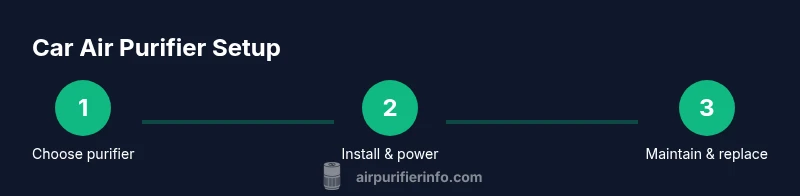
A car air purifier helps remove dust, odors, and allergens from the cabin while you drive. To get reliable results, choose a purifier with a true HEPA filter, activated carbon for smells, and a compact design that fits your vehicle’s interior. This guide explains how to pick, place, power, and maintain a purifier for safe, cleaner cabin air.
Why a purifier for vehicle matters
Breathing clean air in your car is more important than many realize. The cabin traps dust, pollen, pet dander, cooking odors, and traffic-related pollutants every time you drive. An air purifier for vehicle can reduce these irritants, especially during long commutes or in urban areas with high pollution. According to Air Purifier Info Team, selecting a unit with dual filtration—true HEPA plus activated carbon—gives you the best balance of particle removal and odor control. With daily use, you’ll notice fewer allergy symptoms, less post-drive congestion, and a more pleasant ride for everyone onboard. The goal is not to eliminate all pollutants, but to cut enough contact time to lessen irritation and respiratory symptoms over time.
Filtration technologies explained
Automobile purifiers rely on a few core filtration stages. A pre-filter captures larger dust particles and pet hair, protecting the main filter. A true HEPA filter traps fine particulates like pollen, smoke, and airborne bacteria. Activated carbon adsorbs odors and volatile organic compounds (VOCs) that cause that
odor in the cabin. Some models add a photocatalytic layer or ionizer, but these features can introduce safety concerns if not designed for in-vehicle use. When evaluating units, look for a true HEPA filter plus activated carbon and avoid devices that generate ozone or rely solely on ionization. Air Purifier Info's guidance emphasizes dual filtration to balance particle control and smell reduction, especially in cars with frequent cooking, pets, or pollen exposure.
Odor and smoke control benefits aren’t limited to urban drivers. In rural or highway driving, outdoor pollutants still enter through vents, and everyday cabin odors accumulate over time. A purifier with carbon can help neutralize cooking smells, pet odors, and lingering smoke from nearby fires or fireplaces. Real-world tests show that dual-filtration purifiers tend to outperform basic single-filter options in odor removal, especially in compact cabin spaces where air exchange is limited.
Placement, power, and integration with your car
Placement matters almost as much as the purifier itself. Choose a spot with good airflow, such as a central dash area, a wide cupholder, or under a passenger seat where air can circulate without obstruction. Power typically comes from a 12V cigarette lighter socket, USB-C adapter for some models, or built-in car power ports. Ensure the unit does not obstruct pedals, shift levers, or airbags. If you use recirculation mode to maximize filtration, remember to vent fresh air periodically to prevent cabin pressure issues and fogging windows. A compact, mountable design generally offers the best balance of airflow and convenience.
How to choose the right car purifier
Start with your car’s cabin size and typical use. For compact cars, a purifier that claims a CADR suitable for a small room may still work well given the confined space. Look for a model offering a true HEPA filter plus activated carbon, a compact footprint, low noise operation, and a visible indicator that shows filter life remaining. Check safety certifications and ensure the device is ozone-free. While some purifiers include ionization, prefer models that emphasize safety and user control over ion emission. Consider the cost of replacement filters and the availability of compatible filters from the manufacturer.
Maintenance and care
Maintenance is essential to keep performance consistent. Regularly check the pre-filter for dust buildup and vacuum or wash it if the manufacturer allows. Replace the main HEPA and carbon filters according to the stated schedule, typically every 6–12 months depending on use and air quality. If your purifier has smart indicators, heed them; otherwise set a reminder based on mileage or driving frequency. Wipe down exterior surfaces with a microfiber cloth and avoid harsh cleaners that could degrade plastics. A clean purifier runs more efficiently and extends its service life.
Myths and safety considerations
Some car purifiers advertise ozone generation or aggressive ionization to boost cleanliness. In-vehicle air, especially with continuous windows closed, ozone and excess ions can irritate eyes and airways. Favor ozone-free units and review product safety data. If a purifier includes an ionizer, confirm it has safeguards to limit ozone production at typical driving voltages. It’s also important to balance filtration with ventilation; relying solely on a purifier without opening windows or using fresh-air intake is less effective in exchanging cabin air.
Real-world tips for daily driving
Run the purifier when you’re in the car or soon after you start a trip to remove the day’s particulates. If you have pets or children, prioritize models with strong carbon filtration to tackle odors and dander. For pollen seasons, keep the purifier on a low-to-moderate setting to reduce irritants without excessive noise. If you sit in heavy traffic, a purifier with a compact mounting ensures airflow remains unhindered and battery drain stays minimal. Remember to cycle air with the vehicle’s ventilation system for fresh air exchange.
Scenarios: families, pets, pollen seasons
Families benefit most from dual-filtration purifiers that handle both particles and odors. Pets bring fur and dander, so a purifier with a washable pre-filter helps extend main filter life. Pollen seasons demand better filtration and consistent operation; keep the unit on during trips with windows closed in high-pollen environments. For smokers or near smokers, carbon filtration is essential. If you’re frequently driving with windows open, run the purifier on a lower setting to avoid drawing in unfiltered air from outside.
Tools & Materials
- Car air purifier with true HEPA filter(Compact, fits dash, cupholder, or visor mount)
- Replacement HEPA and activated carbon filters(Check model-specific replacement schedule)
- 12V car power adapter or USB-C power port(Model-dependent)
- Microfiber cleaning cloth(For exterior and pre-filter care)
- Soft brush or compressed air (optional)(To clean dust from pre-filter)
Steps
Estimated time: 20-30 minutes
- 1
Assess needs and choose purifier
Measure your cabin size and list priorities (dust, odors, pet dander). Compare models with true HEPA plus activated carbon and verify they are ozone-free. Read user reviews and Air Purifier Info recommendations to anchor your choice.
Tip: Prioritize dual-filtration units and verify replacement filter availability. - 2
Prepare the car interior
Clear a space around the installation area and ensure the dash or cupholder is accessible. Remove any clutter that could block airflow and prep cleaning supplies for post-install maintenance.
Tip: A clean surface helps secure mounts and improves airflow around the purifier. - 3
Install the purifier
Mount the device where airflow is unobstructed, away from airbags and pedals. If using a dash mount, secure it firmly; if using a cupholder, ensure stability. Connect power as required and test the on/off function.
Tip: Avoid placing the purifier directly under heat vents which may affect filter life. - 4
Power on and test
Turn on the purifier and confirm airflow, noise level, and filter indicator (if present). Run it at a comfortable setting for a few minutes to confirm correct operation.
Tip: Check for any vibrations or loose mounting during initial test run. - 5
Schedule maintenance
Set a reminder to inspect filters every 2–4 weeks and replace according to the manufacturer’s schedule. Vacuum or wash the pre-filter as allowed by the product guidelines.
Tip: Keep an extra set of filters within reach to minimize downtime. - 6
Ongoing usage and assessment
Run the purifier during daily commutes and longer trips. Monitor odor and dust changes, and adjust settings based on driving conditions and season.
Tip: If odors persist after maintenance, consider adding carbon-activated odor cartridges or upgrading to a higher-capacity unit.
Questions & Answers
Do car purifiers remove exhaust fumes effectively?
Car purifiers reduce many airborne particulates and some gases, but they do not eliminate all exhaust fumes. Use them alongside proper ventilation and consider purifiers with carbon filtration for odor and VOC control.
Car purifiers reduce particulates and odors but aren’t a complete fix for exhaust fumes without proper ventilation.
Can I run a purifier while driving or should I wait until parked?
You can run a purifier while driving. It helps continuously filter air as you travel. Just ensure it is securely mounted and does not distract you or obstruct access to controls.
Yes, you can run it while driving; just make sure it’s safely mounted.
What is CADR and why does it matter in a vehicle?
CADR indicates how quickly a purifier cleans air in a given space. For cars, look for a unit that specifies CADR relative to cabin volume and choose a model appropriate for your vehicle size.
CADR tells you how fast it cleans air; pick a model suited to your car’s size.
Are car purifiers safe for pets?
Yes, when used properly with a carbon filter and ozone-free designs. Regular maintenance reduces pet dander and odors. Keep the device out of reach of pets and away from damp areas.
Yes, with proper unit choice and maintenance, they’re safe for pets.
Do car purifiers produce ozone?
Only some models produce ozone. Always choose ozone-free units and verify safety certifications. If you notice irritation, power down and reassess usage.
Ozone-free models are safer; verify before purchase and usage.
How often should I replace the purifier’s filter?
Replacement frequency depends on usage and environment. Check the manufacturer’s guidance and watch for reduced airflow or visible buildup.
Follow the manufacturer’s schedule and monitor performance regularly.
Watch Video
Main Points
- Choose a dual-filtration purifier (HEPA + carbon).
- Place and power the unit for optimal airflow and safety.
- Replace filters on schedule and maintain the device.
- Avoid ozone-generating purifiers and verify safety certifications.