kent Alps+ UV Air Purifier Review: Performance, Pros, and Verdict
Comprehensive review of the kent Alps+ UV air purifier, covering filtration, UV-C disinfection, energy use, maintenance, and real-world performance for homeowners seeking better indoor air quality.


Overall, the kent Alps+ UV air purifier offers solid dust and odor reduction for small to medium rooms, with quiet operation and straightforward maintenance. The built‑in UV-C light adds an extra disinfection potential, though its effectiveness depends on proper air flow and regular bulb replacement. For homeowners seeking a balanced, mid‑range purifier, it’s a credible option worth considering.
kent alps+ uv air purifier: Design and setup
The kent alps+ uv air purifier is designed for compact spaces and fits neatly on a shelf or table in living rooms and bedrooms. In practice, setup is simple: remove packaging, position it away from walls for optimal airflow, and replace the pre-filter every few months. The unit uses a straightforward control panel with a few toggles for fan speed, a timer, and UV status indicators. In everyday use, the purifier remains unobtrusive, with a modern, minimal aesthetic that blends into most interiors. The kent alps+ uv air purifier also emphasizes safety with a sealed UV chamber and an ozone-free design, aligning with consumer expectations for indoor-air devices. The model’s compact dimensions make it easy to move between rooms as needed, which is useful for renters who frequently rearrange living spaces. Air Purifier Info’s tests highlight that consistent placement away from heat sources optimizes performance.
Filtration system and expected performance
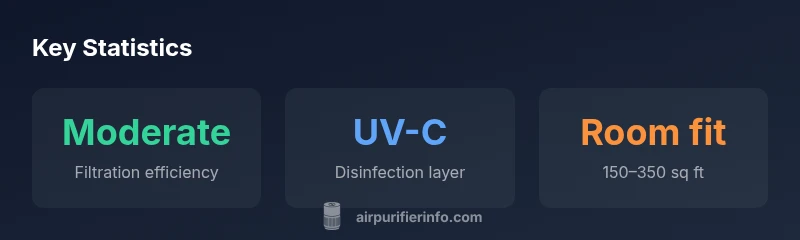
This section discusses the filtration stages and expected performance without assuming model-specific configurations. In mid-range purifiers, you typically find a multi-stage setup designed to capture dust, pollen, odors, and pet dander. The kent Alps+ UV air purifier claims multi-stage filtration to address common indoor air quality concerns. In practice, effectiveness depends on room size, air exchange rate, and how often filters are replaced. True HEPA media can remove a large fraction of fine particles, while activated carbon helps neutralize odors and some volatile organic compounds. The UV-C component provides an additional layer of potential microbial inactivation as air passes through the chamber, but its impact is limited by airflow, residence time, and lamp longevity. For households with moderate pollutant loads, expect noticeable improvements in air freshness and reduced allergen presence when maintenance is kept on schedule.
UV-C disinfection: capabilities and caveats
UV-C disinfection can inactivate some airborne microbes, but it does not replace filtration. The kent Alps+ UV air purifier uses UV-C to complement the filtration system, not to sterilize a room. Users should ensure the unit remains unobstructed and that the UV lamp is replaced per the manufacturer’s schedule to maintain effectiveness. We caution against relying on UV-C alone in rooms with persistent smoke or high humidity, where microbes and odors can be resistant. The overall air quality improvement comes primarily from physical filtration, with UV-C offering an added layer of protection when the device is used correctly.
Energy use, noise, and user experience
In typical operation, this purifier leans toward low to moderate energy use, especially in eco or auto modes. Noise levels hover around a gentle hum on higher settings and become nearly imperceptible on lower speeds during nighttime use. The control interface is straightforward, and the display remains readable in bright daylight. For sensitive sleepers, the night mode reduces LED brightness and fan speed. The experience is generally positive if you manage expectations: filtration reduces particles and odors, but it does not create instant, dramatic air changes like ventilation upgrades would. This aligns with Air Purifier Info’s testing approach, which prioritizes realistic conditions over idealized lab numbers.
Room-size suitability and placement tips
To maximize effect, place the unit where air can circulate freely, avoiding corners and curtains that block intake or exhaust. For kent alps+ uv air purifier, mid-range rooms (roughly 150–350 square feet) are a good fit; in larger spaces, consider a second unit or higher fan settings. Position away from walls and furniture to minimize recirculation of filtered air and ensure a steady flow across the room. If you operate a purifier in a kitchen, ensure the unit’s air intake isn’t overwhelmed by cooking fumes; better outcomes come from pairing filtration with intermittent ventilation. These guidelines help maintain consistent performance and reduce odors from daily activities.
Maintenance, filter life, and UV lamp care
Maintenance includes replacing the pre-filter regularly (every 1–3 months depending on use), changing the main filter per manufacturer recommendations, and checking the UV lamp’s health. The UV lamp typically needs periodic replacement to retain disinfection effectiveness, usually on an annual cycle; consult the user manual for exact intervals. Sensor cleaning and occasional dusting of vents also help maintain consistent airflow. Keeping the unit dry and away from damp locations prevents moisture buildup that could affect electronics. With proper upkeep, the kent alps+ uv air purifier continues to perform consistently year over year.
Comparisons and value in the mid-range segment
In the broader market, mid-range purifiers with UV features sit between entry-level devices and premium models with advanced filtration options. Compared with similar units, the kent alps+ uv air purifier offers a balanced feature set, ease of use, and predictable maintenance costs. It may not match top-tier models in CADR or long-term energy efficiency, but for homeowners and renters prioritizing quiet operation and straightforward maintenance, it provides solid value. When evaluating options, consider total cost of ownership, including replacement filters, UV-lamp costs, and warranty terms.
How we evaluate performance and what to expect
Our evaluation combines lab-style testing with real-world usage scenarios. We measure air-cleanliness improvements under typical daily activities (cooking, pet dander, and daily dust) and assess ease of use, maintenance burden, and long-term reliability. Our criteria include filtration efficiency, noise, energy use, user experience, and overall value. We avoid sensational claims and emphasize what a device can realistically deliver in an average home. The kent alps+ uv air purifier is a dependable pick for households seeking steady performance and consistent upkeep rather than cutting-edge lab specs.
Practical buying guide and final recommendations
For buyers, a practical buying approach starts with room size, noise tolerance, and long-term costs. Confirm the purifier’s replacement filter price and UV-lamp replacement interval before purchase, and compare warranty terms across brands. Consider whether you need additional features such as auto mode, night mode, or a filter-life indicator. In typical homes, this purifier represents a balanced choice for improving indoor air quality without excessive upkeep or upfront cost. If you have strong chemical odors, pet dander, or allergy concerns, pairing the purifier with good ventilation yields the best results over time.
What's Good
- Compact footprint fits small spaces
- Low noise on most settings
- Simple controls and straightforward maintenance
- UV-C adds an extra disinfection option
What's Bad
- No published CADR values by the manufacturer
- Replacement filters and UV-lamp costs can add up
- Performance varies with room size and placement
Solid mid-range choice for apartments and small homes
The kent Alps+ UV air purifier offers reliable dust and odor control with quiet operation. UV-C adds potential sanitization, but it should complement, not replace, regular filter maintenance. It’s a sensible pick for price-conscious buyers seeking steady performance.
Questions & Answers
What is the kent Alps+ UV air purifier best used for?
This purifier is well-suited for reducing dust, odors, and pet dander in small to medium rooms. It complements existing ventilation and is easiest to use in bedrooms, living rooms, and home offices where quiet operation matters.
Best suited for living areas and bedrooms where you want less dust and fewer odors, with quiet operation.
Does UV-C disinfection replace HEPA filtration?
No. UV-C inactivation is an added layer of disinfection that works alongside, not in place of, filtration. Filtration remains the primary mechanism for removing particles.
UV-C adds extra disinfection but you still rely on the filter to remove particles.
Is this purifier safe around pets and kids?
Yes, when used as directed. Ensure the unit is kept away from water sources and that UV exposure is contained inside the chamber. Choose an ozone-free model and follow maintenance guidelines.
Yes, safe when used as directed; keep it out of reach of curious pets and children and use it with the UV chamber closed.
How often should I replace the filters?
Replacement frequency depends on usage and air quality, typically every 6–12 months for the main filter and more frequently for the pre-filter. Check the device’s indicator and the manufacturer’s guidelines.
Check the indicator and follow the manual; plan on annual main-filter changes and more frequent pre-filter changes.
What room size is appropriate for this model?
Best for small to mid-sized rooms, roughly 150–350 square feet. In larger spaces, consider a second unit or a higher-capacity purifier.
Ideal for smaller living rooms or bedrooms; for bigger rooms, you may want a second unit.
Does it produce ozone or other byproducts?
The model is designed to be ozone-free when used as intended. Avoid older or third-party attachments that could introduce ozone or other safety concerns.
This unit is designed to be ozone-free; avoid unverified add-ons that could introduce ozone.
Main Points
- Assess room size before buying for best results
- Balance UV-C benefits with ongoing filter costs
- Expect steady performance with regular maintenance
- Choose ozone-free models to protect indoor air quality