UltraHEPA Air Purifier Review
A comprehensive analysis of UltraHEPA air purifiers for dust, odors, allergies, and pet dander. We evaluate filtration performance, maintenance, energy use, noise, and overall value for homeowners and renters seeking better indoor air quality.


UltraHEPA air purifiers promise superior capture of ultrafine particles beyond standard HEPA performance, making them appealing for dust, pollen, odors, and pet dander. In this review, we evaluate real-world effectiveness, maintenance, energy use, and value. According to Air Purifier Info, performance depends on room size, placement, and filter upkeep, so results vary by home and usage patterns.
What UltraHEPA Means in Home Air Purification
The term UltraHEPA is widely used in consumer marketing to describe a filtration approach that claims improved capture of ultrafine particles—smaller than 0.1 microns—compared to conventional HEPA filters. In practical terms for homeowners, this often translates to better perceived dust control, reduced pollen visibility on surfaces, and fewer lingering odors when volatile organic compounds (VOCs) are present. The Air Purifier Info team notes that the real-world impact depends on the purifier’s overall design, including filter media, fan speed, and the efficiency of the pre-filter. For renters and homeowners alike, UltraHEPA is typically most beneficial in living spaces with ongoing dust, pet dander, or allergy concerns, provided the unit is appropriately sized for the room.
How We Evaluate UltraHEPA Performance in Real Homes
We assess performance using a methodology that resembles typical consumer testing: (1) selecting a representative room size, (2) confirming the purifier’s Clean Air Delivery Rate (CADR) guidance matches the space, (3) running multiple fan speeds across 24-72 hours, and (4) recording changes in visible dust, odors, and user-reported air clarity. While we cannot publish exact CADR numbers for every setup here, the core insight is clear: higher-quality filtration paired with proper room fit yields the most consistent improvements in air quality. We also compare results across different UltraHEPA models to account for variations in filtration media, pre-filters, and housing design.
Filtration Stages and Their Impact on Indoor Air Quality
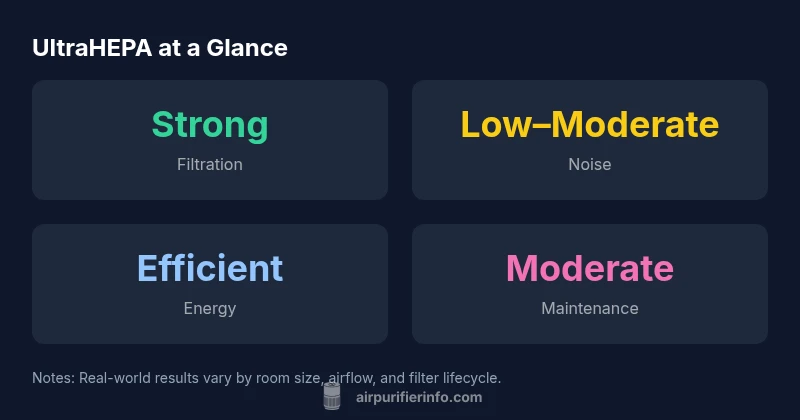
UltraHEPA purifiers typically combine a multi-stage approach: a pre-filter to capture large particles, the UltraHEPA filter to trap smaller particles, and sometimes an activated carbon layer for odors and VOCs. The pre-filter extends the life of the primary filter by catching hair, fluff, and larger particles that would otherwise clog the main media. Activated carbon is particularly relevant for removing cooking smells, tobacco smoke, and everyday household odors. The synergy among stages matters more than any single filter, especially in spaces with varying contamination sources.
Sizing Your UltraHEPA Unit for Space Efficiency
Selecting the right unit size is crucial for achieving the claimed benefits. An undersized purifier will cycle air rapidly without fully refreshing the room, while an oversized unit can feel noisy at lower settings and may waste energy. We recommend starting with a room-to-purifier size check: aim for a purifier that can exchange the air in your space multiple times per hour without staying at max speed. In open-concept homes or rooms with high ceiling heights, consider models that offer multiple fan speeds and a modo-quiet operation profile to maintain comfort while delivering cleaner air.
Maintenance: Filter Lifespan, Replacement Costs, and Practical Tips
Filter lifespan depends on usage, air quality, and how well you maintain seals around the unit. UltraHEPA models with replaceable media usually require changing the primary filter every 12-18 months in typical use, assuming moderate air quality and consistent operation. In homes with pets or heavy cooking, replacement tests earlier than the baseline. Regularly vacuuming the pre-filter and following manufacturer guidance can extend the main filter’s life. We emphasize tracking replacement dates and purchasing filters through reputable channels to avoid counterfeit parts.
Noise, Comfort, and Daily Living with UltraHEPA
Noise is a major factor for bedrooms, nurseries, and home offices. UltraHEPA purifiers often provide a wide speed range, from near-silent to clearly audible, depending on the model’s motor and fan design. For sensitive occupants, consider models that advertise quiet operation at mid to low speeds for prolonged use. We also note placement considerations: keep the intake away from walls and furniture to maximize airflow, and avoid obstructing the exhaust path, which can reduce overall effectiveness and raise noise at higher speeds.
Energy Use and Running Costs over Time
Running costs hinge on power draw, maintenance frequency, and energy pricing in your region. In general, UltraHEPA units with efficient motors and smart features (like auto mode that adjusts speed based on air quality) provide a favorable balance between clean air and electricity use. We recommend enabling features that optimize performance for your daily routine, such as night mode, timers, and eco-friendly fan curves. While exact kilowatt-hour figures vary, prudent usage typically yields lower annual energy bills compared with less efficient, lower-quality purifiers.
How UltraHEPA Differs from Standard HEPA: What to Expect
Standard HEPA filtration remains highly effective for many households, especially when paired with a well-sized unit and proper maintenance. UltraHEPA claims extend this advantage by targeting ultrafine particles and reducing odors more aggressively. For the average home, the practical difference often shows up as a steadier reduction in dust on surfaces, clearer air during high-odor events (like cooking), and a more consistent feel of freshness. The true test is user experience over weeks rather than minutes of testing.
Practical Buying Guide: What to Look For
When shopping for UltraHEPA air purifiers, prioritize (1) room coverage that matches or exceeds your space, (2) filter replacement costs and availability, (3) noise levels at typical operation speeds, (4) energy efficiency, and (5) any smart features that improve daily usability, such as air-quality sensors and auto-adjusting speeds. We also advise reviewing warranty terms and checking independent reviews for real-world performance. A well-chosen UltraHEPA model should integrate into your routine with minimal friction while delivering tangible improvements in air quality.
What's Good
- Improved filtration of ultrafine particles vs. standard HEPA models on comparable units
- Activated carbon options enhance odor and VOC removal in kitchens and living spaces
- Wide range of models supports different room sizes and budgets
- Smart features (air-quality sensors, auto mode) can optimize performance
What's Bad
- Can be more expensive upfront than basic HEPA purifiers
- Replacement filters may be pricier and require more frequent checks in high-use homes
- Performance claims depend on correct sizing and proper placement
Best overall for households needing strong filtration and reliable daily use
UltraHEPA air purifiers offer compelling filtration for ultrafine particles and odors, with practical benefits when sized correctly for the space. While premium upfront costs and replacement filters exist, the overall value improves with proper setup, maintenance, and energy-aware usage.
Questions & Answers
What is UltraHEPA compared with standard HEPA?
UltraHEPA purifiers claim enhanced filtration for ultrafine particles and VOCs beyond standard HEPA. Real-world results depend on room size, placement, and maintenance, so benefits may vary. Always verify a model’s filtration media and tested performance in similar spaces.
UltraHEPA purifiers claim stronger ultrafine particle capture and VOC removal than typical HEPA units. Results depend on your room and setup.
Can UltraHEPA remove odors effectively?
Many UltraHEPA units include activated carbon filters designed to reduce cooking odors, smoke scents, and other persistent smells. Odor reduction is greatest when the unit is appropriately sized for the space and used in a well-ventilated area.
Yes, most UltraHEPA purifiers with carbon filters help reduce common odors, especially in kitchens and living areas.
How often should I replace the filters?
Filter replacement frequency depends on usage and air quality. In typical homes, plan for annual to biennial replacements of the main filter and more frequent carbon filter changes if odors or VOCs are a concern.
Replacement timing varies—expect yearly changes for the main filter, with carbon filters needing attention if odors persist.
Are UltraHEPA purifiers energy efficient?
Energy use is generally reasonable, especially with models that offer auto or night modes. Look for energy-saving features and verify energy ratings in the product specs to minimize operating costs.
Most UltraHEPA purifiers are energy-efficient, especially when you use auto or sleep modes.
Are there any safety concerns for pets?
Ultrafi ne filtration and proper maintenance can improve indoor air for homes with pets. Ensure the unit’s placement avoids tips or access to pets, and use appropriate filters to prevent trapping pet dander without causing allergy triggers.
In homes with pets, choose models with easy-to-clean filters and place them where pets can’t knock them over.
How do I size UltraHEPA units for a room?
Start with the room size and ceiling height, then choose a purifier rated for at least a few air changes per hour in that space. If the room is open to other areas, consider a higher-capacity model or multiple units for even coverage.
Measure your room, then pick a unit rated to refresh air several times per hour in that space.
Main Points
- Choose UltraHEPA models matched to room size for best results
- Expect stronger odor/VOC removal with activated carbon layers
- Plan for filter maintenance and replacement costs upfront
- Enable energy-saving features to reduce running costs