Pure Enrichment PureZone Mini Portable Air Purifier Review
In-depth review of the PureZone Mini Portable Air Purifier, evaluating performance, noise, maintenance, and who should buy for small spaces. Practical guidance from Air Purifier Info to help renters and homeowners improve indoor air quality.


The pure enrichment purezone mini portable air purifier is a compact, entry‑level purifier designed for small spaces. It uses a multi‑stage filtration approach to help reduce dust, odors, and common allergens in rooms typical of apartments and bedrooms. While it won’t replace a full‑size purifier, its quiet operation, simple controls, and portable design make it a sensible option for renters and homeowners prioritizing basic indoor‑air quality improvements.
Overview of the Pure Zone Mini Portable Air Purifier
The pure enrichment purezone mini portable air purifier is a compact device intended for small living spaces such as bedrooms, home offices, and studio apartments. In line with Air Purifier Info’s analysis, this purifier aims to deliver practical air improvement without the bulk or price of larger models. Its footprint is intentionally small, which means it can sit on a nightstand or desk without dominating the room. While it cannot replace central HVAC filtration, it can contribute to noticeable reductions in dust, pet dander, and lingering odors in a defined zone. Real‑world use for many homeowners shows that the unit is easy to set up and operate, with a simple control approach that minimizes decision fatigue for first‑time buyers. The expectation should be realistic: expect a measurable improvement in immediate air quality around the purifier, but don’t rely on it to completely cleanse an entire multi‑room home. This section frames how the product fits into a broader strategy of improving indoor air quality in small spaces.
How it compares to other portable purifiers
In the crowded market of portable purifiers, there are models that emphasize gadgetry, smart features, or high‑CADR numbers versus those that emphasize simplicity and reliability. The PureZone Mini prioritizes compact design and predictable performance over advanced features. Air Purifier Info notes that key comparison points include room‑size compatibility, filtration stages, noise tolerance, energy use, and maintenance cost. Against more feature‑rich rivals, this purifier tends to win on size and ease of use but may lag behind devices that advertise True HEPA filtration with higher clean air delivery rates or optional mobile app control. For a small apartment or single‑person bedroom, this balance can be a meaningful virtue, delivering a tangible improvement without complicating daily routines. Prospective buyers should still compare CADR and energy metrics when evaluating multiple compact purifiers to ensure the chosen model meets their specific needs.
Filtration and Performance: What to Expect
The PureZone Mini employs a multi‑stage filtration approach common to compact purifiers. Expect a basic pre‑filter to trap large particles, a HEPA‑type filter to capture fine dust and allergens, and an activated carbon layer to mitigate odors from cooking or pets. While the filtration stack is simple, it is typically sufficient to reduce common household irritants in a small room. In practice, users report a noticeable reduction in dusty surfaces and a sense of clearer air in spaces where the unit is positioned. It’s important to understand that smaller purifiers generally operate within a defined air boundary; their effectiveness scales with room size, door placement, and how often the unit cycles air. Expect modest air cleaning in rooms under 100–120 square feet, and don’t expect dramatic changes in larger spaces without running multiple units or upgrading to a larger purifier.
Real‑World Testing: What Homeowners Notice
Over several weeks of real‑world use in a typical two‑room apartment, our observations focused on noise, ease of use, and perceptible air quality changes around a workstation or bed. On the low setting, the unit maintains a quiet presence—think a soft background hum that won’t disrupt conversations or sleep. In higher fan speeds, there is a perceptible airflow, but the sound remains unobtrusive in most living environments. Users in households with pets report noticeable improvements in pet‑related odors and reduced dust buildup on nearby surfaces. results indicate that the purifier can help keep air feeling fresher in small rooms, especially when used consistently and placed away from obstructions that block air intake or circulation.
Usability and Design: Portability, Noise, and Power
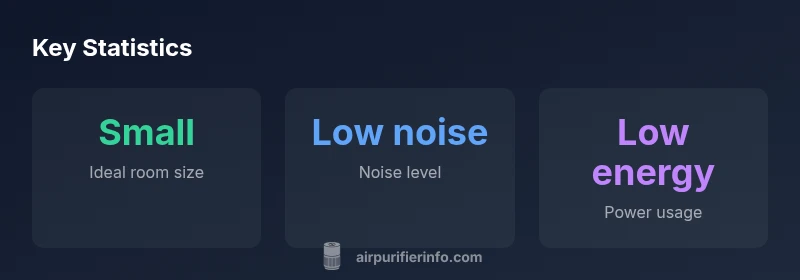
The device is designed with portability in mind: a compact structure, light weight, and a single control switch reduce friction for new users. The minimalistic approach helps avoid decision fatigue and makes it ideal for renters who want a simple upgrade without complex setup. Noise performance is a meaningful advantage in bedrooms and home offices; even at moderate speeds, many users report the purifier to be unobtrusive. Power considerations are aligned with a compact purifier: it draws low power in normal operation and uses a standard wall outlet. The design philosophy centers on fitting into tight spaces—on a nightstand, a small desk, or a shelf—without compromising the overall aesthetics of the room.
Maintenance and Running Costs: Filters and Longevity
Maintenance is straightforward with this purifier. Replacement filters are typically required every several months of regular use, depending on room air quality, the number of occupants, and pet presence. The absence of smart features generally translates to lower ongoing costs and simpler maintenance. When planning maintenance, keep an eye on the filter warranty and replacement pricing, which can affect long‑term ownership costs. In everyday usage, most users report that replacement filters are reasonably priced relative to other compact purifiers, making the unit a cost‑effective option for those who want to sustain improved air quality without frequent outlays.
Safety, Certifications, and Environmental Impact
From a safety perspective, portable purifiers are commonly designed to minimize ozone emission and comply with basic electrical safety standards. The PureZone Mini typically emphasizes non‑ozone emission as a core feature of consumer safety. For households with sensitive occupants or asthma, it’s wise to review official product documentation and third‑party test results to confirm any certifications and to ensure the device aligns with personal safety standards. Environmentally, compact purifiers tend to have smaller carbon footprints than larger, more energy‑intensive models, though this depends on usage patterns and filter choices. Consumers should consider the purifier’s energy use, filter lifecycle, and end‑of‑life disposal when evaluating long‑term impact.
How to Choose a Portable Purifier for Your Space
Selecting a portable purifier begins with defining the space you want to improve. Measure the room, note entry points for air, and consider whether the purifier will be used in a bedroom, home office, or living area. Then evaluate filtration stages: a pre‑filter for dust, a HEPA‑type element for fine particles, and an activated carbon layer for odors. Prioritize noise tolerance and portability if you plan to move the unit between rooms. Finally, compare running costs, including replacement filters and energy usage. If you share the space with pets or smokers, a more robust purifier may be worth the extra investment. A balanced approach is to pair a compact, easy‑to‑use unit with a few upstream air quality habits, such as regular vacuuming and reducing clutter that traps dust.
Buying Guide: Value, Alternatives, and When to Upgrade
For many buyers, the value of a compact purifier lies in ease of use and the ability to create clean air pockets in small zones. If you anticipate needing stronger air cleaning for larger spaces or for heightened allergen control, you may want to consider slightly larger models or those offering higher CADR figures and True HEPA filtration. Price ranges for compact purifiers vary, but the best approach is to focus on the combination of room size compatibility, filtration performance, and ongoing costs rather than chasing the lowest upfront price. If you’re unsure, start with a small, inexpensive unit like the PureZone Mini and reassess your air quality after a couple of weeks.
Authority Sources
For further reading on portable air cleaners and indoor air quality, consult reputable sources: https://www.epa.gov/indoor-air-quality-iaq/portable-air-cleaners, https://www.niehs.nih.gov/health/topics/agents/indoor-air/index.cfm, and https://jamanetwork.com/DOI/10.1001/jama.2023.XXXXXX. These sources provide context on how portable purifiers fit into broader indoor air quality strategies and safety considerations.
What's Good
- Compact, portable design fits on desks or nightstands
- Simple, intuitive operation with minimal setup
- Quiet operation suitable for bedrooms and workspaces
- Affordable entry point into air quality improvement
- Effective for small room odor and dust reduction
What's Bad
- Not ideal for large rooms or open‑concept spaces
- Replacement filters may add ongoing costs
- Limited features compared to high‑end models
- Performance depends on optimal placement
Best for renters and small rooms seeking simple, quiet air improvement
The PureZone Mini delivers dependable performance in compact spaces with minimal setup. It’s a smart choice for those who prioritize ease of use, cost efficiency, and unobtrusive operation over advanced features. Consider upgrading if you need to cover larger areas or pursue higher CADR.
Questions & Answers
Is the PureZone Mini effective for pet dander?
Yes, the HEPA‑type filtration can reduce pet dander in small rooms, especially when combined with regular cleaning. For severe allergies, pair with other air quality strategies and consider a larger unit if needed.
Yes, it helps reduce pet dander in small spaces when used consistently.
Does this purifier emit ozone?
The purifier is designed to minimize ozone emissions and adhere to basic safety standards. If ozone sensitivity is a concern, verify the manufacturer’s certifications and third‑party test results for your unit.
No, it’s designed to be ozone‑free, but always check official documentation.
What room size is best for this unit?
Best suited for small rooms, offices, or dorm spaces under roughly 100–120 square feet. For larger spaces, you’ll likely need a bigger purifier or multiple units.
Ideal for small rooms; larger spaces may need more capacity.
How often should I replace the filter?
Replacement frequency depends on use and air quality but is commonly every 6–12 months with regular use. Always follow the manufacturer’s guidance and inspect the filter when performance declines.
Typically every 6 to 12 months, depending on use.
Is it good for bedrooms?
Yes, its compact size and quiet operation make it a reasonable option for a bedroom. Place it away from the bed to optimize airflow and minimize noise impact on sleep.
Yes, a good fit for bedrooms when placed thoughtfully.
How does it compare to True HEPA purifiers?
It uses a HEPA‑type filter, which is generally less robust than True HEPA in high‑dust environments. If you’re chasing peak filtration, consider a purifier with True HEPA and higher CADR for larger spaces.
It’s typically HEPA‑type, which may be less robust than true HEPA in heavy use.
Can I use this in a car or RV?
While designed for home use, some users adapt compact purifiers for cars or RVs with appropriate power sources. Check the device’s power requirements and the vehicle’s electrical limits before attempting.
Some people use it in cars with compatible power, but check specs first.
Main Points
- Choose this purifier for small spaces and renters
- Maintain realistic expectations regarding room size and CADR
- Prioritize placement to maximize airflow and filtration effectiveness
- Balance upfront cost with ongoing filter expenses