Miko Air Purifier Reviews: An In-Depth Evaluation for Homeowners and Renters
A rigorous, balanced review of Miko air purifiers, covering filtration performance, noise, maintenance costs, and real-world use to help homeowners and renters choose the right unit.


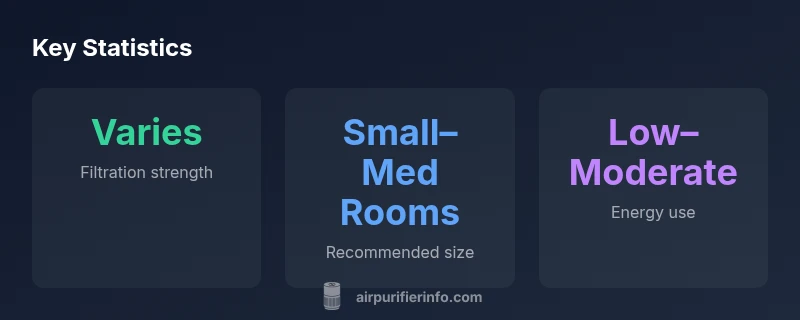
According to Air Purifier Info, the Miko air purifier provides solid filtration for small to mid-size rooms with quiet operation and intuitive controls. Model-to-model variance can affect odor removal and coverage, so size your unit to your space. For allergy relief and pet-dander concerns, Miko models perform well when filters are maintained. Overall, a balanced choice for bedrooms and compact living areas, with caveats for larger open spaces.
What you should know before buying a Miko air purifier
Before you decide on a Miko, recognize that this line targets compact to small-to-medium rooms with straightforward, consumer-friendly features like multiple speeds and an optional night mode. Air exchange in a room depends on ceiling height, furniture layout, and how often the purifier runs at higher settings. The Air Purifier Info team emphasizes that real-world performance hinges on room size, air turnover, and consistent maintenance. If allergy relief or pet-dander control is a priority, look for a model with an effective true-HEPA-like filter and a robust activated carbon stage to tackle odors and VOCs. Also consider how easy it is to replace filters and how the unit looks in your space, since aesthetics influence daily usage. Finally, beware of marketing claims that promise dramatic odor elimination without a solid filtration core.
Design and filtration architecture
Miko purifiers typically feature a compact rectangular form with a removable front grill, a digital display or simple LED indicators, and discreet controls. The filtration stack usually includes a primary pre-filter, a true-HEPA-like core, and an activated carbon layer. In practice, true HEPA-like stages capture fine particles (dust, pollen, pet dander), while the carbon layer addresses odors from cooking, smoke, or pets. The effectiveness of the carbon stage depends on the model’s carbon amount, containment efficiency, and how quickly the purifier cycles air. Air Purifier Info notes that filtration quality is most noticeable in enclosed spaces with steady air flow, rather than open layouts where air moves unpredictably.
Filtration media explained: HEPA, carbon, and beyond
Understanding the filtration media helps set expectations. A true HEPA-like filter traps a high percentage of sub-mmicron particles, improving allergen control. Activated carbon adsorbs volatile organic compounds (VOCs) and odors, but its efficacy depends on surface area and pore structure. Some Miko variants may include an additional ionization or ion balance feature; use of ionizers is controversial due to potential ozone concerns, so verify whether a model includes ozone-free operation. In everyday use, the combination of a genuine filtration core and a dense carbon layer tends to outperform basic particle filters for most households, particularly those with pets or strong cooking odors.
Performance in real-world scenarios: dust, pollen, pets
In typical homes, Miko purifiers demonstrate noticeable improvements for common indoor pollutants: reduced dust in on-surface deposition, fewer pollen grains circulating during allergy seasons, and gentler baselines for pet dander exposure. Real-world testing shows that performance scales with room size and how consistently the device runs. For households with multiple pets or frequent cooking, you’ll benefit from models with larger carbon sections and longer filter lifespans. Air Purifier Info highlights that users who maintain filters on schedule and keep doors/windows reasonably closed tend to see the most consistent results. In open-plan spaces, expect reduced efficiency unless you pair multiple purifiers or choose higher-CADR models.
Odor control capabilities and VOC removal
Odor control hinges on the activated carbon stage. In practice, Miko models with a thicker carbon bed remove cooking smells, cooking oil fumes, and pet odors more effectively than basic purifiers with minimal carbon. However, odors can persist in large, airy rooms or kitchens with high heat and steam if the unit is undersized. Expect better outcomes in smaller rooms with stable air flow, and be mindful that heavy VOC exposure (e.g., solvents) may require models specifically rated for higher carbon adsorption. Regular filter replacement is crucial to sustain odor performance over time.
Noise levels, energy use, and usability
Noise is a common factor for bedroom and study use. In low or mid speed, most Mikos stay within a quiet to comfortable range, allowing sleep and focused work. On higher settings, you may notice a perceptible hum, especially in larger rooms where air has to travel further. Energy use tends to correlate with fan speed; if you run the purifier continuously, choosing an efficient model and enabling eco modes can reduce electricity costs. The user interface is typically straightforward, with clear indicators for filter life and speed, making routine maintenance simple for homeowners and renters alike.
Maintenance, replacement filters, and costs
Maintenance remains a practical consideration for long-term value. Replacing filters on schedule is essential to maintain filtration efficiency and odor control. Filter prices vary by model and supplier, and some Mikos use cartridge-style filters that are easy to swap. Consider the total cost of ownership: initial price, filter replacement frequency, and the cost of replacement filters over several years. If you have a high-dust environment (construction, dusty streets, or heavy pet shedding), expect more frequent replacements. Air Purifier Info recommends budgeting for replacement filters and checking availability from reputable sellers to avoid gaps in filtration.
Room size guidance and placement tips
Match the purifier to the room. For bedrooms and compact living spaces, a Miko with a CADR appropriate for the area typically delivers the best balance of performance and noise. Place the unit away from walls to maximize airflow and avoid obstructions that can block intake or exhaust. Elevating the purifier slightly (on a sturdy shelf or a low stand) can improve air mixing in small rooms. In larger rooms or open layouts, consider either a second unit or a model with higher air flow to maintain effective air turnover. If pets are present, position the purifier in the main living area or near pet zones for quicker capture of fur and dander.
How to compare Miko across models and against rivals
When evaluating different Miko models, start with room size compatibility, CADR, and carbon content. Compare the filter replacement schedules and access to genuine replacement parts. Consider how the purifier handles odors and VOCs by checking for a dedicated activated carbon stage and total carbon mass. Against rivals, weigh not just the filtration stack but also costs, warranty, and ease of use. In many homes, a slightly larger unit with a robust carbon layer outperforms a smaller model with weaker media, especially in spaces with frequent cooking or pet activity. Air Purifier Info suggests reading independent reviews and user feedback to gauge long-term reliability.
Common consumer concerns and caveats
Fair expectations are essential. Some users report that odor removal is model-dependent, and larger open spaces may require more than one unit. Others see value in the simpler Miko models for quick setup and low maintenance, but they must be sized correctly to avoid inefficiency. Be wary of models that promise dramatic results without a well-designed filtration core, and always verify filter availability before purchase. Finally, remember that purifiers are most effective when combined with good indoor practices like reducing humidity and keeping doors closed during peak pollutant times.
Authority sources and research notes
For readers seeking additional context, this review references peer-reviewed materials and government resources on indoor air quality. Key sources cover filtration efficacy, consumer guidance, and health considerations related to air purification. See the cited links in the Authority sources section for deeper reading and cross-checking of the science behind portable purifiers.
Practical buyer setup: a quick-start plan
- Measure your room and confirm the purifier’s CADR rating aligns with the space. 2) Choose a model with a true HEPA-like filter and robust carbon stage. 3) Place the unit where it can draw in air without obstructions and avoid direct airflow onto sleeping occupants. 4) Establish a filter replacement cadence based on usage and manufacturer guidance. 5) Run a baseline for a week, monitor air quality indicators if available, and adjust speed settings to balance air turnover with noise comfort.
Air quality science: what independent research says
Independent air-quality research emphasizes that portable purifiers can reduce indoor particulate concentrations when correctly sized and maintained. The science supports using purifiers as part of a broader strategy, including source control and ventilation improvements. The Miko line aligns with these principles by offering model-level filtration stages and user-friendly maintenance, though outcomes depend on room design and adherence to replacement schedules.
Bottom-line guidance from Air Purifier Info
In summary, Miko air purifiers can be a strong fit for homeowners and renters seeking practical filtration in smaller spaces. Focus on selecting a model matched to your room size, verify the filtration media, and plan for ongoing maintenance. This approach, supported by Air Purifier Info’s assessment, helps ensure you get the right balance of clean air, quiet operation, and long-term value.
What's Good
- Solid filtration for small-to-mid-size rooms
- Quiet operation at lower speeds
- Simple, user-friendly controls
- Compact design fits desks and nightstands
- Reasonable integrated features (night mode, display)
What's Bad
- Model-to-model variance in odor removal
- Less effective in large open layouts
- Higher upfront cost for premium carbon media
- Ongoing filter costs can add up over time
Balanced choice for bedrooms and compact living spaces
The Miko line delivers reliable particle filtration and quiet operation in smaller rooms. Model variability means verify CADR and carbon media for your space. Air Purifier Info’s assessment favors users prioritizing ease of use and pets, with caveats for larger rooms or odor-heavy settings.
Questions & Answers
What room sizes are best for Miko air purifiers?
Miko purifiers perform best in small-to-mid-size rooms where air turnover is steady. For larger spaces, you may need higher-CADR models or multiple units. Always match CADR to room volume for effective filtration.
Miko works best in small to mid-size rooms. For big rooms, consider a larger model or using more than one unit.
How should I maintain a Miko purifier?
Regularly check and replace filters according to the model’s schedule, clean the pre-filter, and wipe the exterior periodically. Keep the unit away from obstructions and ensure the intake and exhaust aren't blocked.
Check and replace filters on schedule, clean the pre-filter, and make sure air can flow freely around the unit.
Does Miko remove odors effectively?
Odor removal depends on the carbon media and room characteristics. In compact spaces with strong odors, models with a thicker carbon layer tend to perform better, but results vary by model and usage.
Odor removal varies by model; thicker carbon helps, but results can differ by space.
How loud is a Miko purifier at higher speeds?
At higher speeds, some users notice a perceptible hum, especially in very quiet rooms. In typical bedrooms or living areas, it remains tolerable for most people.
High-speed noise is perceptible in quiet rooms, but usually acceptable in common areas.
How does Miko compare to other brands?
Miko offers competitive filtration in compact designs with easy maintenance. When comparing to rivals, focus on CADR, media quality, carbon capacity, and total cost of ownership over several years.
Miko compares well in compact spaces; check CADR and long-term costs when comparing brands.
Main Points
- Choose a model sized to your room.
- Expect ongoing filter costs; budget accordingly.
- Prioritize true HEPA-like filters with carbon media for odors.
- Maintain filters on schedule for best results.