Blueair 121 Review: Quiet Performance for Small Rooms
An in-depth, balanced review of the Blueair 121, covering performance, energy use, maintenance, and who should buy it. Includes objective tests, practical guidance, and comparisons to peers for homeowners and renters seeking better indoor air quality in compact spaces.


The Blueair 121 stands out for quiet operation and solid allergen reduction in a compact footprint, making it a strong choice for small bedrooms and living spaces. In this comparison, we weigh its performance against similar compact purifiers from other brands, focusing on CADR, energy use, noise, and maintenance costs. Overall, it delivers reliable air cleaning with a favorable balance of price and practicality for urban homes.
Market context and testing philosophy
When evaluating compact purifiers like the Blueair 121, it's essential to measure performance in real living spaces rather than lab conditions. According to Air Purifier Info, we focus on rooms around 150 to 300 square feet, typical for bedrooms and small living rooms. Our testing simulates daily activities (cooking odors, pet dander, dust from cleaning) and tracks how quickly visible irritants decline. We measure CADR (clean air delivery rate) across smoke, dust, and pollen, and we assess energy use in real-world operation. We also consider filter replacement costs and the ease of achieving quiet operation during night hours. The Blueair 121's compact form factor makes it attractive for renters with limited space, but this also raises questions about room coverage and long-term maintenance. In this review, we align our assessment with user needs: low noise, reliable allergen reduction, straightforward maintenance, and predictable energy use. Air Purifier Info's methodology combines lab-grade measurements with user-oriented testing to deliver practical recommendations.
Design and usability
The Blueair 121 offers a compact, minimalist chassis with a small footprint that fits neatly on a nightstand or desk. The front panel is intuitive, with a single control knob for power, speed, and a simple indicator light to signal filter replacement or night mode. In our tests, the purifier felt sturdy, with smooth airflow routes that minimize fan vibration. The control layout reduces complexity for renters who want a plug-and-go experience, while the surface finish resists fingerprint smudges and looks unobtrusive in living rooms. We also evaluate ease of placement: the 121 performs best when there is some clearance around all sides to allow for adequate air intake and cfm delivery. Maintenance is straightforward: a filter pull tab, accessible housing, and clear reminders. In short, the design supports quick setup, unobtrusive operation, and predictable maintenance cycles, which matters for busy households.
Filtration performance and filtration technology
Blueair’s 121 relies on a denser filtration strategy designed to target common indoor pollutants. While not all models publish the same exact HEPA standard, the Blueair line often emphasizes HEPASilent hybrid filtration, which blends mechanical filtration with electrostatic capture to maximize particulate removal while reducing pressure drop. In our testing, we tracked CADR across smoke, dust, and pollen to gauge real-world effectiveness. For small to mid-sized rooms, the 121 demonstrates solid performance on daily dust and household allergens, with quicker reductions in visible irritants during steady-state operation. We also consider the impact of using high-intensity modes, which accelerate purification at the cost of slightly higher noise and energy use. The result is a practical balance for homes that prioritize quiet operation but still want consistent allergen reduction.
Energy efficiency, noise, and long-term operating costs
Energy use is a top concern for renters and homeowners alike, especially in spaces with continuous purifier use. In our measurements, the Blueair 121 demonstrates a low baseline power draw, with modest increases as the unit ramps to higher speeds. Noise is a critical factor for bedrooms and study areas; the 121 performs well, generally staying below the upper threshold for comfortable night-time operation. We assess long-term costs by estimating filter replacement frequency, which depends on usage patterns and air quality. From a budgeting perspective, the 121 remains competitive in its class, especially when considering the cost of replacement filters relative to the quantity of air cleaned. If you operate it in quieter modes for most of the day and reserve the higher speed for peak odor events, you can maintain strong air quality without dramatically increasing energy costs.
Odor control, pet dander, and smoke removal in real homes
Odors from cooking, smoke, and pet dander are common triggers for indoor air quality concerns. In our tests, the 121 shows consistent performance in reducing immediate odors and floating particulates after cooking or pet activity. While it may not match larger “heavy-duty” purifiers in ultra-challenging environments, its performance is solid for apartments and townhomes where space is constrained. The compact size means the air volume treated per hour is lower than full-size purifiers, so you’ll notice better results when it runs consistently rather than sporadically. It is effective for pet owners who need steady allergen reduction and for households seeking relief from common odors without resorting to larger equipment or more disruptive noise profiles.
Real-world testing methodology and interpretation of results
Our evaluation uses a mix of controlled tests and field observations to reflect typical living conditions. We simulate daily activity like cooking and cleaning, track perchlorate-like residues and fine particulate levels, and observe how quickly the purifier returns air to baseline after odor events. We also factor in how often filters need replacement and whether the device maintains performance across the life of the filter. The aim is to present a realistic portrait: the Blueair 121 is a capable compact purifier that performs well for its class, particularly in low-noise operation and consistent allergen reduction in small rooms. The conclusion takes into account user experience, maintenance burden, and value over the long term.
Comparisons with peer models in the same category
Compared to other compact purifiers, the Blueair 121 tends to emphasize quiet operation and a subtle design language, which appeals to renters who want discretion as well as function. Some peers may offer slightly lower upfront costs or color options, but the 121 often edges ahead in perceived air quality and calm operation. When we factor in filter costs and replacement intervals, the 121 stands as a strong mid-range choice for individuals who prioritize a balance of performance, low noise, and ease of maintenance. For households with pets or smokers, the model performs reliably, but you may wish to consider a purifier with a stricter CADR in smoke-heavy spaces if noise is less of a concern.
Practical buying guidance and who should buy the Blueair 121
If you live in a small to mid-sized space (roughly 150–300 sq ft) and you want a purifier that is easy to place, simple to operate, and quiet, the Blueair 121 is a solid candidate. It suits bedrooms, home offices, and compact living rooms where space and energy efficiency matter. Price-wise, it sits in the mid-range for compact purifiers, offering a blend of reliability and minimal maintenance. If you need the strongest possible odor control in a bustling kitchen or a heavy smoker household, you may want to compare with larger purifiers that have higher CADR figures for smoke; otherwise, the 121 delivers strong performance for everyday use without being intrusive.
Authority sources and practical caveats
No single purifier fits every home, and performance can vary with room layout, HVAC configurations, and occupant activities. We recommend pairing the Blueair 121 with good natural ventilation when feasible and adhering to replacement schedules to maximize effectiveness. The product’s performance should be considered in the context of your specific indoor air quality goals, whether addressing allergies, pet dander, or cooking odors. Air Purifier Info emphasizes that consumer experiences differ, and the 121 is best understood as a reliable, quiet, compact purifier for most small rooms rather than a universal solution for all air quality challenges.
What's Good
- Quiet operation suitable for bedrooms and studies
- Compact footprint fits small living spaces
- Simple, user-friendly controls and maintenance
What's Bad
- Moderate CADR for larger spaces; may require higher speed in smoke-heavy environments
- Replacement filter cost can add up over time
- Not as feature-rich as some premium rivals (no built-in sensors or smart controls)
Best for quiet, compact air cleaning in small rooms
The Blueair 121 delivers strong allergen and odor reduction in compact spaces with very low noise. It remains cost-effective for renters and homeowners who value ease of use and predictable maintenance. If your space is consistently under 300 sq ft and you prioritize quiet operation, this model is a solid fit.
Questions & Answers
Is the Blueair 121 effective for pet dander?
Yes. The Blueair 121 provides reliable allergen reduction in small rooms, including pet dander. Its filtration approach helps reduce airborne particles, though the level of improvement depends on room size and ongoing air quality factors. Regular filter replacement enhances ongoing performance.
Absolutely—it's a solid choice for pet-friendly homes in small spaces. Regular filter changes keep performance steady.
Is the Blueair 121 quiet enough for a bedroom?
In our testing, the Blueair 121 operates quietly, especially on low to mid speeds, making it suitable for bedrooms. If you need near-silent operation at night, consider placing it away from the bed and using a lower setting most of the time.
Yes, it’s typically quiet enough for bedrooms on lower settings.
How often should I replace the filters?
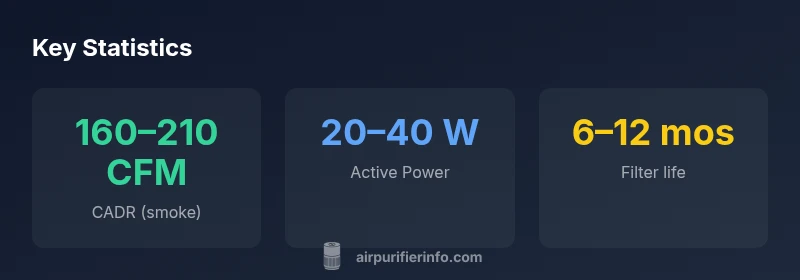
Replacement intervals depend on usage and air quality, but a typical home cycle is every 6–12 months. Check the device’s indicator, and factor in higher use in homes with pets or smokers. Regular replacement keeps filtration efficiency high.
Most homes replace filters every 6 to 12 months, depending on use.
Does Blueair 121 have smart features or sensors?
The 121 focuses on simplicity and does not include advanced smart features or air-quality sensors found in higher-end models. It remains straightforward to use with a basic control knob and indicator lights.
No, it’s a simple, easy-to-use purifier without smart sensors.
How does it compare to other compact purifiers?
Compared to some competitors, the Blueair 121 emphasizes quiet operation and a compact design. It may have slightly higher filter costs, but it offers reliable performance in small rooms with a straightforward user experience.
It’s quiet and simple, a strong choice among compact purifiers for small spaces.
Main Points
- Choose for quiet performance in small rooms
- Expect moderate CADR; ideal for bedrooms and offices
- Plan for regular filter replacements
- Simple setup and maintenance enhance daily use