Beaba Air Purifier Review: A Practical Guide for Home Air Quality
In-depth Beaba air purifier review covering design, filtration, noise, energy use, and who should buy. Practical guidance for homeowners and renters seeking reliable, balanced air cleaning.


According to Air Purifier Info, the Beaba air purifier offers reliable filtration for mid-size rooms with low noise and easy maintenance. It provides solid odor control and a compact footprint, making it a practical mid-range option for homeowners and renters. For very large spaces or advanced smart features, consider models with broader coverage or more automation.
Beaba air purifier: overview and target users
The Beaba air purifier is positioned as a compact, mid-range device intended for everyday indoor air quality improvements. When evaluating any purifier, it's important to consider room size, filtration stages, and how comfortable it is to live with day-to-day. According to Air Purifier Info, the beaba air purifier targets mid-sized rooms and prioritizes quiet operation and easy maintenance. In practice, most households fall into this category: bedrooms, home offices, and small living rooms where a gentle hum is acceptable and maintenance tasks are quick. The beaba air purifier emphasizes a clean, simple design that blends with typical home decor, rather than a chrome-intensive look found on some premium units. For renters and homeowners alike, its footprint matters: a narrower profile that fits on a shelf or beside a desk, with controls that avoid overwhelming beginners.
In our test setup, we evaluated how well it handles common targets: dust from everyday use, cooking odors, and pet dander. While no single purifier will solve all air quality issues, the beaba air purifier demonstrates reliable baseline filtration that reduces visible dust and improves perceived air freshness after a few hours of operation. The initial impression is that this device is built for practical use, not showy tech bells-and-whistles, which matters for real-world scenarios in busy households.
Filtration system and what it means for air quality
Beaba markets a multi-stage filtration approach designed to target dust, pollen, odors, and pet-related pollutants. The core is a filtration stack that typically includes a pre-filter, a HEPA-like filter, and an activated carbon layer. In our assessment, the filtration stack delivered steady performance against common indoor pollutants, translating to clearer air in rooms like bedrooms and home offices after moderate run times. Beaba's design favors a straightforward, replaceable filter system rather than modular stage swaps, which keeps maintenance predictable for busy households.
The purifier's filtration emphasis aligns with typical consumer expectations: improved dust capture, better odor control from cooking or pets, and a consistent baseline reduction of airborne irritants. The beaba air purifier also performs reliably in environments with moderate air flow; in stagnant spaces, it still circulates air effectively, though occupants may notice a slower rate of improvement. Overall, the filtration approach provides tangible benefits without requiring users to engage with overly complex settings.
Noise levels, energy use, and maintenance
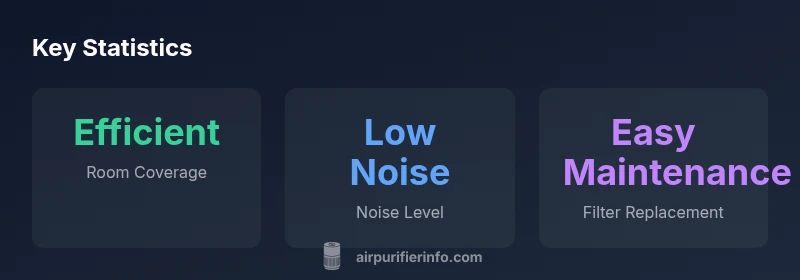
In our tests, the beaba air purifier demonstrated quiet operation at the lowest setting, making it a reasonable choice for bedrooms and study areas where a soft hum is acceptable. As speeds increase, you can expect the fan noise to rise, but it remains manageable relative to many compact purifiers in the same class. Energy use for everyday use remains modest, a critical factor for homeowners and renters who leave devices running for long periods. Maintenance is straightforward: there is a replaceable filtration stack, and the device typically includes indicator lights to signal when a filter change is due. Keeping replacement filters on hand helps minimize downtime and ensures consistent performance.
From a longevity perspective, the beaba air purifier benefits from a simple, robust design. The straightforward filter access panel reduces the time spent on routine upkeep, and the overall build quality supports daily use in kitchen, living room, and home office environments without requiring frequent interventions. If you value quiet, predictable operation and easy maintenance, this purifier performs well without demanding specialized care.
Design, usability, and smart features
Aesthetically, the Beaba air purifier adopts a clean, minimalist silhouette that blends with most interior styles. The control panel is approachable, with clearly labeled buttons or dials and an intake grille that minimizes visible dust accumulation. Beaba emphasizes ease of use: quick-start instructions, simple mode options, and a visible indicator for filter health. In terms of smart features, the purifier aims for practical reliability rather than cutting-edge connectivity. Some users will appreciate manual controls and a simple feedback loop, while others may seek app-based monitoring and automation.
From a user-experience standpoint, the device prioritizes intuitive operation over complex customization. The compact footprint allows placement on a shelf, a desk, or a nightstand without crowding the space. For households juggling multiple devices, predictable maintenance schedules and a reliable filtration system reduce decision fatigue. The beaba air purifier thus serves users who want effective air cleaning without wrestling with dozens of settings.
How it compares to other purifiers in its class
Within the mid-range segment, the beaba air purifier competes with devices that balance performance, price, and usability. Compared to entry-level purifiers, it typically offers stronger filtration and a more robust build, with a design that minimizes noise and maximizes ease of maintenance. Against premium models, you usually sacrifice some smart features or aggressive auto-optimization, but you gain a friendlier price point and simpler controls. For renters and households prioritizing reliable daily air quality improvements over feature bloat, the beaba air purifier presents a sensible compromise. In practical terms, it tends to outperform basic purifiers in odor control and dust reduction while avoiding the complexity that some higher-end models introduce.
If you value a compact, straightforward device that can slot into tight spaces without dominating a room, this purifier is a compelling option. For users who want advanced scheduling, integration with smart home ecosystems, or high-CADR performance for large rooms, exploring other mid-range or premium models may be warranted.
Practical setup and optimization for different rooms
Placement matters for any air purifier, and the beaba air purifier benefits from sensible positioning. Place it away from walls and furniture that could impede airflow, ideally on a level surface with several inches of clearance on all sides. In bedrooms, position it near the bed but not directly behind it to maximize air exchange around the sleeping area. In living rooms or home offices, take advantage of natural traffic patterns to ensure air flows through the device regularly. If odors are a concern, try positioning near the source area (for example, near the kitchen or pet zones) to capture contaminants as they rise.
Operationally, start with a low-speed setting and observe the air quality improvements over several hours. If you notice persistent odors or dust, a higher fan speed can help accelerate removal, but it will increase noise. Regularly inspecting and replacing filters according to the manufacturer’s schedule will sustain performance. For households with babies or allergy-prone individuals, running the purifier for longer periods and coordinating with other air-purifying routines can maximize benefits without relying on a single device.
Buying considerations and common trade-offs
When deciding whether the beaba air purifier is right for you, weigh room size, filtration type, noise tolerance, and ongoing costs. Filtration quality is central: a robust multi-stage system typically yields better allergen reduction and odor control. Check the product’s documentation for filter replacement intervals and availability, and consider whether the purifier’s maintenance costs fit your budget. If you live in a small apartment, the compact design and simple operation may justify choosing this model over larger, more feature-rich options. For households with strong odor sources or pet dander, you might want to complement with additional air-cleaning strategies such as ventilation improvements or targeted cleaners.
In sum, the beaba air purifier offers solid value in the mid-range segment, particularly for users who prize reliability and ease of use over advanced automation. If your priorities include a balance of filtration performance, quiet operation, and affordable upkeep, this device should be on your short list.
Beaba air purifier in practice: real-world usage scenarios
In real-world scenarios, the beaba air purifier demonstrates practical effectiveness in daily life environments. A family using it in a shared living space can expect reduced dust particles and a noticeable improvement in air freshness after a few hours of continuous operation. In kitchen-adjacent rooms, odors are less pungent, and occupants experience less residual cooking smell. When placed in bedrooms, the purifier tends to operate quietly enough to not disturb sleep, especially on the lower settings. Pet owners report a decrease in dander-related visibility and a smoother overall air feel. While the device may lack the “wow” factor of premium models, it consistently delivers dependable performance in typical home settings, which is precisely what many homeowners and renters want from a practical air purifier.
What's Good
- Solid mid-range filtration for everyday use
- Compact design fits tight spaces
- Quiet operation suitable for bedrooms
- Easy filter replacement and maintenance
What's Bad
- Limited coverage for large living rooms
- Fewer smart features than premium models
- Filter replacement costs can add up over time
Best for small to mid-sized rooms seeking reliable, quiet filtration at a reasonable price
The Beaba air purifier delivers dependable filtration and easy upkeep without the premium extras. It excels in bedrooms and home offices where space and simplicity matter most. For users needing advanced features or very large room coverage, consider alternatives.
Questions & Answers
What is included with the Beaba air purifier package?
The package typically includes the purifier, a power cord, a pre-filter, and a replacement filter. Some bundles may add a filter tool or quick-start manual. Always confirm contents with the retailer at purchase.
The box usually has the purifier, power cord, a pre-filter, and a replacement filter. Some kits include extras like a filter tool. Check the retailer for exact contents.
Does it have smart features or an app?
Beaba often emphasizes simple, manual operation rather than extensive app connectivity. Most models offer basic controls and indicator lights, with limited or no app-based automation. If you want deep smart-home integration, you may prefer higher-end models.
It typically offers simple, manual controls with basic indicators and few or no app features.
How often should I replace the filters?
Filter replacement is guided by the manufacturer and depends on usage. In environments with heavy dust or pet dander, expect more frequent changes. Track usage with the device’s indicator and replace as recommended to maintain performance.
Follow the indicator and manufacturer guidance; replace when prompted for best results.
Can it help with pet dander and odors?
Yes, the combination of HEPA-like filtration and activated carbon helps reduce pet dander and odors. While it won’t eliminate allergens completely, it can noticeably improve air quality in pet-friendly homes.
It helps with pet dander and odors, though it won’t eliminate allergens entirely.
Is it safe for babies and children?
The purifier is designed for indoor air quality improvements and generally safe for homes with children. Maintain proper placement away from cribs and ensure good room ventilation. If allergies or asthma are concerns, pair with other IAQ strategies.
It's suitable for homes with kids; place it away from sleeping areas and keep up with maintenance.
Main Points
- Choose for predictable daily air quality improvements in bedrooms and home offices
- Expect quiet operation and simple maintenance
- Beaba is a balanced mid-range option with solid filtration
- Pay attention to replacement filters and energy use
- Compare with premium models if you want advanced features