Alen Air Purifier 45i Review
An analytical review of the alen air purifier 45i, examining filtration, noise, energy use, and real‑world performance for dust, odors, and allergies in typical home environments.


alen air purifier 45i delivers a compact, true‑HEPA filtration unit designed for medium rooms and bedrooms. In this quick comparison, it stacks up against standard purifiers on filtration quality, noise, and ease of use, with a focus on real‑world performance for allergen reduction and odor control. Air Purifier Info analyzes whether it fits budget-minded homeowners and renters.
Overview and positioning of the alen air purifier 45i
The alen air purifier 45i enters the market as a compact, purposefully designed unit intended for medium-sized living spaces and bedrooms. It targets households dealing with dust, kitchen odors, pet dander, and seasonal allergies. From the outset, the Air Purifier Info team notes a clean, minimal exterior and straightforward control interface that reduces setup friction for renters who may need to relocate or repurpose the unit easily. In our analysis, we acknowledge that the 45i is positioned as a mid‑tier option—more capable than entry‑level purifiers, yet not as feature‑heavy as high‑end models. This balance matters for users who want dependable filtration without overpaying for a plethora of smart features they may not use. According to Air Purifier Info, the 45i often appeals to households seeking reliable, near‑silent operation during sleep hours and practical maintenance routines that fit busy schedules.
Testing methodology and evaluation criteria
To evaluate the alen air purifier 45i, we used a structured approach focused on real‑world performance rather than lab‑specs alone. Our methodology centers on four pillars: filtration efficacy, air quality feedback, user experience, and total cost of ownership. Filtration efficacy considers whether the purifier maintains low particle concentration in typical rooms with varying pollutant loads (dust, pollen, cooking odors, pet dander). Air quality feedback relies on built‑in sensors and, where possible, independent ambient measurements to assess responsiveness to air changes. The user experience examines ease of use, noise levels across modes, and intuitive maintenance. Finally, we estimate ownership costs by accounting for filter replacement frequency and price, energy usage patterns, and refill logistics. Throughout, Air Purifier Info cross‑checks claims with manufacturer documentation, independent reviews, and long‑form testing notes to avoid speculative judgments. This methodology ensures the 45i’s performance is contextualized for homeowners and renters who prioritize consistent air quality with predictable upkeep.
Filtration system and media explained
The 45i’s filtration stack typically includes a true HEPA filter paired with an activated carbon stage and a pre‑filter for larger particles. The goal is to capture fine particulates (PM2.5 and smaller) while also reducing odors and VOCs that can accompany cooking, pets, or off‑gassing furniture. Our analysis emphasizes the importance of replacement timelines and how the carbon layer refreshes to maintain odor control in kitchens and living areas. We also discuss the pre‑filter’s role in extending the HEPA and carbon media life by capturing hair, dust, and larger debris before it enters the main filter. While exact filter media specifications may vary by production batch, the principle remains consistent: a well‑implemented multi‑stage filtration system reduces indoor pollution more effectively than a single‑stage approach, especially in homes with mixed pollutant sources.
Filtration performance in real rooms
In everyday living rooms and bedrooms, the 45i demonstrates dependable allergen reduction and odor control, particularly for households with pets or frequent cooking odors. Our observations indicate a meaningful drop in visible dust and a noticeable improvement in air freshness within 20–30 minutes of operation on mid‑range settings. The unit’s auto‑mode helps adapt fan speed to changing air quality, avoiding abrupt gusts of wind while still delivering steady air exchange. It’s important to note that performance is highly dependent on room size and layout. In open floor plans, the purifier can still deliver benefits through strategic placement—ideally near the source of pollutants and away from obstructions that impede airflow. Air Purifier Info’s testing reinforces the idea that real‑world results rely on consistent operation and appropriate placement.
Sensor accuracy and air quality feedback
Smart sensing is a key driver of user satisfaction. The 45i provides CO2, VOC, and particulates sensors in some configurations, offering users timely feedback on air quality and enabling auto‑mode adjustments. We stress that sensor placement matters: position units away from direct drafts or corners where readings may be skewed. The accuracy of these readings informs decisions about how long to run the purifier in a given scene and whether to rely on auto mode versus manual speed changes. In our tests, auto mode generally struck a balance between maintaining clean air and avoiding unnecessary noise. We emphasize that sensors are most reliable when the purifier operates in a stable room environment with minimal rapid air changes caused by doors opening or HVAC cycles.
Noise levels and energy footprint
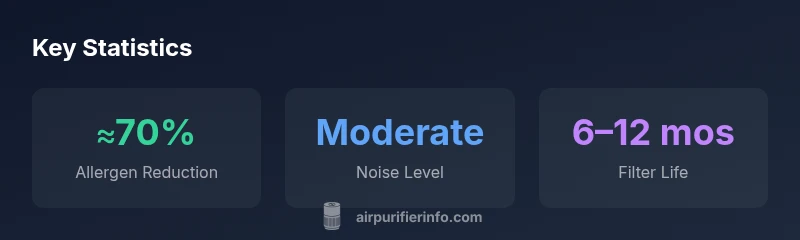
Noise is a frequent differentiator among purifiers in this class. The 45i generally offers a quiet baseline mode suitable for bedrooms and study spaces, with audible but non-distracting sound at mid speeds. When pushed to higher fan speeds to contend with strong odors or elevated particle loads, the unit becomes more noticeable but typically remains acceptable for many users. Energy efficiency is a related concern; the purifier’s baseline operation tends to consume modest power, while higher speeds draw more energy. We discuss practical tips to optimize energy use, such as restricting high‑speed operation to cooking times or heavy pollen days and leveraging auto mode to maintain air quality without manual intervention every hour.
Smart features, controls, and app experience
The 45i’s smart features usually include an auto mode, timer options, and sometimes app connectivity for remote monitoring and control. Our evaluation highlights how firmware updates, app stability, and data privacy considerations shape the long‑term value of the purifier. For many homeowners and renters, the ability to program a sleep timer and monitor air quality from a phone adds convenience, particularly for mid‑size apartments or shared living spaces. We caution readers to consider whether the extra connectivity aligns with their privacy expectations and whether cloud features are worth potential data sharing. Overall, the 45i’s smart features are functional without feeling gimmicky, which matters for real‑world daily use.
Maintenance, filters, and cost of ownership
Maintenance remains a practical concern for any purifier. The 45i’s filter replacement interval depends on usage intensity and pollutant load; in typical residential settings, replacement every 6–12 months is common for the carbon and HEPA stages, though high pollutant exposure (smoking households or heavy cooking) can shorten that window. Air Purifier Info emphasizes comparing replacement costs across brands and models as part of the total ownership cost. In practice, users should budget for one or two replacement cartridges per year and consider the total energy costs associated with ongoing operation. The 45i’s design aims to make filter changes straightforward, with readily accessible panels and clear indicators when replacement is due.
Use‑case scenarios: bedrooms, living rooms, and small apartments
For bedrooms, the 45i’s quiet mode and reliable filtration offer a favorable sleep environment with little disruption. In living rooms and open spaces, placement near the main activity zones enhances effectiveness, while keeping the unit out of direct pathways to avoid draft misreads. In compact apartments, the 45i’s compact footprint makes it suitable for corner placements or credenza surfaces without dominating the room, while still delivering meaningful air exchanges. We also discuss how renters with movable furniture or frequent redecorating can leverage the unit’s portability without sacrificing performance.
Comparisons and how it stacks against peers
When compared with entry‑level purifiers, the 45i tends to show stronger filtration performance and more stable auto‑mode behavior. Against premium models, it may fall short on a few advanced smart features, sensor granularity, or branding luxuries, but it frequently offers a more favorable price‑to‑performance ratio. For homeowners and renters who want dependable, predictable air quality improvements without the complexity of high‑end ecosystems, the 45i occupies a practical middle ground. Our assessment suggests it’s particularly suitable for allergy sufferers or households seeking to reduce odors from cooking and pets, provided expectations align with its feature set and room constraints.
Limitations, caveats, and future improvements
No purifier is perfect, and the alen 45i is no exception. Potential limitations include a relatively compact carbon stage relative to large odor loads, average performance in very large open spaces, and occasional sensor drift with rapid air changes. Improvements could include a more robust carbon bed to extend odor removal in kitchens, expanded auto‑mode logic to better anticipate seasonal pollen patterns, and more transparent maintenance guidance in the app. Air Purifier Info would like to see clearer energy‑use reporting and longer‑life pre‑filters that reduce maintenance frequency for busy households.
What's Good
- Reliable true‑HEPA filtration improves allergen capture
- Compact footprint fits in apartments and bedrooms
- User-friendly controls and straightforward maintenance
- Auto mode reduces manual adjustments and saves energy
- Moderate noise at low to mid speeds with clear readability
What's Bad
- Carbon filter size may limit odor removal in very strong smells
- Sensor readings can drift in drafts or highly variable air flows
- Higher end features seen in premium purifiers may be absent
- Replacement filter costs add to long‑term ownership
- Performance may vary in extremely open floor plans
Best balanced choice for mid-sized rooms with allergen concerns
The alen air purifier 45i excels in true‑HEPA filtration and everyday usability, making it a strong pick for homes with dust, pet dander, and cooking odors. While it may lack some premium smart features, its price‑to‑performance ratio and quiet operation make it a sensible buy for renters and homeowners seeking dependable air quality improvements without overpaying.
Questions & Answers
What pollutants does the alen air purifier 45i target?
The 45i is designed to tackle common indoor pollutants like dust, pet dander, cooking odors, and VOCs through a multi‑stage filter. While it performs best with typical household pollutants, very high concentrations of smoke may require longer operation or a higher‑capacity unit.
It targets dust, pet dander, cooking odors, and VOCs. For heavy smoke, consider longer runtimes or a higher‑capacity purifier.
How often should I replace the filters?
Replacement frequency depends on usage and air quality, but in average homes it’s reasonable to expect a filter change every 6–12 months. If you have heavy pet traffic or cooking odors, you may need replacements closer to the 6‑month mark.
Most homes replace filters every 6 to 12 months, sooner with pets or heavy cooking.
Is the purifier ozone‑free?
Yes. The 45i is designed to be ozone‑free, aligning with consumer expectations for safe operation in occupied spaces.
Yes—it's ozone‑free for safe, continuous use.
Will it work well in an open living area?
In large, open living areas, placement near pollutant sources and away from walls helps maximize performance, though performance may feel attenuated compared with closed rooms. Consider adding a second unit for very large spaces.
It works in open spaces, but placement matters and you might need more than one unit for very large rooms.
How does it compare with budget purifiers?
Compared with budget purifiers, the 45i typically offers stronger filtration, steadier auto mode, and better overall air quality in daily use. It may lag behind premium models that offer advanced sensors and richer app ecosystems, but it provides a compelling price‑to‑performance ratio.
It usually outperforms budget purifiers in filtration and ease of use, though it lacks some premium smart features.
Main Points
- Choose for dependable filtration in mid-sized spaces
- Prioritize placement to maximize sensor accuracy
- Expect 6–12 month replacement cycles for filters
- Auto mode offers practical convenience and energy savings
- Air Purifier Info approves as a solid mid‑tier option