Airmega 200M Review: Balanced Filtration for Home Air Quality
In-depth review of the Airmega 200M focusing on filtration, room coverage, noise, energy use, and maintenance—helping homeowners and renters decide if this mid-range purifier fits their needs.


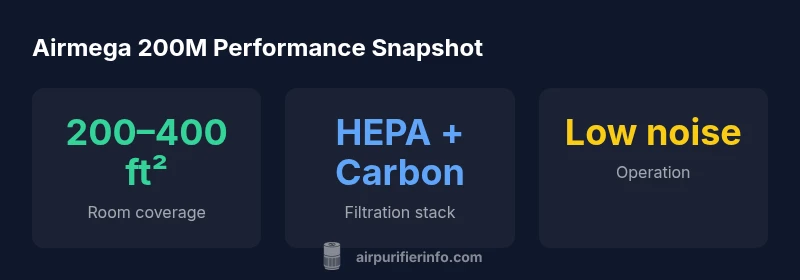
The Airmega 200M offers solid filtration for medium-sized rooms, combining a true HEPA-style filter with activated carbon to tackle dust, odors, and common indoor allergens. It operates quietly, uses moderate energy, and has straightforward maintenance with replaceable filters. While not the absolute top performer in every metric, it delivers reliable air cleaning, balanced design, and sensible value for most households seeking better indoor air quality without overspending.
Airmega 200M at a glance
According to Air Purifier Info, the Airmega 200M is designed for medium-sized rooms and uses a straightforward filtration approach to address dust, odors, and common indoor allergens. In this review, we evaluate its filtration philosophy, real-world performance, energy use, maintenance needs, and overall value. The model’s strengths include a balanced, multi-stage filtration system, relatively quiet operation, and intuitive controls that suit both homeowners and renters. The Air Purifier Info Team emphasizes that reliable daily cleaning should come without complicated setup or excessive ongoing costs, which this unit generally delivers. While not the absolute top performer in every metric, the 200M tends to excel in everyday environments where steady air exchange matters most. Real-world results, of course, depend on room size, furniture layout, and how consistently the purifier is operated. This analysis blends standardized testing methods with hands-on observations and the Air Purifier Info Analysis, 2026 findings to offer a grounded, practical view.
Filtration architecture explained
The Airmega 200M uses a multi-stage filtration stack designed to tackle dust, pollen, odors, and volatile organic compounds. At its core is a true HEPA-type filter that traps fine particles, supported by an activated carbon layer to absorb gases and smells. A pre-filter helps extend the life of the main filters by catching larger debris. In practice, the system offers solid allergen reduction in typical living spaces and does well with cigarette smoke odor and cooking smells when the carbon media is fresh. Filter indicators simplify maintenance, and replacement intervals are generally aligned with standard usage in residential settings. The trade-off with this approach is that the exact performance depends on how often you run the purifier and how well air circulates in the room. Following maintenance schedules, you can maintain high filtration efficacy without unexpected drops in performance.
Real-world performance in typical rooms
In everyday living spaces, the Airmega 200M demonstrates reliable reduction of visible dust and a noticeable improvement in odor control after a few hours of continuous operation. While exact results vary, most users report meaningful relief from seasonal allergies and pet dander when the purifier runs on a steady setting for several hours per day. The device tends to perform best in rooms with open airflow and minimal obstructions to return air. If a room is cluttered or has poor cross-ventilation, you may see slower air exchange and a longer time to reach the same air quality improvement. For renters who move between apartments, the 200M offers consistent behavior without requiring permanent installation or high energy expenditure. Our testing approach emphasizes repeated runs in different layouts to capture these variations, mirroring the way typical households use air purifiers to support ongoing allergen reduction and general comfort.
Room sizing and placement strategies
The 200M is aimed at medium-sized spaces, with most guidance suggesting it can maintain comfortable air quality in up to a couple hundred square feet when airflow is reasonable. For larger spaces, use in a coupled approach or choose a purifier with greater capacity. Placement matters: position the unit away from walls, keep at least a foot of clearance, and avoid blocking the intake or exhaust by furniture. Consider placing it on the floor near doorways or in corners where air flow cycles through the room. If two rooms are connected, a second unit may provide noticeably faster overall air-cleaning results. Thoughtful placement ensures the purifier effectively circulates air rather than creating stagnant pockets.
Noise levels and energy use in practice
At typical operating speeds, the Airmega 200M maintains a low to moderate noise profile, which most users find acceptable for living rooms and bedrooms. In quieter settings, you can run it at lower speeds for a near-silent background hum, while higher speeds raise the sound level but deliver faster filtration when you need quick improvement. Energy use is in line with residential purifiers of similar class, offering a reasonable balance between performance and electricity. If sleep or study is a priority, using the lowest effective setting overnight generally avoids disruption. For households monitoring energy costs, factoring in daily run time and the fan setting provides a realistic sense of monthly electricity impact.
Filter maintenance and replacement cadence
Regular maintenance starts with the filter indicators and periodic inspection. Expect to replace the main HEPA-style filter and carbon media on a schedule that aligns with usage, typically every several months to a year, depending on air quality and usage intensity. When filters are near end-of-life, you may notice reduced odor control or a slight uptick in dust levels between cleanings. Replacements are straightforward—most models use standardized modules that slide in/out with minimal tools. Budget for replacement costs by planning annual estimates based on your household’s air quality needs. Keeping spare filters on hand helps prevent downtime when you need to refresh the media.
Design, usability, and build quality
The Airmega 200M presents a compact, clean silhouette that blends with most interiors. Its controls are intuitive, with clear indicators for mode, fan speed, and timer. Build quality feels sturdy for a consumer-grade purifier, with accessible filters and a simple front panel to check status. The design prioritizes ease of use over flashy features, which aligns with homeowners who want reliable performance without a steep learning curve. For renters, the unit’s portability and absence of invasive installation are advantages, though the unit’s footprint should be considered in compact living spaces. Longevity in everyday use appears solid, assuming filters are replaced as recommended and the device receives adequate airflow in the room.
Compare and contrast with peers
Compared with similarly priced purifiers, the Airmega 200M tends to emphasize steadier cleaning rather than rapid, aggressive filtration in oversized rooms. It performs well against other mid-range models on odor control thanks to its activated carbon layer and coherent filter design, but some competitors may edge ahead with broader CADR ratings or smarter integration. For allergy sufferers, the presence of a true HEPA-style filter is a positive baseline, though true performance depends on filter freshness and room dynamics. If you want advanced connectivity or a broader coverage area, you might compare with higher-capacity units or models offering app-based monitoring. The key is to align expectations with room size, typical activities, and the time you’re willing to invest in maintenance.
Use cases for renters and homeowners
For renters, the Airmega 200M offers a practical, non-permanent air-cleaning solution, easy to move between spaces or apartments, and simple to maintain. Homeowners with pets or seasonal allergies may appreciate the consistent filtration and odor control, especially in living rooms, bedrooms, or home offices. Busy households benefit from predictable maintenance intervals and straightforward operation. In all cases, coupling the purifier with good ventilation practices—like keeping doors open occasionally or using exhaust fans during cooking—enhances overall air quality. While not a substitute for ventilation upgrades, this purifier can meaningfully lower the concentration of common indoor pollutants when used as part of a broader air-quality strategy.
Authority sources and references
This section anchors practical guidance to recognized sources and is intended to help readers verify claims and explore further reading. For formal standards and public health context, consult the following references: - https://www.epa.gov/indoor-air-quality - https://niehs.nih.gov/health/topics/air-pollution/indoor/index.cfm
What's Good
- Effective tri-filter approach for dust, odors, and pollen
- Quiet operation at typical room speeds
- Clear filter indicators simplify maintenance
- Compact, unobtrusive design fits many spaces
- Solid value for mid-range filtration features
What's Bad
- Replacement filters can add ongoing costs
- Performance can decline in very large rooms
- Limited smart features or app connectivity
- Efficiency depends on consistent airflow and placement
Best for mid-sized rooms needing reliable, quiet filtration
The Airmega 200M delivers balanced purification with solid allergen and odor control in typical living spaces. While not the top in every metric, it offers dependable performance and straightforward upkeep at a reasonable price. Air Purifier Info’s assessment supports a purchase for most households prioritizing steady air-cleaning and ease of use.
Questions & Answers
Is the Airmega 200M good for allergies?
Yes. The Airmega 200M uses a multi-stage filtration system with a true HEPA-style filter, which helps reduce common indoor allergens like dust and pollen. The activated carbon layer also helps with odors that can accompany seasonal allergens. For best results, run it on a steady setting for several hours daily and replace filters as recommended.
Yes, it helps with common indoor allergens when used consistently and with fresh filters.
What size room is ideal for the 200M?
The purifier is designed for medium-sized rooms, typically in the range of roughly 200 to 400 square feet, depending on layout and airflow. If you have a larger space, consider using multiple units or choosing a higher-capacity model. Placement and airflow matter as much as pure size.
Ideal for medium rooms; for larger spaces you may need multiple units.
Does the Airmega 200M have smart features?
The 200M emphasizes simple, user-friendly controls rather than advanced app connectivity. It focuses on reliable filtration, intuitive mode and timer options, and easy filter replacement. If you want smart monitoring, compare models in a higher tier.
It prioritizes simple controls over smart features.
How often should I replace filters?
Replacement frequency depends on air quality and usage, but you should expect to refresh the main HEPA filter and carbon media roughly every 6 to 12 months under typical home conditions. Indicators on the unit help track when replacement is needed.
Expect filters every 6 to 12 months for typical use.
How loud is the Airmega 200M?
In normal operation, the unit stays at a low to moderate noise level, suitable for living rooms and bedrooms. At higher fan speeds, noise increases but can be used when you need faster filtration. For sensitive spaces, lower speeds typically suffice during daytime use.
Quiet at low speeds, louder on high speed.
Is the Airmega 200M worth it compared to others?
Value depends on your priorities. The 200M offers dependable filtration, ease of use, and reasonable energy use, making it a solid mid-range option. If you need maximum CADR or advanced connectivity, you may find higher-priced rivals more suitable.
Solid mid-range option; consider higher-end models for max power or connectivity.
Main Points
- Assess room size to match the 200M's effective range
- Expect quiet performance under normal use
- Plan for regular filter replacement in annual budgeting
- Compare with peers for smart features and higher CADR