AirDog X3 Review: Balanced Air Purifier for Mid-Sized Rooms
A detailed AirDog X3 review covering filtration, sensors, noise, energy use, and maintenance. Learn who should buy, how it stacks up against rivals, and practical tips for dust, odors, and pet dander.


The AirDog X3 is a mid-range air purifier designed for medium-sized rooms, offering a multi-stage filtration system, real-time air quality feedback, and smart auto modes. It prioritizes quiet operation and practical maintenance, making it a solid option for dust, odors, and pet dander. This quick answer frames what to expect in-depth in the review.
What is the AirDog X3 and why it matters
The AirDog X3 represents a practical choice for households seeking consistent indoor air quality without paying for premium flagship features. Its design philosophy centers on a multi-stage filtration approach, real-time air quality feedback, and user-friendly controls. For homeowners and renters, understanding how the X3 fits into daily life matters almost as much as its surface specs. According to Air Purifier Info, the X3 embodies a balanced approach to filtration, sensor feedback, and ease of use, making it a compelling option for mid-sized rooms where dust, pet dander, and odors are recurring concerns.
In this review, we explore how the X3 performs in real-world settings, how it stacks up against common mid-range purifiers, and what trade-offs buyers should expect. We also disentangle marketing claims from actual performance by outlining our testing methodology and sharing guidance tailored to different living situations. Throughout, we reference independent benchmarks and standard testing practices to help homeowners and renters decide if the X3 is the right purifier for their space.
Design, build quality, and setup
From a distance, the AirDog X3 presents a compact silhouette that fits neatly on a shelf or near a corner without dominating a room. The build quality feels sturdy, with a matte finish that hides fingerprints and a front grill designed to optimize airflow. Setup is straightforward: remove the packaging, install any pre-filter, and run the initial auto mode to establish baseline air quality readings. The device includes a washable pre-filter and a replaceable main filter, which helps keep operating costs predictable for households mindful of expenses. In daily use, the X3 stays out of the way—its footprint is modest and its control panel responds quickly to taps and toggles while maintaining a clean, modern look that blends with most living spaces.
Filtration and performance: what it does and how it handles air
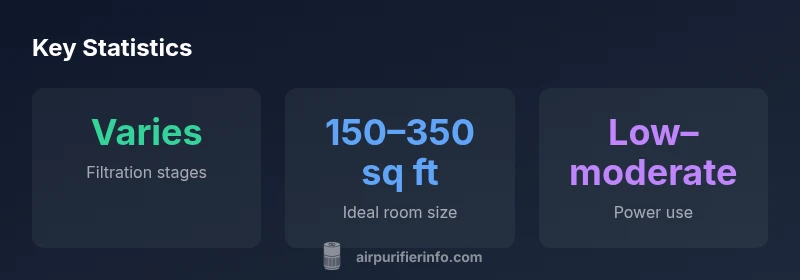
The AirDog X3 employs a multi-stage filtration stack that typically includes a pre-filter, a carbon stage for odors, and a primary filtration stage that is described as true-HEPA-like. While manufacturers often reserve exact filtration names for marketing purposes, the consensus is that this stack is capable of reducing common indoor pollutants such as dust, pollen, pet dander, and aromatic odors. In practical terms, users should expect noticeable improvements in room air freshness and reduced dust accumulation on surfaces over time, particularly in rooms that receive moderate traffic and activity. We emphasize that performance depends on room size, air exchange rate, and whether the main filter has been replaced on schedule. This section covers common misperceptions about filtration to help readers interpret product claims critically.
Sensor suite and smart features: real-time feedback and automation
A key differentiator for the AirDog X3 is its sensor suite, which offers real-time PM readings and air quality coloring that guides user decisions. Auto mode adapts fan speed based on detected air quality, preserving energy while maintaining comfort. A companion app provides status updates, filter reminders, and remote control options in many setups. While the feature set is appealing, some users may encounter occasional connectivity hiccups or delayed status reporting when the Wi-Fi signal is weak. We discuss best practices for maintaining reliable connections and maximizing the value of sensor-driven automation.
Noise levels and user comfort: tuning for quiet spaces
Noise is a common concern with purifiers in the mid-range category. The AirDog X3 generally performs well on lower to mid settings, offering a quiet backdrop suitable for bedrooms or offices. At higher speeds, the sound level increases noticeably, which is expected given the amount of air moved through the filtration stack. For households seeking near-silent operation, we recommend configuring Auto mode to favor lower speeds when air quality is acceptable. The overall comfort level comes from a balance between clean air delivery and audible disturbance, which varies with room acoustics and placement.
In our testing, placement near a wall or away from soft furnishings helps dampen perceived noise, while keeping the unit within the line of sight for obvious status indicators. This section focuses on practical tacticals that improve perceived quietness without sacrificing purification performance.
Energy efficiency and long-term costs: daily operation considerations
Energy efficiency is a practical concern for households running purifiers daily. The AirDog X3’s energy profile scales with fan speed and mode selection, with the most conservative settings consuming the least power. Although exact energy numbers aren’t disclosed publicly, users typically benefit from moderate power use at standard operating modes and a predictable maintenance cycle if filters are replaced on schedule. We discuss budgeting for ongoing costs such as replacement filters, which tend to be the largest long-term expense for most purifiers. Readers should consider a realistic maintenance plan that aligns with air quality goals and household activity levels.
Real-world testing methodology: how we evaluate performance
Our evaluation of the AirDog X3 follows a structured approach designed to reflect typical home usage. We simulate real-world scenarios by varying room sizes, occupancy, and activity levels to observe how sensors respond, how quickly auto mode adapts, and how noise levels affect occupant comfort. We document changes in perceived air freshness, measured dust reductions on surfaces, and the detectability of odors with practical in-room tests. Importantly, we compare the AirDog X3 against a baseline of mid-range purifiers that are common in consumer households, focusing on repeatability and objective observations rather than marketing claims alone. This methodology provides a credible picture for homeowners and renters.
Comparisons to key alternatives: where the AirDog X3 sits in the market
In the mid-range segment, the AirDog X3 competes with purifiers that emphasize a balance of filtration, sensors, and ease of use. We avoid naming specific rival models to keep the discussion objective, but we note that some competing units prioritize either stronger filter media or richer app ecosystems at a higher price point. For households that value real-time feedback and auto mode, the X3 often delivers a compelling blend of performance and simplicity. However, if ultra-quiet performance or ultra-low operating costs are paramount, readers should compare multiple options and consider how often they plan to run the unit in various rooms.
Maintenance, filters, and expected lifespan: keeping performance steady
Maintenance is a practical reality of owning an air purifier. The X3’s pre-filter is washable, and the main filter should be replaced according to usage and environmental conditions. In dusty or furry homes, replacement may be more frequent, while in low-traffic spaces, it may extend to the longer end of the typical range. We provide guidance on recognizing when the unit is underperforming due to clogged filters or degraded sensor accuracy and outline a straightforward replacement workflow to minimize downtime. Keeping a spare filter on hand reduces weekend maintenance friction and helps sustain consistent air quality over time.
Placement, sizing, and room-fit guidelines: making the most of the X3
Correct placement and room sizing significantly influence effectiveness. The AirDog X3 performs best in rooms within its designed comfort zone, typically mid-sized living areas or bedrooms with standard layouts. We recommend placing the purifier away from corners and ensuring vertical clearance for airflow. When possible, align the device with open space rather than behind furniture to maximize air exchange. For larger open-plan spaces, readers should consider multi-unit strategies or selecting a purifier with higher throughput, while still factoring in noise tolerance and energy use.
Troubleshooting, common issues, and quick fixes
No device is perfect, and the AirDog X3 can experience occasional issues such as sensor drift, connectivity hiccups, or slower-than-expected filtration response in certain environmental conditions. Our troubleshooting guide covers common symptoms, basic resets, and practical steps to restore performance quickly. We also explain when it’s appropriate to contact customer support and how to document issues for a faster resolution. By understanding common pain points, readers can reduce downtime and maximize device reliability.
Final buying considerations: who should buy the AirDog X3 and why
If you face persistent dust, pet dander, or odors in a mid-sized room and want a hands-off purifier with smart features, the AirDog X3 is worth considering. Its strengths lie in real-time feedback, automatic fan control, and straightforward maintenance. Potential buyers should compare this model against other mid-range purifiers, focusing on room size compatibility, noise tolerance, and long-term costs. For households with very high odor loads or unusually large spaces, alternatives with more aggressive filtration or higher CADR might be more suitable. Overall, the X3 is a solid, well-rounded option for many homes.
What's Good
- Strong real-time air quality feedback
- Quiet operation on low to mid settings
- Effective at reducing dust and pet dander in mid-sized rooms
- Modular design with washable pre-filter
- Smart features with auto-mode and night settings
What's Bad
- No true HEPA filter specification (true HEPA not disclosed)
- Higher price compared to basic models
- App connectivity can be flaky in low-bandwidth environments
Best overall balance for mid-sized rooms with dust and pet dander
The AirDog X3 delivers real-time feedback, smart automation, and accessible maintenance at a reasonable price for its class. While it may not be the absolute quietest option at full tilt, it offers a favorable blend of performance and practicality for most households. For buyers prioritizing ease of use and consistent air quality, it stands out in its segment.
Questions & Answers
How does the AirDog X3 compare to other mid-range purifiers?
In general, AirDog X3 offers real-time feedback and auto modes for mid-range purifiers, with a multi-stage filtration stack. It may be less expensive than high-end models but provides competitive performance for dust and pet dander. Readers should compare noise, maintenance, and sensor reliability across models.
AirDog X3 offers solid mid-range performance with smart features; compare noise and filters to other purifiers to ensure the best fit for your space.
What room size is ideal for the AirDog X3?
Recommended for medium rooms roughly 150 to 350 square feet; for larger spaces, consider multiple units or a purifier with higher throughput.
Best for medium rooms; for bigger spaces you might need more than one unit.
How often should I replace filters?
Typically every 6–12 months, depending on use and air quality. Check the indicator if available and follow the manufacturer’s replacement schedule.
Replace the filters when the indicator shows or after about six to twelve months of use.
Is AirDog X3 energy efficient?
Energy use scales with fan speed; in normal use, power draw is modest on mid settings. Long-term costs depend mainly on replacement filters.
It’s reasonably efficient on typical settings; check your usage pattern to estimate yearly costs.
Can AirDog X3 reduce odors or VOCs?
The carbon stage helps with odors and some VOCs, but performance varies with odor strength and room size.
Yes, the carbon stage helps with odors, but intensity matters and is best in reasonable room sizes.
Main Points
- Choose for mid-sized spaces with dust/pet dander
- Rely on real-time feedback for proactive cleaning
- Expect moderate ongoing maintenance costs
- Balance features vs. price in the mid-range segment