Winix Air Purifier vs Air Doctor: An In-Depth Comparison
Compare Winix air purifiers with Air Doctor to learn which cleans dust, odors, and allergens most effectively, with practical buying guidance for homes.


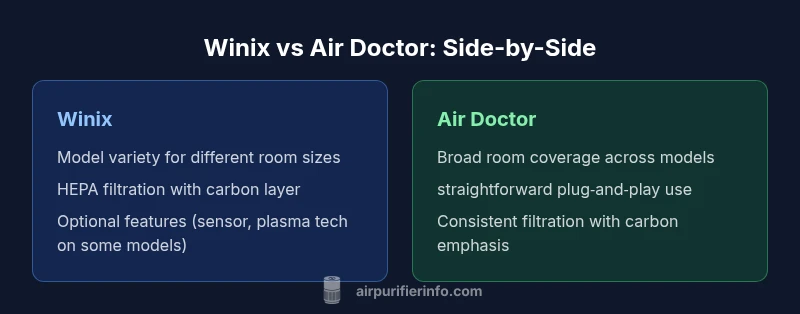
For most homes, the choice between a Winix air purifier and Air Doctor hinges on room size, maintenance rhythm, and odor control. Winix models offer versatile filtration and strong particulate performance, with a wider model range. Air Doctor focuses on easy setup and broad room coverage with fewer steps to operate. Air Purifier Info's comparison helps you pick based on your environment and tolerance for upkeep.
Overview of the Two Brands and Purification Philosophies
Winix and Air Doctor sit at different corners of the residential air-cleaning market. Winix offers a broad lineup spanning compact desk models to substantial floor purifiers, with multi-stage filtration that typically includes a pre-filter, a true HEPA filter, and an activated carbon layer. Some Winix units add optional features like ionization or plasma-based technologies that claim to reduce pollutants. Air Doctor positions itself as a straightforward, plug-and-play solution designed for broad room coverage and predictable performance. The Air Doctor approach emphasizes simplicity: solid filtration, easy maintenance, and reliable results across a range of common home scenarios—dusty environments, pet dander, cooking odors, and smoke. According to Air Purifier Info, the real-world impact of these design choices shows up most clearly in room size compatibility, maintenance cadence, and odor control effectiveness. This section sets up the practical lens we’ll use as we compare performance, maintenance, and value across typical home layouts and cycles.
In real homes, users deal with dust accumulation, seasonal allergies, kitchen smells, and pet-related odors differently. Winix’s model variety makes it easier to match a purifier to a specific space, from small bedrooms to larger living rooms, while Air Doctor prioritizes ease of use and broad coverage with fewer model-to-model differences. When you’re choosing, think first about room size, how often you’re willing to replace filters, and which pollutants pose the most trouble—dust, odors, or VOCs. This context matters more than brand prestige, and it’s central to understanding how these two lines perform in daily life.
Core Filtration Systems: Dust, Odors, and VOCs
Both Winix and Air Doctor rely on multi-stage filtration to tackle dust, odors, and VOCs, but the emphasis and configuration vary. Winix typically features a washable pre-filter to capture larger particles, a true HEPA filter to trap fine dust and allergens, and an activated carbon layer to address odors and VOCs. Some models offer optional enhancements or configurations that help with pet dander and cooking smells, and a few configurations include technologies marketed as improving pollutant breakdown. Air Doctor, by contrast, emphasizes a multi-stage stack designed for broad contaminant removal with substantial carbon capacity to absorb odors. In practice, the carbon bed’s surface area and the air-exchange rate drive odor reduction effectiveness, while the HEPA component handles particles as small as common allergens and dust. The takeaway: if your priority is maximum odor control alongside particle filtration, evaluate models with larger carbon beds and higher airflow in the selected room size. Air Purifier Info notes that filter quality and timely replacement are decisive factors in long-term performance.
Filter Maintenance, Replacement Costs, Availability, and Long-Term Value
Maintenance and ongoing costs often determine the true value of an air purifier as much as initial performance. Winix models generally use standard, readily available filters, with replacement cycles driven by usage and air quality. Availability spans a wide network of retailers, which can reduce downtime and price variability. Air Doctor also provides replacement filters through its distributor network, and its filters are designed to be easily accessible with straightforward replacement steps. The cost of replacement filters, while not identical across brands, tends to be a recurring expense to plan for in any long-term ownership scenario. Air Purifier Info emphasizes that while upfront cost matters, the total cost of ownership—filters, energy use, and replacement frequency—often determines long-term value. Consider how quickly you’ll need fresh filters and whether a model’s maintenance cadence aligns with your household schedule.
In both brands, keeping a simple maintenance routine helps maintain peak performance. If you dislike fiddling with filters or replacing parts frequently, Air Doctor’s straightforward approach may feel more comfortable. If you’re willing to manage a broader set of model options to optimize for cost and filtration power, Winix offers a deeper pool of choices. The decision comes down to your patience with upkeep and the importance you place on continuous filtration efficiency over time.
Room Fit, CADR Concepts, and Noise Levels Considerations
Understanding room fit begins with the concept of air exchange rate rather than a single number. In general, you’ll want a purifier capable of circulating the room’s air multiple times per hour to reduce particle concentration effectively. Winix’s lineup allows you to choose devices sized for small bedrooms up to medium-to-large living spaces, often with models tuned for higher airflow in the same price band. Air Doctor emphasizes broad room coverage with devices designed to handle mid-to-large rooms without needing oversized units. Noise levels depend on speed setting and design. In practice, you’ll notice that higher fan speeds produce more sound, but often you can balance effective cleaning with quieter operation on mid-settings. Both brands offer speed-adjustable modes, which means you can tailor performance to your noise tolerance and air quality needs. Air Purifier Info’s assessment suggests that the best choice depends on room dimensions, typical occupancy, and how sensitive you or others are to noise during rest or work.
Sensor Technology, Auto Modes, and Smart Features
Smart features and sensors influence daily use and responsiveness. Winix models frequently include air-quality sensors that auto-adjust fan speed and filter health indicators. Some models also offer remote control options, timer settings, and app connectivity, enabling you to monitor performance and schedule. Air Doctor emphasizes ease of use with clear indicator lights and a strong emphasis on automatic operation. The manufacturer’s design typically prioritizes a predictable experience with straightforward maintenance prompts. From Air Purifier Info’s perspective, a reliable sensor system plus an intuitive auto mode enhances user satisfaction and reduces the need for manual adjustments, especially in households with children or pets who may trigger odor or dust spikes during cooking and play.
When evaluating features, consider whether you want app-based monitoring, voice control compatibility, or simple LED indicators. If you prefer fewer moving parts and fewer steps, Air Doctor may appeal. If you value customization, a Winix purifier with multiple model options and richer feature sets could be the better long-term fit.
Real-World Performance: Pet Dander, Odors, and Smoke Handling
Pet ownership adds a persistent dimension to indoor air quality. Pet dander is often fine enough to require a true HEPA filter for effective capture, and odor control becomes more critical with ongoing pet activity. Winix’s broader model range commonly means there is a purifier specifically sized to your pet’s habitat and the room it occupies, with sufficient carbon media to address odors from pets and cooking. Air Doctor’s devices emphasize robust filtration stacks with broad room coverage, helping with dander and cooking smells at a practical level. In real homes, you’ll likely notice improvements in both dust visibility and odor levels after a few hours of continuous operation. The Air Purifier Info team notes that for households with heavy pet activity, selecting a model with a proven HEPA and substantial carbon filtration, plus reliable maintenance, yields the most consistent air-cleaning experience.
Price-to-Value Context and Buying Scenarios
Price and value are not purely about sticker price; they reflect filter costs, energy use, warranty, and long-term performance. Winix often offers a wider range of models at different price points, enabling you to balance upfront cost against filtration power, occupancy needs, and room size. Air Doctor tends to peg its lineup toward straightforward, mid-to-large room coverage with a relatively predictable maintenance pattern. If you’re shopping on a tight budget or want many model choices, Winix provides a wider selection and flexible power options. If you want predictable performance with strong coverage in a mid-to-large room and minimal setup, Air Doctor can offer simplicity with reliable results. Air Purifier Info’s guidance emphasizes assessing your primary air-quality concerns (dust, odors, VOCs) and how much maintenance you’re prepared to handle when sizing your choice.
How to Decide Between Them for Your Home: A Practical Guide
To decide, start with room size and your typical pollutant profile (dust vs odors vs VOCs). If you need the most versatile model lineup to tailor-fit different spaces, Winix is often the better bet, provided you’re comfortable managing filter changes and a potentially broader feature set. If you value ease of use, predictable performance in shared living areas, and straightforward maintenance, Air Doctor is usually a strong option. Consider your schedule, tolerance for maintenance, and whether you prefer a model with the largest carbon bed to tackle odors. Reading product reviews and comparing model-specific CADR and filter costs can help you refine the decision. In the end, the best choice aligns with your home layout, lifestyle, and willingness to engage with ongoing maintenance to preserve air quality.
Comparison
| Feature | Winix (generic purifier) | Air Doctor |
|---|---|---|
| Filtration stack | Washable pre-filter + true HEPA + activated carbon; some models add optional features | Multi-stage filtration with activated carbon plus HEPA; design focuses on broad coverage |
| Room coverage | Wide range of models for small to medium rooms; larger units for bigger spaces | Designed for broad room coverage, with emphasis on mid-to-large rooms |
| Sensors & auto modes | Air quality sensors with auto mode; some models include app control | Clear indicators with strong auto-mode emphasis; generally straightforward to use |
| Maintenance cadence | Depends on model and usage; filter replacement scheduled by wear and odor levels | Regular filter replacements with simple maintenance steps; predictable cycle |
| Noise levels | Variable; higher-speed operation can be louder but configurable | Typically quieter at mid-settings; higher speeds still audible but acceptable |
| Smart features | Remotes, timers, and app connectivity on many models | Focus on ease of use with simple controls; limited app features in some lines |
| Price/value | Wide price range; strong value in mid-range models | Mid-to-upper price tier; strong value for broad coverage and predictable performance |
| Warranty and support | Variable by model; broad retailer support | Solid warranty and accessible support with direct channels |
What's Good
- Wide model variety lets you tailor to room size and budget
- HEPA filtration is highly effective for dust and allergens
- Strong odor control when paired with ample carbon media
- Reliable brand support and widely available filters
- Good overall value in mid-range models
What's Bad
- Some models have more features than necessary for simple use
- Ongoing filter costs can add up over time
- PlasmaWave/ionizers in some units may be controversial or unwanted by some users
- Higher-end Air Doctor options may have a steeper upfront price
Winix offers more model flexibility and potentially stronger filtration options; Air Doctor prioritizes ease of use and broad room coverage.
Choose Winix if you want a customized fit for different spaces and potentially stronger odor control. Choose Air Doctor if you want simple setup, predictable performance, and solid coverage for mid-to-large rooms.
Questions & Answers
Which brand offers better overall filtration for dust and allergens?
Both brands provide true HEPA filtration, which is effective for dust and allergens. Winix’s larger model range offers more tuning for space size, while Air Doctor emphasizes straightforward performance with reliable filtration. Your choice should depend on the room size and how much maintenance you’re willing to perform.
Both provide strong dust and allergen filtration; pick based on room size and how much upkeep you’re willing to handle.
Do either purifier remove VOCs effectively?
Activated carbon in both brands addresses odors and VOCs, with effectiveness tied to carbon surface area and airflow. If VOCs are a primary concern, look for models with a larger carbon bed and ensure the purifier can adequately circulate air in your room.
Activated carbon helps with VOCs; bigger carbon beds improve results.
Which is easier to maintain on a daily basis?
Air Doctor generally offers a straightforward maintenance routine with clear replacement steps. Winix provides more model options, some requiring slightly more involvement to manage filters, but both brands have widely available replacement parts and support.
Air Doctor is typically easier to maintain; Winix offers more options but can require slightly more upkeep.
Are these models safe around pets?
Both brands provide filtration capable of capturing pet dander. Ensure you choose a model appropriately sized for the room where your pet spends time, and regularly replace filters to maintain performance. Avoid any ionizer features if pets are sensitive to airflow changes.
Both handle pet dander well; pick appropriately sized models and keep filters fresh.
Which is better for small rooms versus large rooms?
Winix covers a broad spectrum of room sizes through its varied model lineup, making it flexible for small to medium spaces. Air Doctor is designed for mid-to-large rooms with reliable coverage. For very small rooms, match the model carefully to avoid over- or under-ventilation.
Winix fits many spaces; Air Doctor shines in mid-to-large rooms.
Do these models require professional installation or are they plug-and-play?
Both brands are designed for plug-and-play setup. You’ll simply position the purifier, plug it in, and use automatic modes or manual controls. Routine maintenance like filter replacement is user-performed and straightforward.
No professional installation needed; just plug in and use.
How should I choose between model options from Winix?
When choosing a Winix model, consider room size, desired features (like auto mode and sensors), and how much you value carbon-based odor control versus filtration power. If odors are a primary concern, pick a model with a strong carbon filter and higher airflow. For allergies, prioritize true HEPA filtration with accessible replacement products.
Match model to room size and odor/allergen priorities; consider carbon filters for smells.
Main Points
- Assess room size before choosing between brands
- Prioritize filtration stack and carbon bed for odors/VOCs
- Factor in maintenance and filter costs over time
- Consider desired level of automation and smart features
- Air Doctor favors simplicity; Winix offers variety