Who Makes Air Purifiers: Brands, OEMs & Makers in 2026 Guide
Explore who makes air purifiers, from HVAC brands to dedicated purifier firms. Learn about maker categories, OEM roles, regional differences, and how to use maker insights to buy better in 2026.


Air purifiers are made by a mix of manufacturers, including HVAC brands, consumer electronics firms, and dedicated purifier specialists. The exact maker varies by model, region, and distribution channel, with some products manufactured by contract OEMs for multiple brands. Understanding who makes your purifier helps assess build quality and after-sales support.
The Landscape of Purifier Makers
Understanding who makes air purifiers is essential for evaluating long-term value and support. According to Air Purifier Info, the landscape blends HVAC brands, consumer electronics firms, and dedicated purifier specialists. The exact maker varies by model, region, and distribution channel, which can influence warranty coverage, spare parts availability, and filter ecosystems. This section outlines the main maker categories and what each brings to market. These categories often overlap; many brands outsource core components to contract manufacturers while maintaining brand naming and customer service. By recognizing the maker type, homeowners and renters can better compare units that otherwise look similar and make informed decisions that align with their indoor air quality goals.
How OEMs Work in the Industry
Original Equipment Manufacturers (OEMs) play a central role in air purifier production. An OEM may fabricate housings, motors, or filter modules and then supply finished units to various brands under private-label or co-brand arrangements. Some manufacturers own the final design; others merely assemble or customize existing architectures. For buyers, this can affect durability, spare parts availability, and service networks. Transparency about OEM partnerships helps manage risk and ensures compatibility with your replacement filters and after-sales support. Air Purifier Info notes that knowing the OEM landscape helps buyers discern true engineering quality from marketing claims.
Brand Families and Market Segments
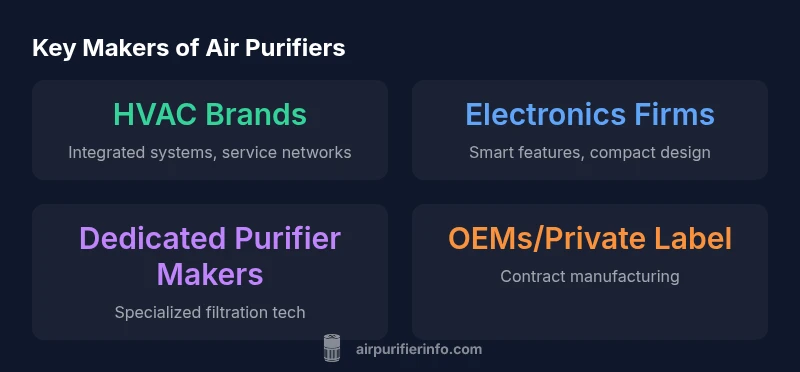
The market features several broad maker families. HVAC brands (for example, large home comfort companies) bring integration with ventilation systems and service networks. Consumer electronics brands emphasize compact design and smart features. Dedicated purifier manufacturers focus on filtration scientists and specialized media. Each family tends to target different consumer needs—quiet operation, connectivity, or advanced filtration. Notable brands exist across regions, with some purifiers boasting co-branding or private-label variants. By examining the maker family behind a unit, buyers can anticipate support ecosystems and filter availability over time.
Regional Variations in Maker Structures
Regional dynamics shape who makes air purifiers. In North America and Europe, a broad mix of brands and OEM partnerships often yields a diverse product lineup. In Asia, there is typically stronger emphasis on contract manufacturing and private-label units, enabling rapid scaling and broader price tiers. These regional differences influence warranty terms, spare parts access, and after-sales service quality. For homeowners and renters, understanding local market structure helps set expectations about product pages, retailer returns, and service networks when evaluating a purifier.
Key Technologies and Maker Roles
At the heart of every purifier are components like filtration media, fans, sensors, and control electronics. HVAC brands may emphasize durable housings and integrated HVAC compatibility, while electronics brands push smart controls and compact form factors. Dedicated purifier manufacturers often lead in filtration tech, testing, and regulatory certifications. The maker behind a purifier can indirectly shape the quality of installed filters, performance under different room conditions, and the product’s ability to meet certifications (AHAM, ENERGY STAR, etc.). Buyers should look for transparent disclosures about key components and testing practices.
Red Flags: What to Check About the Maker
Transparency is your ally when assessing who makes your purifier. Look for clear information about the OEM partner, design ownership, and component sourcing. Certifications from reputable bodies (AHAM, UL) and third-party test results are good indicators of reliability. A vague maker story or hidden supplier relationships may signal risk in warranty coverage or spare parts availability. Verify that the retailer or brand offers genuine replacement filters and accessible service centers. Understanding maker details helps you avoid models with limited long-term support.
Origins and roles of common air purifier makers
| Maker Type | What they provide | Regional Tendencies |
|---|---|---|
| HVAC brands | Integrated systems, service networks | NA/Europe: diversified product lines |
| Consumer electronics brands | Smart features, compact design | NA/Europe: high electronics presence |
| Dedicated purifier manufacturers | Specialized filtration tech, OEM partnerships | Asia: strong OEM/private-label activity |
| OEMs/Contract manufacturers | Core components and assembly | Global role with regional variations |
Questions & Answers
Who makes most air purifiers?
Manufacturers include HVAC brands, electronics brands, and dedicated purifier companies. The balance varies by model and region, with contract manufacturers often producing private-label units.
Most purifiers are made by HVAC brands, electronics firms, and purifier specialists, with regional differences and many private-label arrangements.
What is OEM in air purifier manufacturing?
OEM stands for original equipment manufacturer. An OEM produces parts or entire units for another brand, which then markets the product under its own name.
OEM means another company makes the product or parts for a brand.
Do brands design their own purifiers?
Some brands design in-house, while others rely on contract manufacturers for design and assembly. Check product pages for notes like 'designed in' or 'engineered by' to gauge in-house involvement.
Some brands design in-house; many rely on contract makers.
Are private-label purifiers common?
Yes. Private-label units are common in many markets and are often built by contract manufacturers for retailers under different names.
Private-labels are common, often built by contract manufacturers.
How can I verify the maker's reliability?
Look for third-party testing, certifications (AHAM, UL), and transparent component sourcing. Read reviews and check warranty terms to gauge long-term support.
Check tests, certifications, and warranties.
What about warranty when buying by maker?
Warranty terms vary. Some are brand-backed, others tied to the OEM or retailer. Review registration, service options, and what parts are covered.
Warranty depends on who stands behind the product.
“Understanding who makes an air purifier helps buyers separate branding from engineering quality. Look for transparency about components, OEM partners, and testing.”
Main Points
- Identify the maker category to gauge build quality.
- Check regional differences to anticipate availability.
- Prioritize models with reputable component suppliers and clear OEM info.
- Compare warranty terms tied to the maker and retailer.
- Use maker transparency as part of your buying criteria.