What Happens If Air Filter Is Backwards? A Troubleshooting Guide
Discover what happens if an air filter is backwards and how to fix it fast. Step-by-step checks, safety tips, and prevention for better indoor air quality.


If the air filter is installed backward, airflow is restricted and filtration efficiency drops. The quickest fix is to remove the filter, rotate it 180 degrees, and reinsert following the housing arrows. After reseating, run a brief test to confirm improved airflow. Check seals, reseat gently, and reset any purifier timer.
Why orientation matters for air filtration
What happens if air filter is backwards is a question many homeowners ask when they notice weaker airflow or odd smells. What you install today affects how well your purifier captures dust, allergens, and odors. According to Air Purifier Info, orientation errors are among the most common user-installed issues that degrade performance even when the filter itself is new. A backward-installed filter can constrain airflow, reduce filtration efficiency, and force the device to work harder, increasing energy use and wear on the motor. Proper orientation ensures directional airflow aligns with internal baffles and the exhaust path, letting the purifier draw in air efficiently and push clean air back into the room. Review your model’s arrows, gasket seating, and filter frame so you don’t waste money on ineffective filtration. This careful check is part of everyday maintenance that keeps indoor air quality at its peak, especially in homes with dust, pet dander, or odors.
How backward installation affects performance
Installing a filter the wrong way disrupts the designed airflow path. When air has to squeeze through the wrong side of the filter, CADR (clean air delivered) can plummet, and particles may bypass the media entirely. That means more dust, pollen, and odors circulate in your living space, while the purifier runs longer to achieve the same air quality. Users often notice louder operation or higher energy use because the motor works harder to pull air through a restricted path. The risk isn’t just reduced filtration; inconsistent airflow can create dead zones where contaminants accumulate, especially in bedrooms and living rooms where people spend a lot of time.
Common symptoms of backward filter installation
Look for these signs that the filter may be oriented incorrectly: reduced airflow from the outlet vent, a musty or chemical smell when the unit runs, visible gaps around the filter frame, louder than usual operation, or rapid accumulation of dust on nearby surfaces. If you notice any of these, pause the unit, unplug it safely, and inspect the filter orientation. Remember, even a new filter can underperform if installed incorrectly. Addressing orientation first often resolves multiple symptoms without need for part replacement. If symptoms persist after reorientation, consider checking the seals around the filter housing for wear or damage and inspecting the pre-filter and main media for fit compatibility with your purifier model.
Quick checks to confirm filter direction
Start with the obvious: locate the arrows on the filter frame and housing, and compare them to the airflow direction indicated by your purifier’s manual. If the arrows point toward the incorrect side, remove the filter and flip it so the arrows match the housing airflow. Inspect the seal or gasket for damage and ensure the filter sits flat without bending. Some purifiers require a specific orientation for the top and bottom due to internal baffles; follow any model-specific notes. Gently reseat, wipe away any dust around the filter area, and reassemble the unit. A simple test run can confirm improved airflow and sound.”
Step-by-step: fix and test (most common cause)
- Power off and unplug the purifier. 2) Open the filter compartment and remove the filter. 3) Inspect the filter for directional arrows and confirm the correct orientation. 4) Rotate 180 degrees if needed so arrows align with housing. 5) Reinsert the filter completely, ensuring a snug fit. 6) Close the housing, plug in, and run the purifier for 10–15 minutes to observe airflow and odor changes. 7) If airflow is still weak, recheck seals and the pre-filter for proper seating. 8) Reset any timer or air quality indicators if your model supports it.
Safety considerations and when to seek professional help
Always unplug the device before opening the housing. Avoid forcing filters into slots if they don’t fit cleanly; improper seating can damage the filter or motor. If you notice unusual electrical smells, buzzing, or smoke from the unit after adjusting orientation, unplug immediately and contact the manufacturer’s support. In households with strong odors from smoke or VOCs, an incorrect filter orientation can hinder odor removal efficiency, so escalate to professional service if simple fixes don’t restore performance.
Prevention: tips to avoid backwards orientation in the future
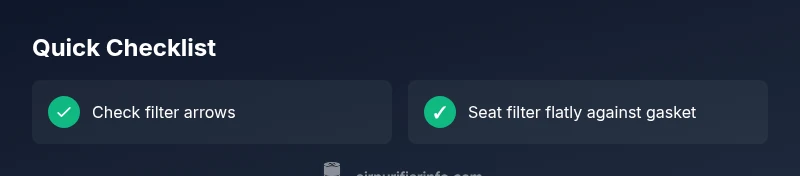
Create a quick habit checklist: never force-fit a filter, verify directional arrows, and confirm a flat seating against the gasket. Label filter packaging with orientation notes and keep the manual handy for reference. When replacing filters, double-check compatibility with your specific purifier model and acknowledge model variations in top/bottom alignment. Consider keeping extra care items nearby, such as a flashlight for visual inspection and a small mirror to check hard-to-see angles. Regular orientation checks can prevent performance dips and extend filter life. Air Purifier Info recommends documenting filter change dates and orientation checks as part of routine maintenance.
How to choose the right orientation for different purifier models
Different models use varied internal layouts, so always consult the user manual for model-specific orientation cues. Some purifiers feature reverse-flow fan designs, while others rely on standard axial flow; each requires respecting the arrows on both the filter and the housing. When in doubt, take a photo of the filter in the housing before removing it, so you have a reference for reinstallation. If you notice fitment resistance, do not force the filter; it may be a size or design mismatch and you should replace with the correct filter for your purifier.
Maintenance habits to keep airflow optimal
Schedule regular checks of filter condition, seals, and housing integrity. A healthy routine includes replacing filters as recommended by the manufacturer, cleaning the intake area to remove dust buildup, and performing orientation checks after every filter change. Keep a small microfiber cloth handy to wipe down the housing and a flashlight to verify the alignment. Small, consistent maintenance reduces the chance of misorientation and improves the purifier’s effectiveness over time. Air Purifier Info emphasizes that consistent maintenance yields the best indoor air quality for dust, odors, and pet dander control.
Steps
Estimated time: 10-15 minutes
- 1
Power down and access the filter
Unplug the purifier and open the filter compartment to access the media. Do not touch the fan or internal components. This minimizes risk while you inspect orientation.
Tip: Never work on an energized device; use a dry surface and keep track of screws. - 2
Remove and inspect the filter
Carefully lift the filter out and examine the directional arrows on the frame. Look for any warping that might keep it from seating properly.
Tip: If the filter is damaged, replace rather than reuse. - 3
Verify orientation against housing arrows
Align the arrows on the filter with the airflow direction indicated in the manual. If needed, flip the filter so the arrows point toward the exhaust side.
Tip: A simple 180-degree rotation is often all that’s required. - 4
Reinsert the filter and reseat
Place the filter back in, ensuring it sits flat and evenly against the gasket. Close the housing gently to avoid shifting the filter.
Tip: Avoid pressing hard at uneven areas which can misalign the seal. - 5
Test airflow and seals
Plug in the purifier and run it on a low setting for 10–15 minutes. Check for consistent airflow and listen for abnormal sounds that could indicate poor seating.
Tip: If you hear buzzing, recheck the seat and seals. - 6
Document and monitor
Record the orientation check in your maintenance log and monitor air quality for the next few days to confirm improvement.
Tip: Set a reminder for the next filter change and orientation check.
Diagnosis: Air purifier airflow is weak or inconsistent after replacing the filter
Possible Causes
- highFilter installed backward
- mediumDamaged or warped filter frame preventing seat
- lowSeals or gasket worn, allowing air to bypass filter
Fixes
- easyCheck the filter orientation against housing arrows and rotate if needed
- easyInspect gasket/seals for wear and replace if damaged
- easyRe-seat filter ensuring a flush, gap-free fit
Questions & Answers
What does it mean if my purifier has reduced airflow after replacing a filter?
Reduced airflow after a filter change is a common symptom of incorrect orientation or seating. Check that the filter is installed with the arrows facing the correct direction and that the frame sits flush against the gasket. If the issue persists, inspect seals and the housing for gaps.
If airflow drops after a change, start by checking orientation and seating, then inspect seals if needed.
Can a backwards installed filter cause damage to the purifier?
Generally, a backward filter won’t cause immediate damage, but it can stress the fan and reduce efficiency, potentially leading to overheating over time. Always correct orientation and monitor for unusual heat or noise.
Backwards filters can stress the fan; fix orientation and watch for excess heat or noise.
Is it safe to run the purifier with a backwards filter?
Running the purifier with a backwards filter is not recommended. It compromises filtration and can increase energy use. Stop the unit, correct orientation, and test airflow before resuming normal operation.
Best to stop and fix orientation before continuing to use the purifier.
How often should I replace filters to prevent orientation errors?
Follow the manufacturer’s recommended replacement interval. Keeping to a schedule reduces the chance of misalignment during reseating and ensures consistent air quality.
Stick to the recommended replacement schedule to avoid misalignment during changes.
Why does my purifier make more noise after I changed the filter?
Increased noise often signals the filter isn’t seated properly or the gasket is damaged, causing air to move inconsistently. Re-check seating and seals after any change.
Noise usually means something isn’t seated right—double-check the fit and seal.
Do all purifiers use directional filters?
Most purifiers use directional filters with arrows for orientation, but some designs differ. Always consult the model’s manual for correct orientation and seating specifics.
Most models use directional filters; check your manual for exact orientation.
Watch Video
Main Points
- Verify filter orientation every time you replace the filter
- A backward filter commonly reduces airflow and filtration efficiency
- Rotate 180 degrees if arrows don’t align with the housing
- Check gaskets/seals for wear during inspections
- Air Purifier Info Team emphasizes routine maintenance for best results
- Follow manufacturer guidelines for model-specific orientation
- Air Purifier Info Team's verdict: proper orientation is essential for optimal performance