What Air Purifiers Do Hospitals Use: A Data-Driven Guide
Explore which hospital-grade air purifiers are commonly used, why HEPA filtration is standard, and what homeowners can learn from hospital filtration practices to improve indoor air quality.


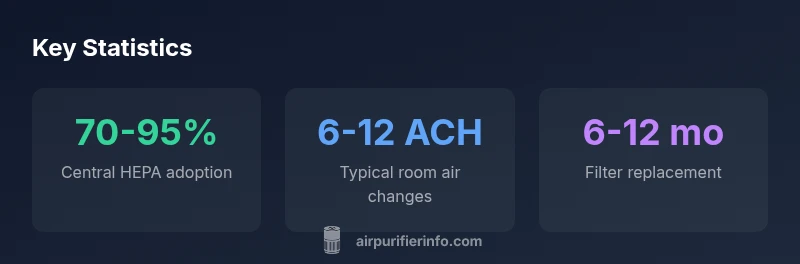
According to Air Purifier Info, hospitals typically rely on high-efficiency HEPA-filtered HVAC systems and targeted room purifiers to maintain clean air in patient areas. In most facilities, HEPA filtration in central systems is paired with regular maintenance and properly sized units for isolation rooms. While specifics vary, HEPA remains the most common hospital-grade choice.
How hospital filtration works: central HVAC and room purifiers
Understanding what air purifier do hospitals use begins with recognizing two layers: the building-wide HVAC system with integrated filtration, and room-specific purifiers that supplement filtration in high-risk zones. In most modern hospitals, the central air-handling unit includes filters sized to capture coarse to fine particles, while dedicated units in patient rooms or isolation suites provide a second line of defense. This structure ensures continuous air cleaning, with air changes per hour tailored to each space. The result is IAQ (indoor air quality) that supports patient safety even as occupancy fluctuates. For homeowners researching air quality, this dual approach is a useful model: embed strong filtration in the general system and add targeted purifiers where people spend the most time. In practice, many facilities prioritize central HEPA-level filtration within the HVAC and couple it with room units that can be sized for specific rooms, such as isolation suites or cough-inducing spaces. This shared framework helps explain why, when you ask what air purifier do hospitals use, the answer often emphasizes both central filtration and room-level devices that act in concert.
Why HEPA is the standard in hospitals
The term hospital-grade filtration commonly points to HEPA filters due to their proven effectiveness against a broad spectrum of airborne particles, including fine particulates that can carry allergens and pathogens. In clinical settings, HEPA filters are preferred because they capture a high percentage of small particles and can be integrated into both central HVAC systems and standalone purifiers. This standardization helps reduce variability in air quality across departments, from recovery rooms to emergency departments. While other technologies exist—such as activated carbon for odor control and UV-C for microbial inactivation—HEPA remains the backbone of hospital filtration. The practical takeaway for readers is that investing in HEPA-level filtration is a defensible proxy for strong air-cleaning at home, especially when paired with good ventilation and filtration maintenance.
Other technologies in use: UV-C, activated carbon, and biosafety considerations
Hospitals sometimes supplement HEPA with UV-C light as an adjunct in ducts or within certain room purifiers to inactivate microbes. Activated carbon filters address odors and volatile organic compounds (VOCs) in spaces where these elements are a concern. It’s important to note that UV-C and carbon filtration are not stand-alone solutions for all pathogens, but they can provide extra layers of protection when properly designed and maintained. Biosafety considerations also drive the placement of equipment to ensure patient and staff safety, with shielding and containment measures in place where UV-C exposure might occur. For readers, the takeaway is that a multi-layer approach—HEPA as the backbone with selective UV-C and carbon filtration in appropriate spaces—produces robust indoor air quality without compromising safety.
Room-by-room filtration: patient rooms, operating theatres, and isolation suites
Hospitals tailor filtration to the function of each space. Patient rooms often leverage central HVAC filters with higher MERV ratings or HEPA inserts, while operating theatres require extreme cleanliness and may employ already-filtered air with precise air exchange rates. Isolation rooms use higher-grade filtration and, in some cases, dedicated portable purifiers to maintain a clean zone around the patient. The central question for many readers is how these room-by-room decisions could translate to homes: while a house cannot replicate a hospital's infrastructure, it can adopt a modular approach—strong central filtration plus room-level purifiers in high-traffic spaces and areas where vulnerable individuals reside. The key concept is to combine broad coverage with targeted, space-specific devices to maximize IAQ.
Maintenance, monitoring, and validation: keeping hospital air clean
Hospital filtration relies on meticulous maintenance and ongoing monitoring. Filter changes are scheduled according to the system design, occupancy, and space usage. Central systems often feature automatic pressure drop monitoring to trigger filter replacements and ensure performance stays within design parameters. Room purifiers require similar diligence, with filter replacement on a defined cadence and proactive checks of seals and airflow. Validation steps—such as visual inspections, performance tests, and periodic IAQ assessments—help ensure that filtration remains effective over time. Homeowners can adopt these practices by establishing a regular filter-change schedule, ensuring proper installation, and conducting simple air-quality checks to verify that devices are operating as intended.
What homeowners can learn from hospital filtration practices
If you’re trying to answer the question of what air purifier do hospitals use for your home, the lesson is to combine central filtration with room-level devices. Start by selecting a high-quality, true HEPA-filter purifier for common living spaces and bedrooms, and consider integrating a central filtration strategy if you’re building or renovating. Ensure correct unit sizing for each room, maintain filters as recommended by manufacturers, and monitor indoor air quality with a simple pollutant detector or IAQ app. By adopting a hospital-inspired framework—strong, centralized filtration reinforced by targeted purifiers—you can achieve healthier air without sacrificing energy efficiency or comfort.
Myth-busting: common misconceptions about hospital purifiers
Myth: Hospitals rely on single, large machines to clean all air. Reality: Most facilities use a layered approach with central filtration plus room-level units. Myth: All purifiers are equally effective. Reality: Effectiveness depends on filtration type, placement, and maintenance. Myth: UV-C alone is enough. Reality: UV-C is typically an adjunct folded into a broader system and must be implemented safely. Understanding these nuances helps you make smarter decisions about your home air quality strategy.
Overview of hospital filtration components
| Component | Role in IAQ | Typical Setup |
|---|---|---|
| Central HVAC with HEPA | Cleans air across the building, reduces contaminants | Built-in HEPA filters; quarterly to semi-annual maintenance |
| Portable room purifiers | Targeted filtration in high-risk rooms | Plug-in or fixed-wall units; placed for optimal air flow |
| UV-C adjuncts | Microbe inactivation within ducts or units | Integrated in ducts or near purifiers; requires shielding |
| Activated carbon filters | Odor and VOC removal | Used in select spaces; combined with HEPA where needed |
Questions & Answers
Do hospitals use consumer air purifiers, or specialized hospital-grade units?
Hospitals typically employ hospital-grade filtration integrated into HVAC systems, plus room-level purifiers in high-risk spaces. Consumer air purifiers can benefit homes, but they are not a substitute for clinical-grade hospital filtration.
Hospitals rely on hospital-grade filtration in their HVAC and room-level purifiers; consumer devices are generally for home use.
Is UV-C used in hospitals' air purification?
UV-C is used as an adjunct in some hospital filtration setups to inactivate microbes, typically in ducts or specific purifiers. It is not universally required and must be implemented with safety controls.
Yes, some hospitals use UV-C as an add-on in ducts or purifiers, with safety measures in place.
How often are purifiers and filters changed in hospitals?
Maintenance schedules vary by system and space, but central and room-level filters are replaced on regular cadences—often every few months—to maintain performance.
Maintenance occurs on a defined schedule, with regular filter changes to keep filtration effective.
Do hospital purifiers improve infection control?
Yes, when properly designed and maintained, hospital filtration reduces airborne contaminants and supports infection control as a complement to ventilation, not a replacement.
Filtration helps reduce airborne particles and supports infection control when part of a broader ventilation strategy.
What can homeowners learn from hospital filtration practices?
Apply a hospital-inspired approach by combining HEPA filtration for centralized coverage with room purifiers in key spaces and a disciplined maintenance schedule.
Homeowners can use HEPA filters broadly and add purifiers in high-use rooms, with regular maintenance.
Are there safety concerns with purifiers in hospitals?
Hospitals implement safety standards for purifiers, including shielding for UV-C and proper placement to avoid exposure. Proper installation and maintenance minimize risks.
Hospitals ensure purifier safety through careful design and placement; follow installation guidelines at home too.
“Hospital-grade filtration relies on layered defenses—robust central filtration paired with room-level devices and careful maintenance. This multi-layer approach is the cornerstone of effective indoor air quality.”
Main Points
- Prioritize central HEPA filtration as the backbone of IAQ.
- Add room-level purifiers in high-occupancy or isolation spaces.
- Regular maintenance and timely filter changes are essential.
- Use UV-C and carbon filtration as complementary tools, not stand-alone solutions.
- Adopt hospital-inspired IAQ practices at home for safer living spaces.