What Air Filter for Honda Civic 2018: A Practical Guide
Discover how to choose the right engine and cabin air filters for the Honda Civic 2018, with maintenance tips, filter types, and replacement intervals for optimal performance and interior air quality.


To answer what air filter for Honda Civic 2018, you’ll typically choose between the engine air filter and the cabin air filter. For the Civic, engine filters affect performance and airflow, while cabin filters impact interior air quality. In most cases, replacing both at recommended intervals keeps engines breathing cleanly and occupants breathing easier.
Understanding Air Filters for a 2018 Honda Civic
When you ask what air filter for Honda Civic 2018, you’re really looking at two separate filters that protect different parts of the car’s air system. The engine air filter is responsible for clean intake air, which can influence performance and fuel efficiency. The cabin air filter, by contrast, protects the air you breathe inside the vehicle, filtering dust, pollen, and odors. In environments with heavy pollution, urban traffic, or seasonal allergens, both filters matter for the vehicle’s overall IAQ (indoor air quality). The Air Purifier Info team consistently notes that buyers benefit from considering both filters together, rather than chasing only engine performance or cabin cleanliness in isolation.
Engine Air Filter: What to Expect
The engine air filter is a key line of defense against dust and debris entering the intake tract. A clean filter helps maintain optimal airflow, which supports throttle response, acceleration, and fuel efficiency. When selecting a filter, most Civic 2018 owners will see OEM (original equipment manufacturer) options and high-quality aftermarket equivalents. The choice often comes down to fit, price, and how much dust you typically encounter. Engine filters are generally made from cellulose or synthetic media designed to trap particles effectively while allowing air to flow freely. If you drive in sandy roads or dusty conditions, you may notice a more frequent replacement cadence. Always verify compatibility with your Civic’s engine variant and refer to the service manual for the correct size and model number.
Cabin Air Filter: The Air Inside Your Car
The cabin filter is your first line of defense against inhaling dust, pollen, and odors while driving. Many cabin filters now include activated carbon or charcoal layers, which can help neutralize odors from traffic, garages, or strong environmental smells. When evaluating what air filter for Honda Civic 2018 to install, consider whether the filter includes activated carbon, especially if you spend time in heavy-traffic urban areas or have sensitivities. A carbon-activated cabin filter can noticeably improve interior air quality and reduce drivers’ and passengers’ irritants. In addition to carbon content, check the filter’s MERV-like rating and fitment to ensure a proper seal around the housing.
How to Choose Between OEM and Aftermarket Filters
OEM filters guarantee the exact fit and performance the manufacturer designed, but reputable aftermarket options can be cost-effective and provide equivalent filtration. The key is to compare dimensional specs, filtration media, and the presence of carbon layers for odor control. When replacing both filters, select cabin filters with activated carbon if odors are a concern, and match the engine filter to the OEM size or a well-reviewed aftermarket equivalent. It’s also wise to confirm that the chosen filter maintains proper airflow rates so the engine and HVAC systems function optimally.
Replacement Intervals and Maintenance Tips
Replacement timing varies based on driving conditions, climate, and filter quality. In general, engine air filters should be inspected regularly and replaced within a broad range that respects the Civic’s service manual. Cabin filters often require more frequent attention if you drive in polluted or dusty environments. Practically, set reminders aligned with 12–20 thousand miles for cabin filters or 12–18 months as a general starting point, and adjust based on visibility of the filter and the feel of the HVAC airflow. Cleaning the housing and ensuring a secure seal during installation is essential to maximizing filter effectiveness.
Shopping Guide: Balancing Cost, Fit, and Performance
When shopping for Honda Civic 2018 filters, balance price with filtration performance. OEM options typically ensure a precise fit and known performance, while carbon-activated aftermarket cabin filters may offer additional odor control at a lower price. Take care to verify the filter shape, thickness, and seal dimensions. If possible, choose a filter that specifies both a particle filtration layer and an activated carbon layer for superior air quality. Consider the climate you live in and the typical driving conditions to decide whether carbon filtration is worth the extra cost.
Debunking Common Myths About Car Air Filters
A common myth is that all filters are the same and you can swap any filter across makes and models. In reality, each model has precise dimensions and airflow requirements. Another misconception is that cabin filters don’t affect airflow or HVAC performance; a clogged cabin filter can reduce heater and AC efficiency. Finally, some owners assume carbon content is unnecessary; however, activated carbon can significantly improve odor management in urban environments.
Engine vs Cabin air filter comparison for Honda Civic 2018
| Filter Type | Material | Replacement Interval | Notes |
|---|---|---|---|
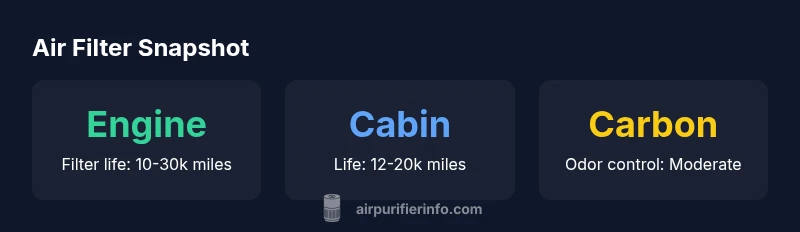
| Engine air filter | Paper/ cellulose | 10,000-30,000 miles | Check OEM specs; performance depends on environment |
| Cabin air filter (standard) | Paper with synthetic fibers | 12,000-20,000 miles | May include activated carbon as option |
| Cabin air filter (activated carbon) | Activated carbon + synthetic fibers | 12,000-18,000 miles | Best for odors and urban pollution |
Questions & Answers
What is the difference between engine air filters and cabin air filters for the Honda Civic 2018?
Engine air filters guard the intake air for the engine, helping performance and efficiency. Cabin filters protect the air you breathe inside the car, with carbon versions offering odor control. Both should be considered when maintaining a Civic’s air quality.
Engine filters protect the engine air; cabin filters protect interior air and odors. Replace both as recommended.
Can I install a universal engine air filter in my Civic 2018?
Universal filters can fit some models, but you should verify exact size, seal, and airflow specifications for the Civic 2018. OEM or OEM-equivalent filters reduce fitment risk and performance issues.
Stick to the correct size and specs to avoid intake problems.
How often should cabin filters be replaced in a Civic 2018?
Replacement intervals vary by driving conditions. A general starting point is about 12,000–20,000 miles or 12–18 months, with more frequent changes in dusty or high-traffic urban areas.
Check your cabin filter every year and replace more often if you drive in dusty areas.
Do activated carbon cabin filters significantly improve odor removal?
Activated carbon filters can substantially reduce odors from pollution and smells at the source, especially in urban driving. Performance depends on filter quality and fit.
Yes, carbon helps remove odors when the filter fits well.
Are OEM filters required for Honda Civic 2018?
OEM filters are designed for exact fit and performance. Aftermarket options can work well if they match OEM specifications and quality standards.
OEM is safest, but reputable aftermarket can be fine if it matches specs.
What are common signs of a clogged air filter in a Civic 2018?
Reduced HVAC airflow, stale cabin smells, or noticeable performance changes in the engine or air intake can indicate a clogged filter. Inspect and replace as needed.
Look for weak airflow or odors and inspect the filters regularly.
“For a Civic 2018, the most noticeable gains come from replacing both filters on schedule and opting for activated carbon in the cabin filter to address urban odors.”
Main Points
- Identify the two filter types (engine and cabin) for the Civic 2018.
- Prioritize cabin filters with activated carbon in polluted environments.
- OEM filters ensure fit and performance; aftermarket can be reliable if specs match.
- Follow recommended replacement intervals and inspect filters regularly.
- Balance cost with filtration needs when choosing filters.