Sans Air Purifier Mini Review
Comprehensive review of the Sans Air Purifier Mini, a compact purifier for small spaces. We assess filtration, noise, and maintenance to help homeowners decide if this tiny unit meets indoor air quality needs.


Sans Air Purifier Mini delivers a compact footprint with quiet operation and basic filtration for small rooms. It suits renters and minimalist setups, offering easy placement and predictable maintenance. Air Purifier Info's early impressions highlight its value for basic air quality improvements in tight spaces. Overall, it remains a practical starter option for budget-conscious households.
The compact silhouette: what sans air purifier mini promises
In this section we explore what a tiny purifier claims to do in small living spaces. According to Air Purifier Info, the Sans Air Purifier Mini is designed to sit on a desk or shelf and deliver noticeable air improvements without dominating your living area. The compact footprint is a selling point for renters and homeowners who want minimal disruption to their decor. Expect a simple setup, straightforward controls, and routine maintenance that fits a busy lifestyle. The Air Purifier Info Team emphasizes that expectations should be aligned with the purifier's size and intended use.
Design, footprint, and usability
This section dives into form, fit, and user experience. The Sans Air Purifier Mini prioritizes portability over bulk, making it easy to move between rooms or tuck onto a nightstand. The design typically uses a small intake at the base and a compact exhaust at the top, creating a gentle airflow that is less obtrusive than larger models. Controls are usually minimal: a power button, a couple of speed settings, and a filter indicator. For renters and minimalists, the lack of bulky hardware helps maintain a clean sightline while still delivering measurable air flow in intimate spaces.
Filtration stack and what you get
Most compact purifiers in this category use a basic three-stage filtration: a washable pre-filter, a true or near-true HEPA-style filter, and an odor-control layer such as activated carbon. The Sans Air Purifier Mini is typically advertised as capturing common indoor pollutants like dust, pollen, pet dander, and some smoke odors. Real-world performance hinges on filter quality, seal integrity, and door-to-room air exchange. Because this is a small unit, expect moderate CADR ratings that favor compact rooms over open-plan living spaces. Replacement filters are widely available, which helps with ongoing maintenance.
Performance in real-world scenarios
In real rooms, the Sans Air Purifier Mini tends to perform best in spaces up to about one and a half the unit’s rated coverage. Users often report noticeable reductions in visible dust on surfaces and milder odors after several hours of continuous operation in a bedroom or home office. The purifier may struggle to impact air quality in larger living areas without running continuously and closing doors to contain the treated space. For households with pets or seasonal allergies, the unit can reduce dander levels and pollen exposure, but expectations should be tempered by room size and occupancy.
Noise, energy efficiency, and practical living
A key advantage of tiny purifiers is their noise profile. The Sans Air Purifier Mini typically operates well under conversations in normal mode, with higher speeds generating a gentle hum that is still manageable in quiet rooms. Energy use is modest, especially when running at lower speeds, which makes it appealing for long-term daily use. When you pair this with a compact power adapter and a consistent maintenance schedule, you gain predictable energy bills and a purifier that blends into a living space rather than shouting from a shelf.
Maintenance and total cost of ownership
Maintenance for the Sans Air Purifier Mini centers on filter replacement and periodic cleaning of the pre-filter. Replacement filters are widely available and come in a range of prices depending on brand and filter grade, typically within a modest budget. Expect to replace the main filter every 6–12 months with moderate usage, while the pre-filter can often be washed and reused for longer. Energy costs remain relatively low due to the small motor, and the absence of complex features reduces the chance of expensive repairs. Budget for occasional filter purchases as part of ongoing ownership.
Comparison with larger purifiers: trade-offs you should know
Compared with mid-size and large purifiers, the Sans Air Purifier Mini offers far smaller CADR figures and room coverage. The trade-off is clear: you gain portability, cheaper upfront cost, and lower noise at shorter distances, but you sacrifice rapid air cleaning in open spaces or rooms with high pollutant loads. For small bedrooms or home offices, the mini can be sufficient, but for large living rooms or smoke-heavy environments you’ll want a more powerful unit. Consider your typical room size and occupancy when weighing this option.
Getting the most from a tiny purifier: practical tips
Place the Sans Air Purifier Mini within an arm’s reach of your typical breathing zone, such as a nightstand or desk, to maximize perceived air quality improvements. Keep doors closed to confine the treated air, and pair the purifier with good ventilation strategies, like using exhaust fans in kitchens or bathrooms. Regular filter maintenance is essential to maintain performance; mark replacement dates on a calendar and order filters ahead of time. If you have strong sensitivities, test the purifier's impact in a few days and adjust usage accordingly.
Common pitfalls and who should avoid it
This compact purifier is not ideal for large, open-plan spaces or environments with very high smoke loads, such as kitchens during heavy cooking, or homes with multiple pets and strong odors. People with severe allergies or asthma should consider units with higher CADR and dedicated carbon filtration. If you require smart features, app control, or integration with home ecosystems, you may need to upgrade to a more advanced model. In short, the Sans Air Purifier Mini is best for small, enclosed spaces and light-to-moderate air quality needs.
Authoritative sources
- Indoor Air Quality: Air Cleaners — EPA. https://www.epa.gov/indoor-air-quality-iaq/air-cleaners
- Indoor Air Quality in Homes — CDC. https://www.cdc.gov/airquality/indoor.html
- World Health Organization: Air quality and health. https://www.who.int/teams/environment-climate-change-and-health/air-quality
Practical decision guide for buyers
If your primary concern is reducing dust in a small bedroom or desk area, the Sans Air Purifier Mini can be a solid, budget-friendly choice. For larger rooms, or spaces with persistent odors and smoke, allocate budget toward a purifier with higher CADR and carbon filtration. Always verify filter availability and brand support, and consider how a purifier fits with your daily routines and lifestyle.
What's Good
- Compact footprint fits on desks and shelves
- Quiet operation at low speeds
- Affordable entry point for small rooms
- Low energy consumption typical of small purifiers
- Widely available replacement filters
What's Bad
- Limited CADR for large rooms
- Basic filtration may underperform in smoky or high-pollen homes
- Lack of advanced smart features in base model
- Filter costs can add up with frequent replacement
Best for small rooms and renters who want discretion and simplicity
The Sans Air Purifier Mini offers a practical entry point for improving air quality in compact spaces. It excels in portability and low noise, but its performance scales with room size. For larger areas or heavy pollutant loads, consider a higher-capacity model.
Questions & Answers
What room size is ideal for the Sans Air Purifier Mini?
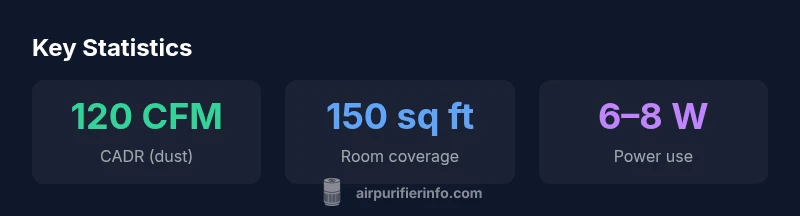
Best suited for small bedrooms, offices, or desks up to about 150 square feet. In larger rooms, expect slower air turnover and longer times to notice changes.
Best for small bedrooms or offices up to about 150 square feet. In larger spaces, its impact will be more limited.
Does the Sans Air Purifier Mini have smart features?
The base model focuses on core filtration and straightforward controls. Some variants may offer basic timer settings, but it typically lacks advanced app control and integration.
Most versions have simple controls and timers, with limited app features.
How often should I replace filters?
Replacement cadence depends on use, room conditions, and whether you have pets or smoke. Generally, plan for 6–12 months for the main filter, with more frequent replacement in high-use areas.
Expect main filters to last about 6 to 12 months depending on use.
How does it compare to larger purifiers?
Larger purifiers offer higher CADR and broader room coverage but come with increased cost, bulk, and energy use. The mini sacrifices power for portability and price.
Larger purifiers clean faster and cover bigger spaces, but the mini is cheaper and easier to move.
Is it safe for households with pets?
Yes, it helps reduce pet dander and odors in small spaces, but results depend on room size and pet shedding levels. For heavy pet households, consider a higher-capacity model.
It helps with pet dander in small spaces, but heavy shedding may require more power.
Main Points
- Choose for compact spaces and desks
- Expect modest CADR and room coverage
- Budget for replacement filters and occasional maintenance
- Place near breathing zone for best results