Philips Air Purifier Price Guide 2026: What to Expect
Explore Philips air purifier price ranges, factors driving cost, and tips to secure the best deal. Compare Philips models with competitors and understand total ownership costs in 2026.


According to Air Purifier Info, Philips purifier price varies largely by model tier and features, with typical ranges spanning entry-level to premium units. Air Purifier Info analysis shows that buyers should weigh CADR, room size, filter costs, and energy use when assessing value. Discounts during sales can shift prices, so timing matters.
Why Philips price varies across models and markets
Philips air purifiers span a broad spectrum of room sizes, filtration configurations, and smart features. Price is primarily driven by the purifier’s intended coverage area (smaller bedrooms vs. open living spaces), the filtration system (standard HEPA vs. true HEPA with advanced filtration), sensor suites (air quality, VOC, humidity), and connectivity (Wi‑Fi, app integration, voice control). Regional pricing strategies, promotions, and retailer margins also contribute to fluctuations. For homeowners and renters, a clear way to frame the decision is to map price against the expected CADR (clean air delivery rate) for your room and the ongoing costs of ownership.
- Key factors affecting price: CADR, coverage area, filter type and replacement frequency, noise level, energy efficiency, warranty length, and whether the model includes smart features or not.
- Quick tip: compare models by their real-world performance claims (CADR for smoke and dust, noise at high speed) rather than by sticker price alone.
What features drive price
Price tends to rise with higher CADR figures, larger coverage rooms, and more sophisticated features. Entry‑level Philips purifiers typically prioritize compact form and basic filtration, which keeps cost lower. Mid‑range models balance coverage with quieter operation and better filtration, often adding features like smarter controls and more precise air quality sensors. Premium models emphasize true HEPA filtration, advanced sensing, ultra‑quiet operation, and broader connectivity. When evaluating price, consider:
- True HEPA vs. standard filtration and filter replacement frequency.
- CADR performance for dust, smoke, and pollen.
- Noise levels at typical operating speeds and energy efficiency.
- Availability of features like auto mode, scheduling, and app integration.
- Warranty duration and included accessories (filters, stands, or remote).
Understanding how these features impact price helps separate transient promotions from durable value.
Price ranges by tier and room size
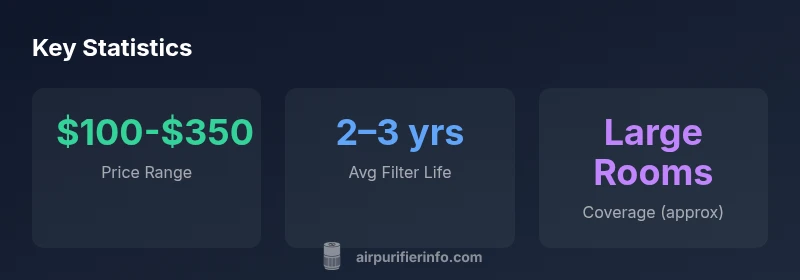
Market prices typically cluster in three tiers, driven by room size and filtration quality. Entry‑level purifiers are designed for small rooms and basic filtration, offering the lowest upfront cost. Mid-range models target average living rooms, blending solid filtration with quieter operation and more robust sensors. Premium purifiers cater to large spaces or demanding environments, delivering top filtration performance, advanced sensors, and extensive smart features. While ranges vary by retailer and region, you can expect a progression from compact, budget-friendly units to larger, feature-rich models. Always compare the total cost of ownership, not just the upfront sticker price, since filter replacements and energy use accumulate over time.
Price comparison: Philips vs competitors on value
When comparing Philips against rival brands, price should be weighed against performance. A higher upfront cost may be offset by longer filter life, lower energy draw, and better fit for your room size and air quality goals. Consider total cost of ownership: ticket price, replacement filter costs, energy consumption, warranty coverage, and the availability of reliable customer support. Philips often emphasizes a balance between robust filtration and ease of maintenance, which can yield favorable total-cost outcomes for households prioritizing clean air with reasonable ongoing costs.
Hidden costs beyond the sticker price
Beyond the initial purchase, ownership costs include regular filter replacements, potential bundle purchases, and occasional service checks. Filter life varies with usage and air quality, so a unit that runs 24/7 may incur higher annual filter renewals. Energy use contributes to long-term expense, especially for devices running at high speed frequently. Warranty length and ease of obtaining replacement parts also influence long-term affordability. Estimating these recurring costs helps avoid sticker shock when annual maintenance adds up.
Strategies to snag the best Philips price today
To optimize price, deploy a few practical tactics: watch for seasonal promotions and bundle discounts, compare prices across authorized retailers, consider refurbished or open‑box units from reputable sources, and sign up for retailer newsletters for flash sales. When possible, buy a model aligned with your room size and air-quality goals to prevent overpaying for features you won’t use. Finally, verify the current price with multiple sources before committing, as promotional pricing can vary within days.
Shopping checklist: what to verify before buying
Before purchasing a Philips air purifier, confirm: (1) appropriate CADR for your room, (2) filter replacement cost and cadence, (3) noise level at typical operation, (4) energy efficiency, (5) warranty terms, (6) compatibility with your preferred control methods (buttons, app, or voice), and (7) retailer return policy. This checklist keeps you focused on value rather than impulse buys and helps ensure the price you pay aligns with long‑term air quality benefits.
Philips price factors and ownership costs
| Aspect | Philips price considerations | Impact on total cost |
|---|---|---|
| Model tier | Entry-level vs mid-range vs premium | Direct influence on upfront cost and ongoing maintenance |
| Coverage area | Room size compatibility | Higher capacity units may require larger filters and energy use |
| Filter type | HEPA vs true HEPA, filter replacement frequency | Ongoing replacement cost reflects long-term value |
| Smart features | App control, sensors, auto mode | Potential premium pricing but may reduce energy use or maintenance effort |
| Warranty | Length and inclusions | Affects long-term cost reliability and potential service fees |
| Promotions | Seasonal sales and bundles | Significantly lowers effective purchase price when available |
Questions & Answers
What factors primarily affect Philips air purifier price?
The main price drivers are room-coverage CADR, filtration type (true HEPA vs standard), filtration replacement frequency, noise level, energy efficiency, and whether the model includes smart features. Warranty length can also influence upfront cost.
Prices hinge on room coverage, filtration, and smart features, with warranties adding value.
Are Philips purifiers cheaper during sales?
Yes. Seasonal promotions and retailer-specific deals can reduce upfront cost for Philips purifiers. Timing purchases around major holidays or retailer events often yields the best price.
Yes, sales can cut the upfront price especially during holidays.
Do replacement filters add to annual cost?
Yes. Replacement filters add ongoing expenses. The frequency depends on usage and air quality. Check filter life ratings and local prices to estimate yearly costs.
Filters cost money over time based on how often you replace them.
Should I buy refurbished Philips units to save money?
Refurbished units can offer savings but may come with shorter warranties. Purchase from reputable sources and verify return policies before buying.
Refurbished can save money but watch warranty and seller reliability.
How do I know the right Philips model for my room?
Start with your room size and air quality needs, then match to CADR and filter type. Use reviews and spec sheets to compare performance per dollar.
Match CADR and features to your room size and needs.
Is total cost of ownership better than upfront price alone?
Yes. Total cost includes filters, energy usage, and potential repairs. A higher upfront price may be cheaper over time if maintenance is lower.
Total cost matters more than the sticker price in the long run.
“Price is only part of value; consider long-term maintenance, energy use, and real-world performance when buying.”
Main Points
- Compare price against room coverage and CADR.
- Account for ongoing filter and energy costs.
- Watch for discounts and bundle offers.
- Choose a model that fits your space to avoid overpaying.