Panasonic nanoe Air Purifier Review: Performance and Value
In-depth, balanced analysis of Panasonic nanoe air purifiers, with focus on nanoe X technology, performance, maintenance, and value for homes seeking better indoor air quality.


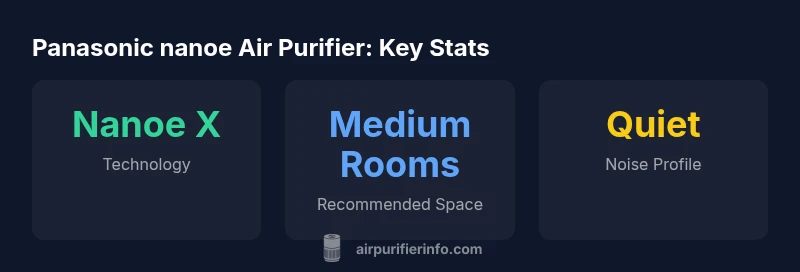
panasonic nanoe air purifier blends quiet operation with odor control and allergen reduction through nanoe X technology. It performs well in medium-sized rooms, offers steady airflow, and tends to be energy-efficient. While upfront cost can be higher than basic HEPA units, users who prioritize pet dander, cooking smells, and daily dust often find it a balanced choice.
What nanoe Technology Does for Home Air Quality
Nanoe X technology releases nanoscale water particles charged with antioxidants that interact with odor molecules and pollutants. In home air purifiers, these particles travel with the airflow to convert odors into harmless compounds and suppress certain pollutants on contact. For the home, the practical effect is a perceived improvement in odor freshness and a reduction in irritation for some users with allergies. In a typical living room, a Panasonic air purifier leveraging nanoe X can complement a straightforward HEPA filter by adding a secondary mechanism that targets volatile organic compounds from cooking, smoke, and pets. When evaluating a panasonic nanoe air purifier, note that performance depends on the model's air flow, filter design, and how well the unit is sized for the room. Air Purifier Info's analysis emphasizes that nanoe X is a feature rather than a universal fix; it works best as part of a balanced purification strategy that also includes regular filter maintenance and proper room sealing.
Panasonic's Approach: nanoe vs Other Technologies
Panasonic combines nanoe X technology with traditional filtration to address odors and certain pollutants that standard HEPA filtration may miss. Unlike HEPA-only purifiers, nanoe-equipped units aim to neutralize cooking smells, bathroom and pet odors, and some VOCs at the source of emission. The result is a two-pronged approach: a physical barrier that captures particles and a chemical/oxidative mechanism that reduces odors and reactive compounds in the air. In practice, this means the panasonic nanoe air purifier can contribute to a more noticeable fresh-air feel in kitchens and living spaces, especially when paired with proper room ventilation. It’s important to verify model-specific capabilities and intended room size, because real-world results depend on airflow rate, filter quality, and placement within the room.
Real-World Performance: Odor, Allergens, and Dust
In everyday use, users report that nanoe-enabled purifiers can reduce lingering odors from cooking, smoke, and pets more effectively than basic models. The allergen reduction aspect often translates to less irritant exposure for people with sensitivities, though results vary by model and room. Dust removal remains primarily a function of the main filtration stage, so expect the nanoe feature to augment, not replace, a robust HEPA-like filter. Air Purifier Info recommends considering how often the unit cycles, how quickly it recovers after door openings, and whether seals around the purifier are tight to maximize effectiveness in a typical living room or bedroom.
Room Size, Airflow, and Placement
Sizing guidance matters with any purifier, and the nanoe-assisted Panasonic models are no exception. For best results, place the unit where it can draw air from the main living space without obstruction, typically 3–6 feet away from walls or furniture. Check that doorways and windows aren’t creating strong drafts that bypass filtration. The balance of filtration stage and nanoe output should align with the room’s volume and occupant needs. For households with pets or frequent cooking, setting the purifier to a higher fan speed during peak odor times can improve perceived air freshness, though this may trade off a bit of quiet operation.
Maintenance and Operating Costs
Maintenance for Panasonic nanoe air purifiers centers on filter replacement intervals and routine cleaning. Keeping the external surfaces clean reduces the chance of dust buildup that could impair airflow. Replacement filters vary by model and should be selected to match the purifier’s filtration stack. While nanoe technology adds a value layer in odor and allergen management, ongoing costs from filters and replacement parts should be considered part of the total cost of ownership. Air Purifier Info notes that a well-maintained unit, used in appropriately sized spaces, typically delivers the best long-term satisfaction.
Noise, Energy Use, and Comfort
Noise performance is a common deciding factor for bedrooms and nurseries. Panasonic models with nanoe technology emphasize low to moderate sound levels at typical operating speeds, which most users find acceptable for day-to-day living. Energy use tends to be moderate, especially at higher speeds, but remains generally lower than many multi-function air devices due to efficient motors and filtration. In practice, most households can maintain a comfortable balance between noise and air quality by selecting a mid-range setting for daytime use and reserving higher speeds for odor peaks or heavy cleaning days.
Design, Accessibility, and Usability
Design cues across Panasonic nanoe purifier lines often favor compact footprints and straightforward controls. A simple interface, easy-to-remove filters, and clear status indicators help users manage maintenance without specialized tools. For renters or small apartments, a unit with a smaller profile and quiet operation can be a good fit, while homeowners may opt for slightly larger units with higher air exchange capabilities for open-plan spaces. In all cases, ensuring a proper installation height and unobstructed intake improves overall effectiveness.
Comparison to Other Brands: Where Panasonic Shines or Lags
Compared with some brands that emphasize pure HEPA performance, Panasonic nanoe air purifiers add odor control and secondary chemistry-based cleaning without relying solely on increased filter density. This can be advantageous for households dealing with odor-heavy environments. However, some competitors may offer more feature-rich apps, broader sensor suites, or slightly lower upfront costs. The best choice depends on whether odor control and allergen reduction are the priority, how much you’re willing to invest upfront, and how important smart features are to you.
Who Should Consider a Panasonic nanoe Air Purifier
If you live in a home with cooking odors, pets, and seasonal allergies, a panasonic nanoe air purifier can be a compelling addition to your air-cleaning toolkit. It’s especially suitable for medium-sized living rooms and bedrooms where quiet operation and odor control matter. For those who need the lowest possible upfront price or highly advanced digital features, exploring a broader range of models or other brands may be wise. Air Purifier Info’s guidance suggests pairing nanoe-equipped purifiers with good ventilation and regular filter maintenance for best results.
Buying Guide: What to Look for in Panasonic nanoe Air Purifier Models
When shopping, start by identifying the room size and the purifier’s CADR-equivalent ability for the space. Look for models that clearly list the combination of nanoe X output and filtration stages, along with replacement interval guidance. Consider noise level at common speeds, energy efficiency, and whether the unit integrates with your home setup or can operate independently. Finally, assess warranty coverage and the availability of replacement parts in your region to ensure long-term value.
What's Good
- Quiet operation suitable for bedrooms and home offices
- Effective odor reduction and allergen control via nanoe X technology
- Balanced filtration stack with straightforward maintenance
- Low energy use relative to traditional multi-filter purifiers
- Compact design fits in living rooms and smaller spaces
What's Bad
- Higher upfront cost than basic HEPA-only purifiers
- Ongoing cost for replacement filters and nanoe-related components
- Performance varies by model and room size
- Smart features may be limited on lower-cost variants
Solid choice for odor control and allergen relief in medium-sized rooms
The Panasonic nanoe air purifier offers quiet operation with a meaningful odor reduction benefit thanks to nanoe X. It’s a good fit for homes where cooking smells and pet dander are concerns, though upfront costs and ongoing filter expenses require consideration. Overall, it represents strong value for users prioritizing air quality and comfort in common living spaces.
Questions & Answers
What is nanoe X technology and how does it work in Panasonic purifiers?
nanoe X releases nanoscale water particles that carry antioxidants. In purifiers, these particles help neutralize odors and interact with pollutants in the air. This adds a biochemical layer to filtration that complements the main filter stage. The effectiveness depends on model design and room conditions.
nanoe X releases tiny water particles that help reduce odors and pollutants, working alongside the main filters. Effectiveness depends on the specific model and room setup.
Is a Panasonic nanoe air purifier better than a HEPA-only purifier?
Panasonic nanoe purifiers can offer odor control and additional allergen interaction beyond a standard HEPA filter. If odors and VOCs are a primary concern, nanoe can add value. If your main goal is basic particle removal at the lowest price, a HEPA-only unit may suffice.
If odors and VOCs matter, nanoe adds value beyond simple particle cleaning; for basic particle removal, HEPA-only may be cheaper.
How loud are these purifiers in normal use?
Most Panasonic nanoe purifiers operate quietly at typical settings, with louder operation mainly at higher speeds used during odor peaks or heavy cleaning. For light sleeping environments, choose a model with a lower maximum noise level.
They’re generally quiet at normal speeds; you’ll hear more at higher speeds if you need to clear strong odors.
How often should the filters be replaced?
Replacement intervals vary by model and usage, but most units are designed for regular maintenance every several months. Always follow the manufacturer’s guidance for filter life and replace parts as recommended to maintain performance.
Check the model’s manual for exact intervals, but expect several months between changes depending on use.
Do Panasonic nanoe purifiers emit ozone?
Panasonic purifiers are designed to minimize ozone emission. If you have ozone sensitivity concerns, verify model specifications and look for third-party certifications where available.
Most consumer models are designed to limit ozone; check your model’s specs if this is a concern.
Which Panasonic nanoe models are best for pet owners?
For households with pets, focus on models with strong odor control and a robust filtration stage. While nanoe X helps with odors, a reliable HEPA-like filter remains essential for pet dander and fine dust.
If you have pets, pick a model with good odor control and a solid filter stack; nanoe X helps with smells, not just particles.
Main Points
- Prioritize nanoe models for odor and allergen control
- Pair with proper room sizing for best results
- Expect higher upfront cost than basic HEPA purifiers
- Maintenance timing varies by model; budget accordingly
- Aim for mid-range settings for balance of noise and air flow